Automated White-Label Reporting Can Cut Agency Client Churn by 20 Percent
Agencies that implement automated white-label reporting cut client churn by up to 20% — here's the cadence, metric stack, and productization model that makes it stick.
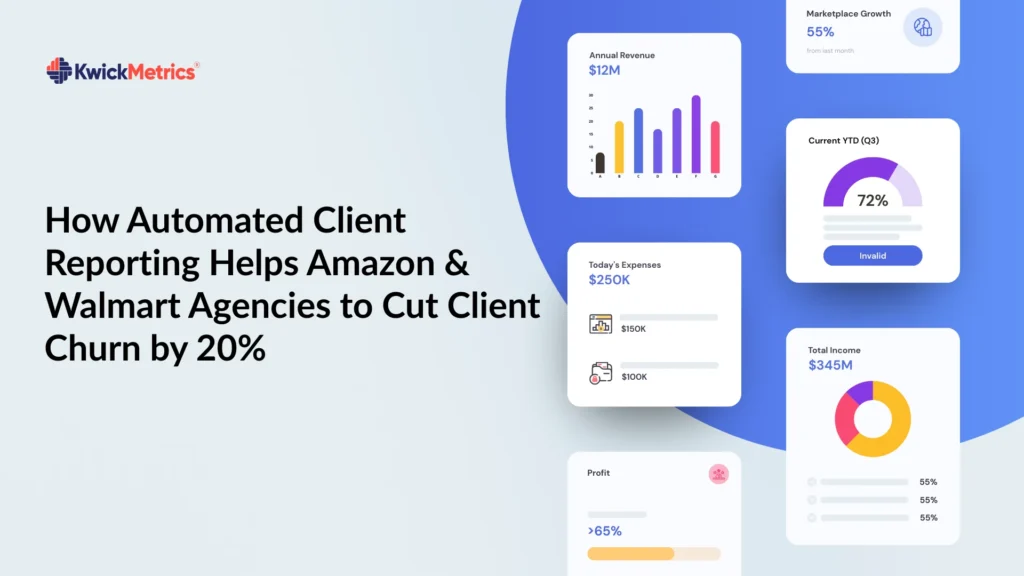
Most agencies lose clients not because the work stopped performing, but because the client stopped seeing it perform. That gap between actual results and perceived results is where retention quietly collapses. The fix is not a better pitch deck or a longer contract. It is a structured, branded reporting system that closes the insight loop before a client ever considers canceling.
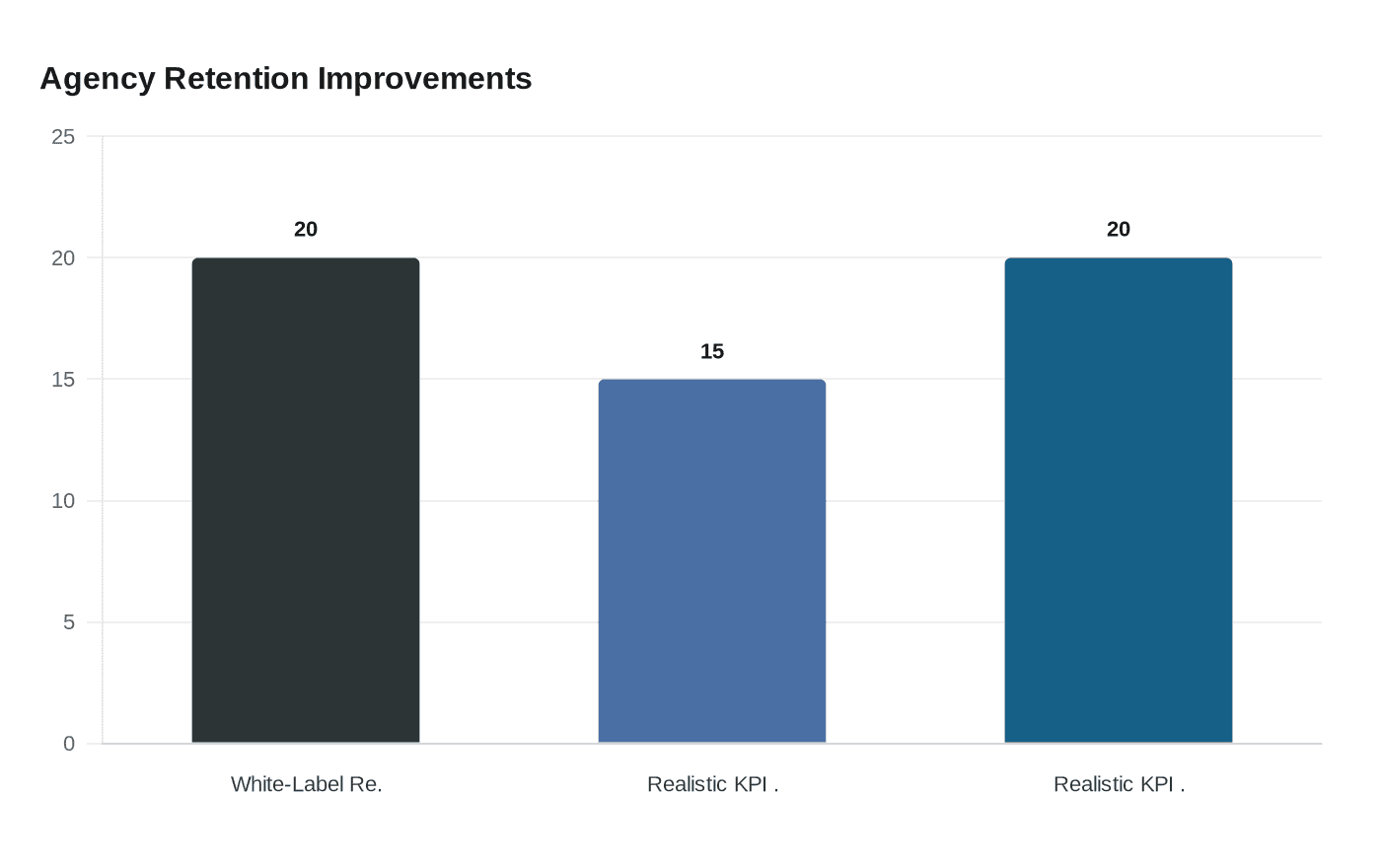
A KwickMetrics analysis of ecommerce and marketing agency retention patterns makes the case precisely: agencies that implement automated, white-labeled reporting with consistent narrative delivery reduce churn by up to 20 percent. That number is not a product of exceptional account management heroics. It is what happens when clients receive clear, branded, explainable evidence of progress on a predictable schedule. The insight loop tightens, and silent cancellations stop accumulating.
The "Silent Churn" Problem in SEO and Marketing Retainers
Silent churn is what happens when a client mentally checks out weeks before they formally cancel. They stop responding to check-ins, skip strategy calls, and quietly start shopping for an alternative. By the time they send the cancelation email, their decision was made a month ago. Research on agency retention patterns identifies communication breakdown as the principal driver, and SEO retainers are particularly exposed: the gradual, compounding nature of organic results frustrates clients who expect faster, more visible proof of progress.
Agencies that establish realistic KPIs during onboarding achieve 15 to 20 percentage point better retention than industry averages. But setting expectations at the start is not enough on its own. If your client cannot see, in plain language, that those KPIs are moving in the right direction, the original onboarding conversation fades and doubt fills the void.
Why a Branded Dashboard Changes the Perception Equation
There is a specific psychological mechanic at work inside a white-label dashboard that generic reporting tools cannot replicate. When clients log into a portal that carries your agency's logo, domain, and color scheme, they associate the analytics with your expertise, not with a third-party vendor. The KwickMetrics analysis is direct on this point: when agencies use white-label dashboards with custom domains, tailored KPI sets, and plain-language delivery, clients perceive the analytics as proprietary to the agency. That perception increases trust and materially reduces the likelihood of churn during periods of short-term performance fluctuation.
This matters most precisely when results dip. If a client logs into a generic third-party dashboard and sees a down month, their first instinct may be to question whether the agency is the right one. If they log into "Apex Analytics" — your branded portal — and see the same data framed inside a narrative that explains what changed, why it changed, and what action is being taken, the experience is entirely different. The dashboard is doing retention work around the clock without a single account manager writing an email.
The Reporting Cadence That Actually Prevents Cancellations
The cadence you set is a direct input to retention. Both over-reporting and under-reporting create friction. Flooding clients with daily data dumps teaches them to ignore updates; monthly-only reporting leaves too long a silence between proof points. The framework that works in practice is a two-layer rhythm.
Weekly reports should be lightweight and decision-focused: what changed this week, what it means, and whether any action is needed from the client. For SEO clients, the weekly pulse should surface Google Search Console clicks (not just impressions), keyword movement on targeted landing pages, and any shifts in local pack visibility for geo-targeted campaigns. These are the metrics clients actually reference when talking to their own stakeholders, and when they appear in your branded portal on a consistent schedule, they become the foundation of trust rather than a source of anxiety.

Monthly reports carry more depth. Scheduling monthly strategy calls to review progress, discuss results, and adjust tactics is the standard recommendation, and the monthly report should serve as the pre-read for that call. This is where cross-channel attribution earns its place: clients need to see the combined effect of organic search, paid media, and conversion rate optimization in one view, not fragmented across three separate tools. The narrative should answer three questions in plain language: what worked last month, what we are testing next, and what requires client input or sign-off. When those three questions are answered before the call starts, the conversation shifts from interrogation to collaboration.
The Metrics SEO Clients Actually Understand
One of the most common reporting mistakes agencies make is defaulting to technical SEO metrics, crawl errors, domain authority movements, and index coverage, without connecting them to business outcomes. Clients do not retain agencies because their crawl budget improved. They retain agencies because qualified leads increased and Google is now showing their business in the local pack for high-intent searches.
The metric set that reliably resonates with SEO clients in a white-labeled portal:
- GSC clicks segmented by landing page, not just total site traffic
- Qualified lead volume from organic, separated from paid and direct
- Landing page winners and losers tracked month over month with annotations explaining what changed
- Local pack visibility score for priority geo-terms, with a trend line, not just a snapshot
- Conversion rate by entry page, tied to CRO tests currently running or recently concluded
Annotation is the differentiator that most agencies skip. When a GSC clicks graph shows a spike in week three, a plain-language annotation that reads "Google featured snippet captured for [target term] on [date]" transforms a data point into a demonstration of expertise. Clarity must beat clutter, and the framework should turn metrics into stories that show clients the next steps.
Productizing the Reporting Layer: Essentials, Growth, Enterprise
The KwickMetrics recommendation on productization is the piece most agencies underinvest in: define two or three reporting packages and match delivery frequency and narrative depth to client tier. The practical structure is straightforward.
An Essentials tier covers weekly automated pulse reports and a monthly summary with core KPI tracking. This is appropriate for entry-level retainers where the relationship is transactional and the client primarily wants to see that key numbers are moving.
A Growth tier adds cross-channel attribution, annotated monthly narratives, and a dedicated review call with data pre-loaded into the branded portal. This is the tier where most mid-market agency clients belong and where the retention impact is sharpest.
An Enterprise tier delivers real-time dashboard access, custom KPI sets negotiated at onboarding, and quarterly business reviews with competitive benchmarking built into the report structure. Agencies managing large ecommerce accounts or multi-location local businesses will find this tier becomes a genuine differentiator when competing for renewals.
Productizing the reporting layer simplifies onboarding because clients self-select into a tier, and it scales recurring revenue operations because the automation does the heavy lifting above the line while account managers focus on insight and strategy.
Data Quality Is Not Optional
The KwickMetrics analysis includes a specific warning that is easy to overlook: bad or delayed data does not just fail to help retention; it actively accelerates churn. A client who logs into a branded portal and sees metrics that are three days stale, or that contradict what their own Google Analytics account shows, loses confidence in the entire reporting apparatus. Timestamp consistency across integrated data sources is a non-negotiable part of the technical setup.
This means ensuring that your Google Search Console integration, your ad platform connectors, and your CRM lead source data are all pulling on the same refresh cycle. A mismatch between GSC data pulled at 6am and paid media data pulled at 11pm creates discrepancies that clients, especially sophisticated ecommerce operators, will catch. When they do, the conversation shifts from "how is our campaign performing" to "can we trust these numbers," and that is a conversation that damages the relationship in ways that are difficult to repair.
The Upsell Advantage Nobody Talks About
The white-label reporting layer has a secondary business function that the retention conversation often obscures: it dramatically reduces friction when upselling additional services. When a client already lives inside your branded portal and has been trained to read your monthly narrative, introducing a new service is as simple as adding a new KPI block to the dashboard and referencing it in the next report. The portal is already trusted. The narrative voice is already familiar.
For agencies that rely on white-label suppliers for fulfillment delivery, this layer is what preserves the agency brand and lets the agency own the story. Clients do not need to know that link-building is fulfilled by a third party or that technical audits are handled by a specialist vendor. What they see is your logo, your annotations, and your narrative explaining what happened and what comes next. Retention is cheaper and more profitable than acquisition, with acquisition costs having risen 50 to 60 percent while improving retention can boost profits by up to 95 percent. The branded reporting portal is where that math pays off.
As fulfillment becomes more commoditized and automated, the agencies that protect margin and retain clients longest will be the ones that invested in making their reporting feel irreplaceable, not the ones that simply delivered the best rankings.
This article was produced by Prism’s automated news system from verified source data, official records, and press releases, then run through automated quality and moderation checks before publishing. The system is built and supervised by the people who set the standards it runs under. Read our full AI policy.
Did this article answer your question?