Founder shares 7-part system to scale SEO agencies past $35M
The real story is the operating system: niche SEO offers, proof-backed pricing, sprint delivery, and disciplined retention mechanics that keep agencies from founder bottlenecks.
1. The scale story starts with the machine, not the headline number
The useful lesson in this founder’s 7-part system is not the revenue milestone itself, it is the operating system underneath it. The model is built to make an SEO agency less dependent on the founder, more repeatable in delivery, and easier to sell to buyers who want clear outcomes instead of vague retainers. That matters in a market where productized SEO, founder-led growth, and measurable reporting are becoming the default language of serious agency operators.
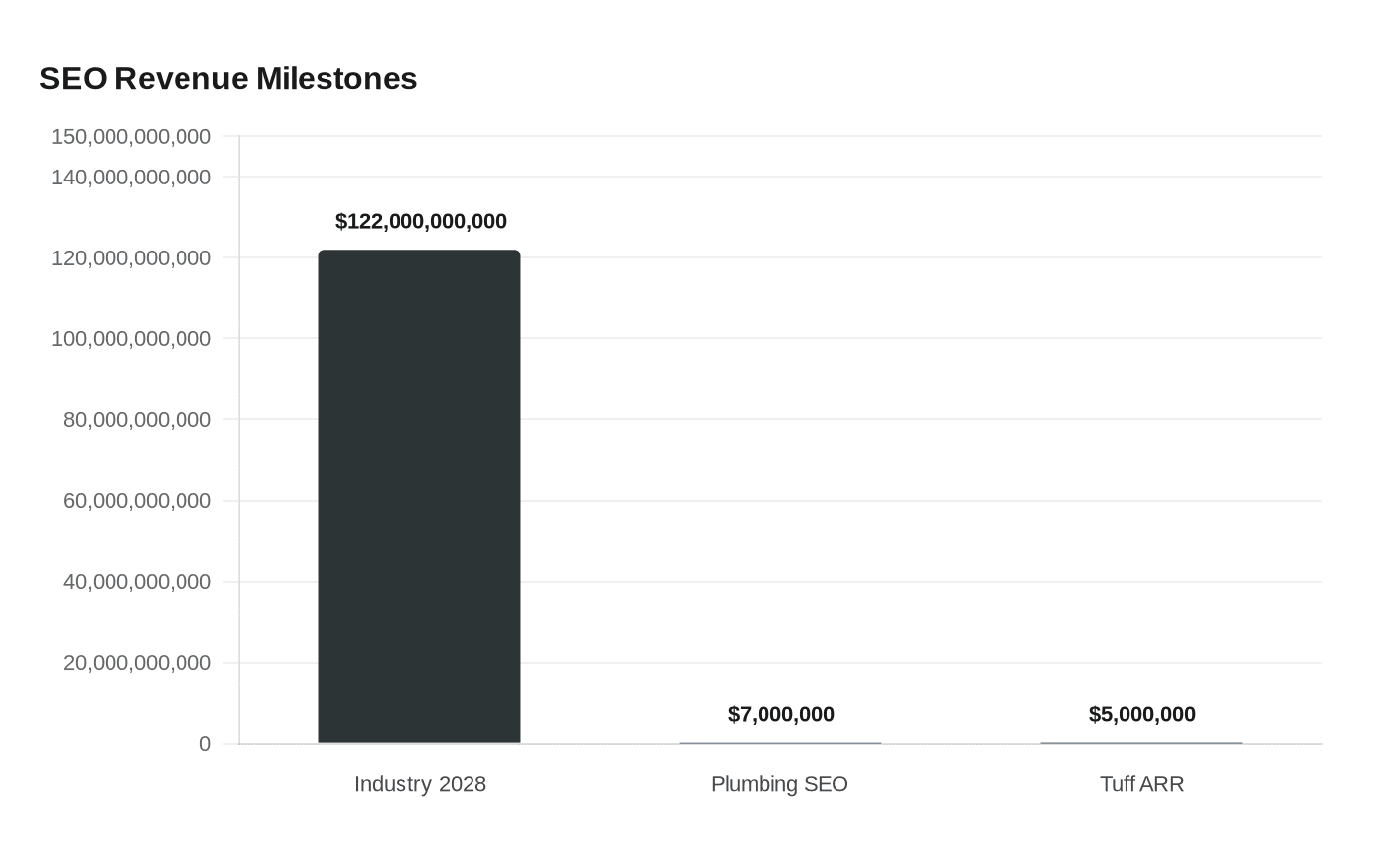
The pressure is easy to understand. A widely cited 2025 industry roundup projects the SEO industry could reach $122 billion in revenue by 2028, and that kind of upside attracts agencies that want more than one-off projects. The founders who are winning are not just chasing larger retainers; they are building systems that package expertise into fixed scopes, fixed deliverables, and fixed pricing.
2. Productized offers are the entry point, but the discipline is in the scope
The first move is productization: selling SEO as a defined offer instead of an open-ended promise. Productized service guides are blunt about what that means, fixed scope, fixed deliverables, fixed pricing, and a buyer who knows exactly what is included before the contract starts. Rocket Labs is a clean example of how this looks in practice, marketing SEO Sprints for SaaS companies as a simple, productized, no-retainer offer aimed at boosting signups and demos from Google.
That structure is attractive because it forces the agency to stop improvising. The trap, though, is that founders copy the packaging and forget the operational restraint that makes it work. Fixed offers only scale when the agency can say no to off-scope work, standardize the handoff, and keep the promise tight enough that the team can actually deliver it the same way every time.
3. Niching down makes the offer easier to sell and easier to prove
The second part of the system is focus. Niching down lets an agency use language, pain points, and case studies that feel specific instead of generic, which makes pricing power easier to defend. Josh Nelson is a strong example of that logic in action: he says he scaled Plumbing & HVAC SEO past $7 million in annual revenue, which is a very different selling motion than trying to be everything to every SMB.
This is also where agencies often miss the point. The niche is not just a marketing label, it is a filter for what the team learns, what the offer includes, and what proof gets reused in sales. When the positioning is narrow enough, every win compounds faster because the next prospect sees itself in the last one.
4. Case-study-led acquisition turns proof into a sales asset
The third piece is acquisition built around evidence, not broad claims. Recent Search Engine Journal and Search Engine Land coverage frames founder-led content and content distribution as a way to drive revenue and measure ROI, which fits the same pattern: people buy when they can see the mechanism. Search Engine Land’s May 15, 2026 guide to capturing SEO leads with smart outreach techniques and turning them into clients reflects how much the market now values practical proof over polished brand language.
Tuff’s growth story shows why this matters. In Semrush’s case study, Tuff started in April 2020 as a small four-person marketing agency with just one significant SEO client, then grew to more than 15 SEO clients, 35 employees, and over $5 million in ARR within three years. Semrush also notes that Tuff used SEO tools to streamline work for existing clients and analyze search landscapes for prospects, which is the kind of sales-supporting rigor founders should be looking at, not just pretty case-study design.
5. Sprint-based delivery keeps the work from turning into mush
Once the sale is won, the fifth part of the system is delivery in 30-day sprints. That cadence does two things at once: it gives clients a clear milestone to judge, and it prevents the team from slipping into the slow-burn drift that kills agency margins. Rocket Labs’ no-retainer SEO Sprints are a useful example because the offer itself is built around short, defined execution instead of an endless monthly maintenance bucket.
This is where many agencies fail after they copy the offer. The sprint format is not just a timeline, it is a forcing mechanism for prioritization. If the team cannot ship the right technical fixes, content moves, and linking opportunities inside a tight window, then the model breaks down and the founder gets pulled back into the weeds.
6. Reporting, guarantees, and proof have to work together
The sixth part is trust architecture: bi-weekly reporting dashboards, guarantee-backed offers, and pricing that rises with proof. Competitive pressure in the broader search market is pushing agencies to prove measurable outcomes faster, and recent commentary on enterprise SEO keeps emphasizing buy-in, business impact, and data-driven reporting. That is why bi-weekly dashboards are more than a cosmetic reporting cadence; they are a way to keep value visible before a client starts wondering what they are paying for.
Guarantees work for the same reason, but only if the agency has the discipline to support them with real process. Founders can copy the guarantee language and miss the underlying operating control, which is where the risk sits. If the work is not tracked tightly, and if the team cannot tie activity to outcomes, the guarantee becomes a liability instead of a sales advantage.
7. Retention mechanics and founder-led distribution make the model compound
The final part is what keeps the agency from depending on the founder forever: referral channels, content distribution, and systems that make the business easier to run without heroic involvement. Agency-growth resources increasingly stress reducing founder dependency and building agencies that are more predictable and exit-ready, which is exactly why the strongest SEO shops invest in process, not just hustle. Seven Figure Agency says Josh Nelson has helped 185+ agency owners scale and that those agencies have generated over $247 million in client results, while its case-study page claims 196 agencies scaled to seven figures and $1.2 billion-plus in combined revenue generated.
That broader ecosystem matters because it shows how mainstream productization has become. The strongest founders are not just selling SEO services, they are building repeatable acquisition, standardized delivery, and clear retention loops that let the business grow without constantly inventing itself again. In a market this large, the agencies that win are the ones that turn expertise into a system, then keep that system disciplined long enough for the numbers to follow.
This article was produced by Prism’s automated news system from verified source data, official records, and press releases, then run through automated quality and moderation checks before publishing. The system is built and supervised by the people who set the standards it runs under. Read our full AI policy.
Know something we missed? Have a correction or additional information?
Submit a Tip