Most SEO teams use AI, but lack formal operating systems
AI is already baked into SEO work, but agencies stall when it stays ad hoc. The edge comes from a documented operating system that protects quality, margin, and rankings.
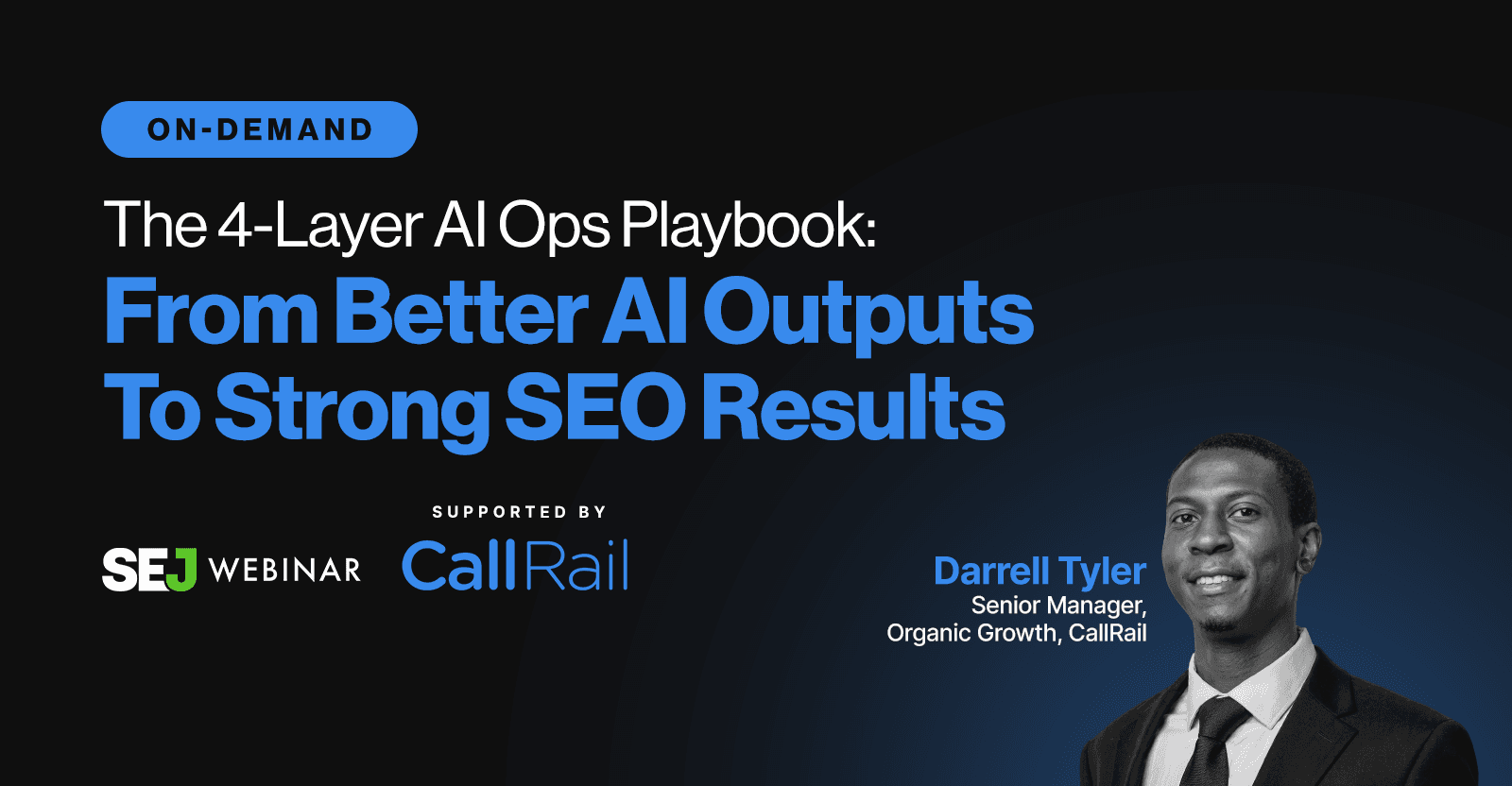
Most SEO teams already use AI to move faster. The real divide is not adoption, it is whether that usage sits inside a system with clear rules, checkpoints, and ownership, or inside a loose pile of prompts that disappears the moment the person who built it leaves. In Darrell Tyler’s read on the market, roughly 85% of the SEOs he talks to use AI for content in some form, but only about 12% have formal systems governing the work. That gap is where agencies win or lose margin, consistency, and trust.
Why AI feels productive, then starts to break
AI makes agencies look efficient right away because it compresses the first draft, the outline, the rewrite, and even parts of the brief. But speed without structure usually shows up later as messy handoffs, inconsistent tone, duplicated work, and content that scales faster than strategy. Search Engine Journal’s related coverage makes the risk plain: undocumented AI workflows create exposure because knowledge can vanish when one person leaves or moves teams.
That is the agency problem in one sentence. A team can publish more pages, more posts, and more client deliverables, yet still fail to improve outcomes if the process behind the output is never documented. When AI is treated like a private shortcut instead of a shared operating layer, quality control becomes personal memory instead of a repeatable business asset.
The four layers that turn prompts into an operating system
Tyler’s framework breaks the work into four layers: Knowledge, Workflow, Governance, and Application. For agencies, that is useful because each layer maps cleanly to something operational, not abstract.
At the knowledge layer, the goal is to decide what AI is allowed to learn from. That means grounding prompts in first-party data such as site search logs, customer questions, sales inquiries, and Google Search Console data. Google’s Search Console help materials position the platform as a source of search-performance and technical site-management information, which makes it one of the few inputs that can connect SEO work to real site behavior rather than guesses.
At the workflow layer, the job is to standardize the order of work. A brief should not be built one way by one strategist and another way by a contractor. If AI is part of the process, the agency needs a consistent path for research, drafting, optimization, and review so the output is comparable from account to account.
At the governance layer, the question is who approves what. That is where SOPs, QA checkpoints, and role ownership matter. If a strategist can generate copy with AI, but an editor, an account lead, and a technical reviewer all sign off on different risk points, the agency can use AI without turning client delivery into a free-for-all.
At the application layer, the agency decides where AI actually touches the work. That can include content briefs, audits, reporting summaries, keyword clustering, and content optimization. The important part is that every use case is documented, measured, and tied to a business result instead of being adopted because it feels modern.
What agencies should actually document
The most useful part of the playbook is that it forces teams to write things down. Agencies do not need a vague AI policy; they need operating instructions that a new hire can follow without reverse-engineering someone else’s process. That is what creates consistency across accounts and protects delivery when workload spikes.
A practical agency system should include:
- A source hierarchy for prompts and briefs, with first-party data named first
- A review checklist that catches hallucinations, off-brand phrasing, and thin answers
- Role ownership for strategist, editor, technical SEO, and account lead
- Rules for client-sensitive information, especially anything tied to reporting or sales data
- A log of which AI use cases are approved, which are experimental, and which are off-limits
This is where the margin story gets real. Once the process is documented, agencies spend less time reinventing briefs, rewriting inconsistent drafts, and fixing avoidable mistakes late in the cycle. That time gets pushed back into higher-value work, the kind that actually improves rankings and retention.
Why the 90-day validation plan matters
The webinar promo around Tyler’s framework includes a 90-day validation plan before scaling across a team, and that detail is more important than it sounds. Agencies often make the mistake of rolling AI across every account at once, then discovering too late that the process works only when one senior operator is babysitting it.
A 90-day rollout gives teams room to prove the system before they make it policy. In practice, that means testing the framework on a limited set of briefs, audits, or content programs, then checking whether the output is faster, cleaner, and easier to QA. If the agency cannot show better throughput without sacrificing quality, the system is not ready to expand.
A disciplined rollout also helps leaders separate novelty from ROI. If the framework is working, it should reduce revision cycles, improve consistency across writers, and make optimization decisions easier to repeat. If it only makes more content, it is probably just accelerating the same old problems.
Why CallRail’s history matters
CallRail brings useful credibility to this conversation because it says it has been developing AI-based tools since 2016. Its AI page says those tools are designed to help businesses get more from marketing by analyzing call data and uncovering revenue opportunities. That matters because the operating model comes from a company that has spent years turning data into action, not from a team that discovered AI last quarter and renamed the prompt folder.
The timing also fits the search market agencies are operating in now. In December 2024, CallRail announced AI-powered search engine attribution capabilities, a sign that search discovery and measurement are changing fast. Agencies can no longer treat AI as a side experiment when both the content workflow and the attribution layer are shifting at the same time.
The agency takeaway
The teams that pull ahead will not be the ones using AI the most casually or the loudest. They will be the ones that turn AI into a documented operating system with defined inputs, repeatable workflows, named owners, and QA that protects the client experience. That is how agencies keep quality steady, defend margins, and produce SEO work that scales without dissolving into noise.
This article was produced by Prism’s automated news system from verified source data, official records, and press releases, then run through automated quality and moderation checks before publishing. The system is built and supervised by the people who set the standards it runs under. Read our full AI policy.
Know something we missed? Have a correction or additional information?
Submit a Tip