Semrush says AI search rewards content built around buyer situations
AI search is rewarding pages built around buyer situations, and Semrush says CEP-led content can lift citations, share of voice, and agency visibility.
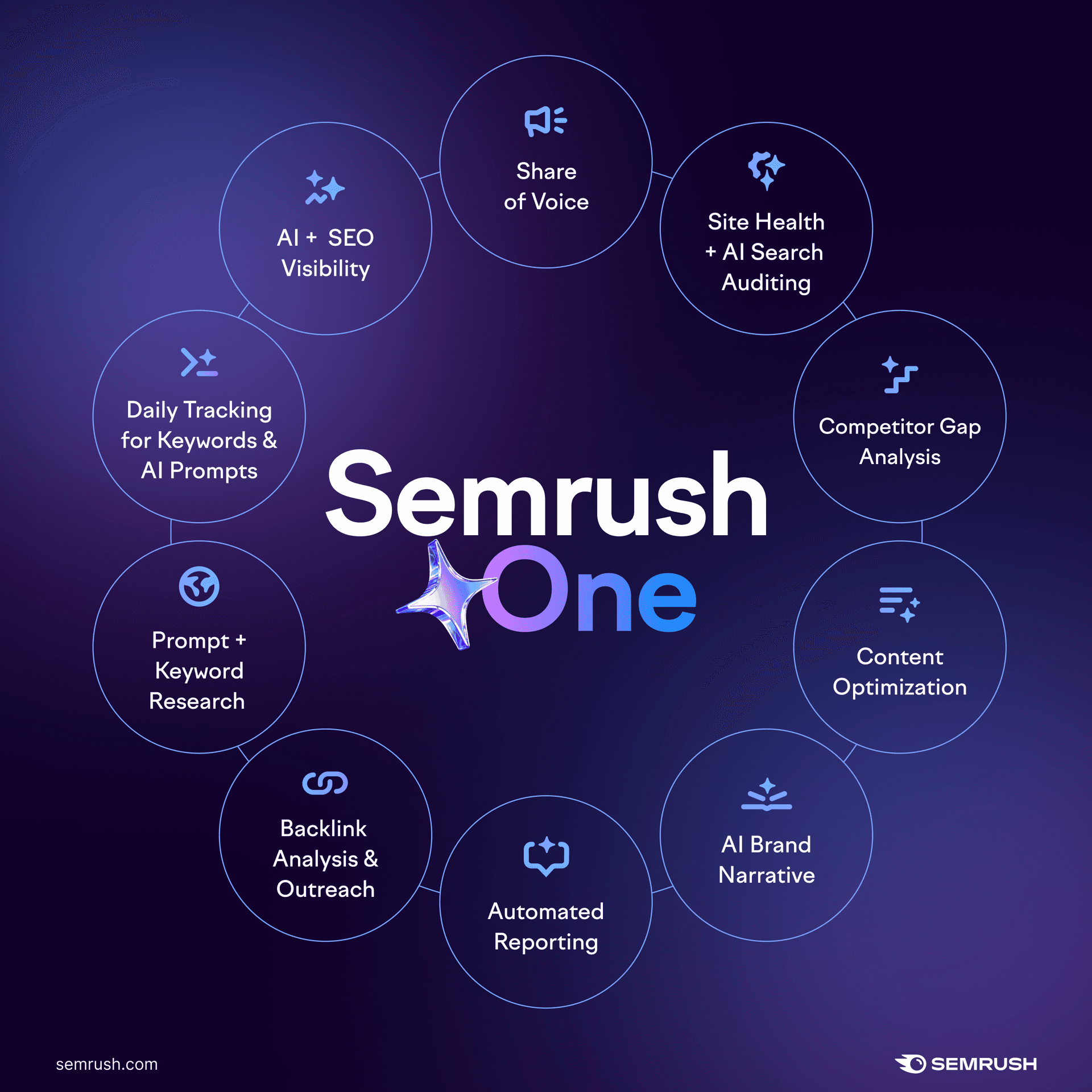
AI search is changing the way buyers express need, and that is a real opening for agencies that know how to build around it. Semrush’s argument is simple: stop writing only for keywords and start planning around category entry points, the moments when a buyer realizes a problem, thinks about a category, and starts recalling brands. In practice, that shift can turn content strategy into a repeatable service offering, not just a one-off optimization exercise.
Why buyer situations now matter more than keyword strings
Category entry points, or CEPs, are not a new invention for search teams. In marketing science, they are the needs, occasions, or situations that bring a category to mind, and the framework comes from Byron Sharp and Jenni Romaniuk at the Ehrenberg-Bass Institute for Marketing Science. Sharp’s book *How Brands Grow*, published in 2010, made the idea central to modern brand thinking by tying it to mental availability, the notion that brands win when they are easy to think of in more buying situations.
That matters because AI search does not force people to speak in tidy keyword phrases. Buyers can describe their problem in plain language, and AI systems can answer based on the underlying need rather than a rigid query string. For agencies, that means the old habit of building briefs around a target phrase alone is starting to look thin. If the content only mirrors a search term, it can miss the moment when the buyer is still diagnosing the problem.
The practical shift from keywords to need states
Semrush’s example is the kind of situation agencies actually see in client accounts. A team notices organic traffic dropping, but it does not yet know whether the cause is an algorithm change, AI Overviews, or content decay. The CEP is not the phrase itself. It is the situation: “something is wrong with our traffic and we need to understand why.”
That distinction is where CEP-led planning becomes useful. Instead of asking what exact query a person types, the brief starts with what moment, pain point, or business trigger they are in. For agencies, that gives content planners a cleaner way to connect search behavior to real-world needs, which is especially important when AI systems are synthesizing answers across multiple signals rather than rewarding a single keyword match.
This also creates a better handoff between classic SEO work and AI visibility work. The same CEP framework can shape the topic choice, the headline, the internal links, the support copy, and the performance model. If the buyer situation is the organizing principle, content stops being a page-level asset and becomes part of a larger path to discovery.
What Semrush’s tests showed
Semrush did not stop at theory. It tested whether anchoring content to CEPs changed how AI systems surfaced its work, and the results were strong enough to matter. One CEP-anchored article was cited every week for more than four months. Another improved share of voice in its target topic cluster from 15% to 26% in the week after publication.
Those are the kinds of outcomes agencies should pay attention to because they speak to visibility, not just rankings. A page that gets cited repeatedly inside AI responses has a different kind of distribution power than a page that simply lands somewhere on page one. A jump in share of voice inside a topic cluster also suggests the content is influencing how the category gets represented across a broader set of related pages and queries.
For agency leaders, the lesson is not that every post will perform this way. It is that CEP-led work can be packaged as a measurable method for improving AI-era discovery. That is more compelling than promising a vague lift in “content quality.”
Why the Google shift made this urgent
The timing is not accidental. Google announced at I/O in May 2024 that AI Overviews were rolling out to everyone in the United States, and it said people had already used AI Overviews billions of times in Search Labs before that broader rollout. Google later said AI Overviews were gradually becoming available to more users, languages, and regions, and it also said AI Mode in Google Search was rolling out in the United States in 2025.
That rollout changes the stakes for agencies because it expands the number of searches where an AI layer can shape what users see first. Industry reporting in 2025 also showed that AI Overviews can meaningfully affect click-through behavior, which makes citation visibility more valuable even when traditional clicks soften. In that environment, being present in the answer itself can matter as much as, or more than, sitting on the results page.
For clients, that means a page built around a buyer situation is not just a branding play. It is a practical response to a search environment where discovery, synthesis, and click behavior are all moving at the same time.
How agencies can turn CEPs into a service
This is where the opportunity gets commercial. Agencies can package CEP-led planning as a repeatable offer by treating it as a workflow, not a theory session. The strongest version usually looks like this:
- Research buyer triggers from customer interviews, sales calls, support logs, and account notes.
- Group those triggers into real-world situations, not just keyword buckets.
- Map each situation to a content brief that answers the buyer’s problem in natural language.
- Build internal linking so the page sits inside a topic cluster, not as a one-off asset.
- Align messaging across landing pages, articles, and nurture assets so the same buyer situation gets reinforced.
- Measure performance beyond rank alone, including citations, share of voice, and branded recall inside AI surfaces.
That is a useful sales story for agencies because it makes CEP work feel concrete. It is not “we do AI SEO.” It is “we help you show up when buyers recognize a category need and ask for help in the way they actually speak.”
The competitive advantage hiding in plain sight
The broader takeaway is bigger than content optimization. Agencies that understand category entry points can help clients move from search terms to business situations, which is exactly where AI search is heading. That gives account teams a sharper way to spot pain points, content strategists a better way to write briefs, and growth leaders a more credible way to sell AI-era search as a competitive advantage.
The old keyword-first model still has a place, but it is no longer enough on its own. In a search landscape shaped by AI Overviews, AI Mode, and natural-language queries, the best content is the content that matches the moment a buyer realizes a category might solve a problem.
This article was produced by Prism’s automated news system from verified source data, official records, and press releases, then run through automated quality and moderation checks before publishing. The system is built and supervised by the people who set the standards it runs under. Read our full AI policy.
Know something we missed? Have a correction or additional information?
Submit a Tip