Semantic programmatic SEO shifts focus from volume to architecture
Semantic SEO scales when pages are designed like a map, not a pile. For agencies, the win is turning authority, links, and brand context into a reusable system.
From page volume to information architecture
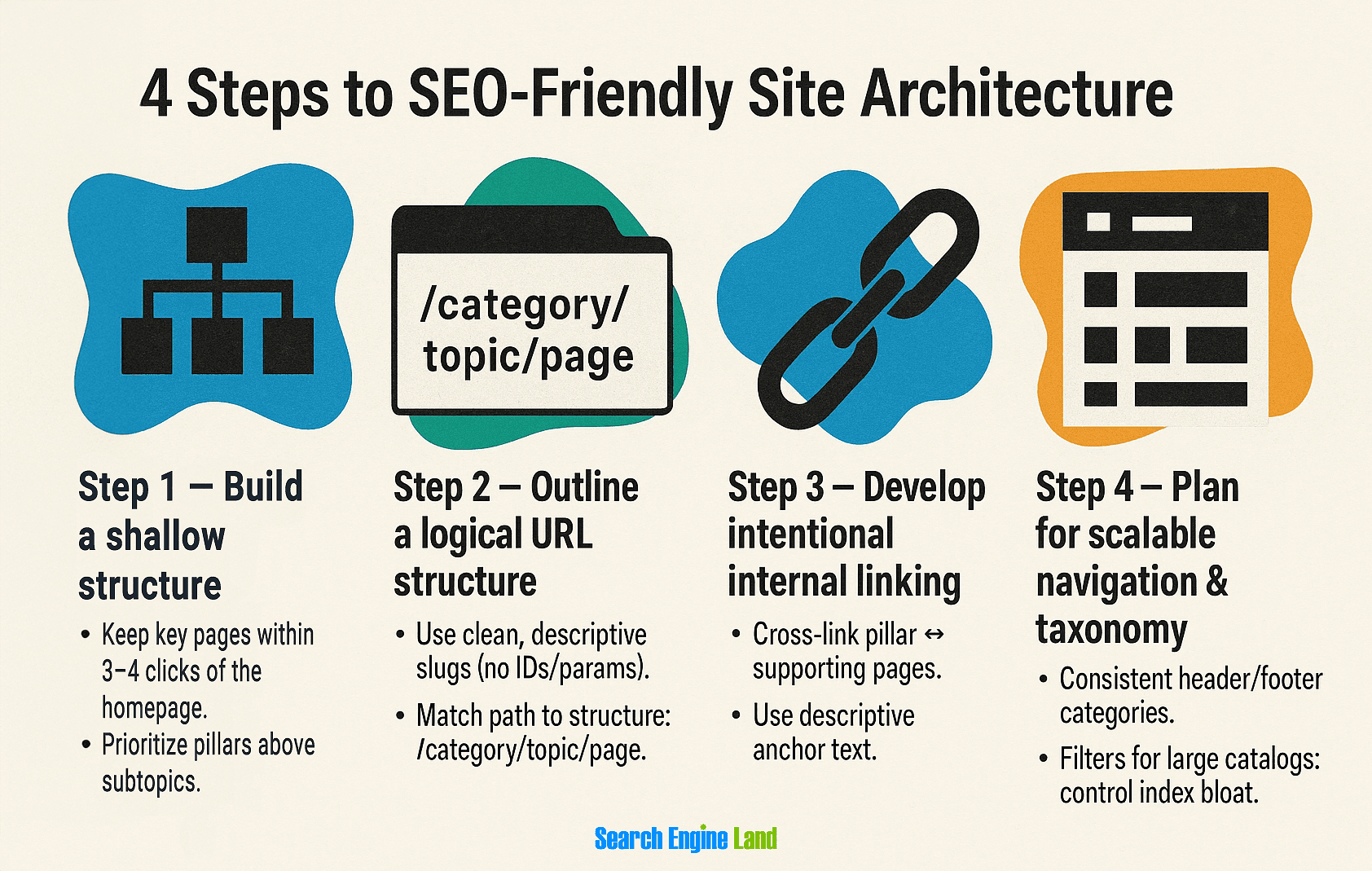
Semantic programmatic SEO works when you treat content as a connected system, not a pile of templates. Search Engine Land’s blueprint makes the core point clearly: the goal is to map authority, embed brand context into AI, and build a semantic linking system that scales without orphan pages. That is a sharp break from the old assumption that success comes from generating thousands of near-duplicate pages and hoping search traffic follows.

For agencies, that shift changes the business model as much as the workflow. Programmatic SEO still matters because it can automate content at scale and capture long-tail keywords, but scale only pays off when the pages reinforce one another. A page that wins a narrow query but sits alone on the site may attract visits without strengthening the brand, the topic cluster, or the conversion path behind it.
How to know whether a client is a fit
The best candidates for semantic programmatic SEO are the ones with real entity relationships and enough demand to justify a structured content system. That usually means a large inventory, a broad service map, a catalog of locations, products, use cases, or comparisons, or a site portfolio that already contains overlapping themes. If the content can be organized around hubs and subtopics, it can be scaled without turning into thin, disconnected pages.
A fit check is less about whether a client wants “more pages” and more about whether the site can support a clear topical hierarchy. Look for these signals:
- The brand has meaningful categories, subcategories, or repeated patterns that can be modeled.
- Search demand exists across related queries, not just one-off keywords.
- The business can define what deserves a hub, what belongs as a supporting page, and where authority should concentrate.
- Internal linking can be designed intentionally instead of patched in after publication.
When those conditions are missing, programmatic output tends to drift toward sameness. Search may still index the pages, but the site loses the semantic structure that helps both users and search systems understand why those URLs exist.
Why Google’s guidance matters here
Google’s own documentation supports this architecture-first approach. Its ranking systems are designed to prioritize helpful, reliable, people-first content, which makes mass-produced low-value pages a bad bet from the start. Google also says spam policies are designed to prevent techniques that deceive users or manipulate search systems into ranking content highly, a warning that applies directly to search-engine-first publishing patterns.
The practical upside of semantic architecture is that it aligns with the signals Google says it uses to understand a site. Google Search Central says internal links and anchor text help people and Google make sense of a site and find other pages on it. It also says structured data helps Google understand page content and can support rich results. Sitemaps, meanwhile, help prioritize crawling of important pages. Taken together, those are not housekeeping details. They are the mechanics of visibility at scale.
Build the system before you build the pages
The agencies that do this well start with a content map, not a content queue. They decide which entity deserves the hub, which modifiers belong in the cluster, and how the pages should point to one another. Search Engine Land’s blueprint treats that as the central design problem, and that is the right mental model for any agency serving multiple clients or managing large site portfolios.
A durable system usually includes three layers. The first layer is the hub, where the brand’s main authority on a topic lives. The second layer is the supporting content, which expands on subtopics, variations, comparisons, or use cases. The third layer is the connective tissue: internal links, descriptive anchor text, and structured data that tell Google how the pieces relate.
That structure matters because it creates authority flow. Instead of publishing pages in isolation, you are building a network where each new URL strengthens the whole. The result is easier for search engines to interpret and easier for AI systems to connect to the brand context they need.
Where semantic programmatic SEO goes wrong
The thin-page trap usually starts with speed. A team builds templates, inserts variables, and launches pages before the site has a clear semantic model. The pages may technically exist, but they become orphan pages, or near-orphan pages, that never receive enough internal support to matter. They can capture a few long-tail queries, yet fail to reinforce topical authority or downstream conversion.
That is the real risk behind the old “more pages = more traffic” mindset. Volume without structure can make a site look busy while leaving its most valuable pages under-supported. Search Engine Land’s framing is useful because it pushes agencies to measure whether a page adds meaning to the system, not just whether it adds another URL.
To avoid that failure mode, keep the publishing logic strict:
- Every template needs a clear relationship to a hub.
- Every supporting page needs a reason to exist beyond keyword substitution.
- Every internal link should make the site easier to understand, not just easier to crawl.
- Every page should reflect the brand’s actual expertise, not generic text that could belong to anyone.
What scalable delivery looks like in practice
The promise of semantic programmatic SEO is not just better rankings. It is more repeatable delivery. Once you have a semantic framework, you can reuse the same architecture across clients without flattening their individuality. That is especially valuable for agencies offering packaged content systems or white-label SEO services, because the method becomes scalable without becoming disposable.
A strong operating model pairs automation with editorial restraint. The automation handles structured assembly, page generation, and the repeatable parts of publishing. The editorial layer decides which topics deserve expansion, where the authority should sit, and how the brand voice and context should survive the process. That combination is what makes programmatic SEO useful rather than merely fast.
In the end, semantic programmatic SEO is not a content factory with smarter templates. It is information design for search, where authority, internal links, structured data, and sitemap priorities all work together. When the architecture reflects real search demand and real entity relationships, scale stops being a volume problem and becomes a systems advantage.
This article was produced by Prism’s automated news system from verified source data, official records, and press releases, then run through automated quality and moderation checks before publishing. The system is built and supervised by the people who set the standards it runs under. Read our full AI policy.
Did this article answer your question?