Semrush tackles AI search attribution gap with new measurement framework
AI search is moving influence upstream, and Semrush's new framework says agencies need visibility, assisted discovery, and revenue signals to prove it.
The blind spot is the story
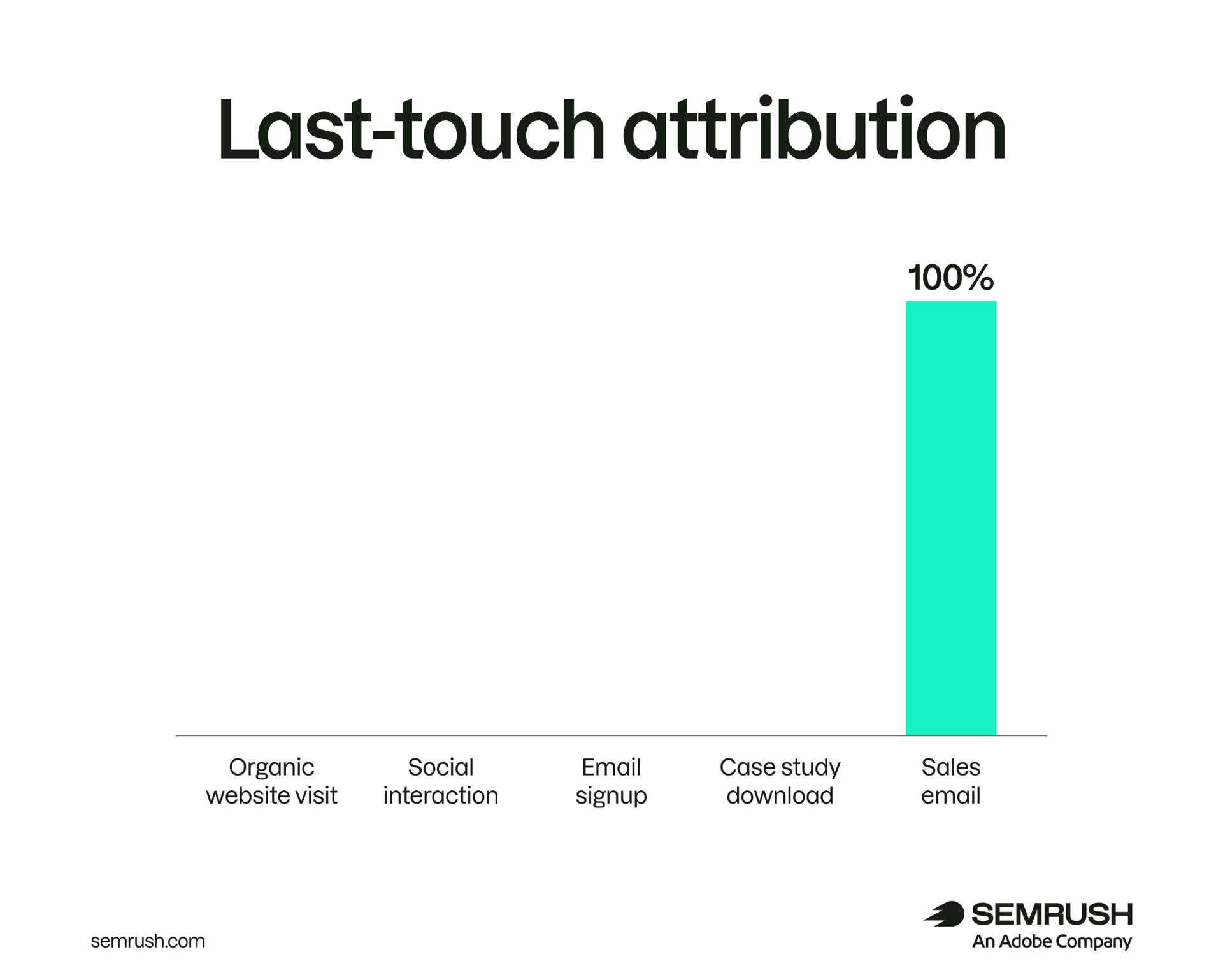
Agencies are already losing credit for work they are doing well. AI systems are shaping buying decisions inside ChatGPT, Perplexity, Google AI Overviews, and other agentic search tools before a user ever lands on a tracked session, which means standard attribution can miss the influence layer entirely. Semrush’s point is blunt: the gap is not just a reporting annoyance, it is the distance between what actually changed a customer’s mind and what your stack can record.

That is why this matters now. Search is no longer only about the click path you can trace. It is increasingly about the answer path you cannot see, and if you are still selling clients on rankings and last-click conversions alone, you are already underselling the real value of your work.
Why the gap is widening so fast
The pressure is coming from product rollout, not speculation. Google said AI Overviews started rolling out to everyone in the U.S. on May 14, 2024, and later expanded them to more than 100 countries and territories. Google also said AI Overviews had reached more than 1 billion global users every month by October 28, 2024, after people had already used them billions of times in Search Labs.
OpenAI pushed the same trend further with ChatGPT search, launching it on October 31, 2024, expanding it to all logged-in users on December 16, 2024, and then making it available to everyone in regions where ChatGPT is available on February 5, 2025. Perplexity, meanwhile, describes itself as a free AI-powered answer engine that provides real-time answers. Put those pieces together and the pattern is obvious: AI search is no longer a side experiment. It is becoming a mainstream discovery layer.
That shift matters because people are using these tools differently than they used traditional search. Google said users were asking longer questions and exploring more complex topics, which is exactly where standard web analytics can get fuzzy. A buyer may compare options, narrow a shortlist, and build preference inside an AI interface long before your dashboard shows a measurable visit.
What Semrush is really trying to fix
Semrush is treating this as a measurement problem that needs a measurement framework, not a single magic metric. The company launched an AI Visibility Index in 2025 to benchmark brand performance across AI-powered search platforms, and that is the right instinct. If AI systems are now part of discovery, then visibility itself has to become measurable in more than one place.
Its broader argument is that the future of reporting cannot stop at traffic and conversions. Agencies need a fuller story that includes AI interactions, assisted discovery, and downstream revenue signals. Semrush’s own 2025 AI Overviews study, which analyzed more than 200,000 keywords with Datos, reinforced why this is changing quickly: by October 2025, commercial and transactional queries were rising among those triggering AI Overviews.
That is the important pivot. AI search is not only affecting top-of-funnel education queries anymore. It is moving into commercial territory, where missed attribution can distort budget decisions and make the wrong channel look weak.
A practical way to think about the three tiers
Semrush’s three-tier measurement framework makes the most sense when you treat it as a stack, not a scoreboard. You are trying to see whether your brand shows up in AI environments, whether that exposure helped create intent, and whether that intent later shows up in revenue.
1. Track AI visibility where decisions start
The first job is simple: know whether your brand is appearing in AI-powered answers at all. That is the gap Semrush’s AI Visibility Index is built to address, because a brand that never appears in an AI response has no chance of influencing the buyer there. Agencies should be treating this as a core visibility layer, much like they once treated rankings as the starting point for SEO reporting.
2. Measure assisted discovery, not just the final click
The second job is to connect those AI touchpoints to later behavior. This is where standard analytics fall short, because they are built to capture visits, sessions, and conversions, not the quiet influence that happened beforehand. If a user first encountered your client in an AI answer engine, then searched branded later or came back direct after comparing options, the old model often gives the credit to the wrong place.
3. Tie the story to revenue signals executives understand
The third job is to show business impact in language clients can use in a meeting. Semrush’s framing around downstream revenue signals is important here, because executives do not buy attribution theory, they buy growth. An executive-friendly dashboard has to show how AI visibility and assisted discovery connect to outcomes the client already cares about, such as qualified demand and closed revenue.
How agencies should reset client expectations
The smartest agencies are going to stop promising perfect attribution and start selling a more complete reading of demand. That means telling clients, early and clearly, that AI influence may be real even when it does not show up neatly in last-click reporting. If the brand is being surfaced inside AI search but the website session is delayed, fragmented, or never captured, the dashboard will undercount the work by design.
This is also where cross-channel reporting becomes a real service line instead of a nice-to-have. Agencies need to combine AI visibility measurement, conventional search and site analytics, and executive dashboards that translate that messy middle into something leaders can act on. The point is not to pretend every interaction is traceable. The point is to build enough signal around the invisible layer that the client stops making budget decisions from incomplete data.
Why this becomes a bigger agency opportunity
Adobe’s move tells you how central this space has become. The company announced on November 19, 2025 that it would acquire Semrush in an all-cash transaction for about $1.9 billion, and completed the acquisition on April 28, 2026. That is a strong signal that AI-era visibility is no longer a niche SEO problem. It is becoming part of the enterprise marketing stack.
For agencies, that raises the bar and the opportunity at the same time. Measurement services have to evolve from rankings and traffic to visibility, influence, and assisted conversion. The firms that can explain how AI search shapes demand before the click will look a lot more valuable than the ones still arguing over a single last-click report that misses half the journey.
This article was produced by Prism’s automated news system from verified source data, official records, and press releases, then run through automated quality and moderation checks before publishing. The system is built and supervised by the people who set the standards it runs under. Read our full AI policy.
Did this article answer your question?


