Semrush urges on-page SEO updates for AI-driven search visibility
Semrush’s checklist treats on-page SEO as AI-search infrastructure, where clear structure, intent match, and machine-readable signals now matter as much as rankings.
The checklist is bigger than rankings now
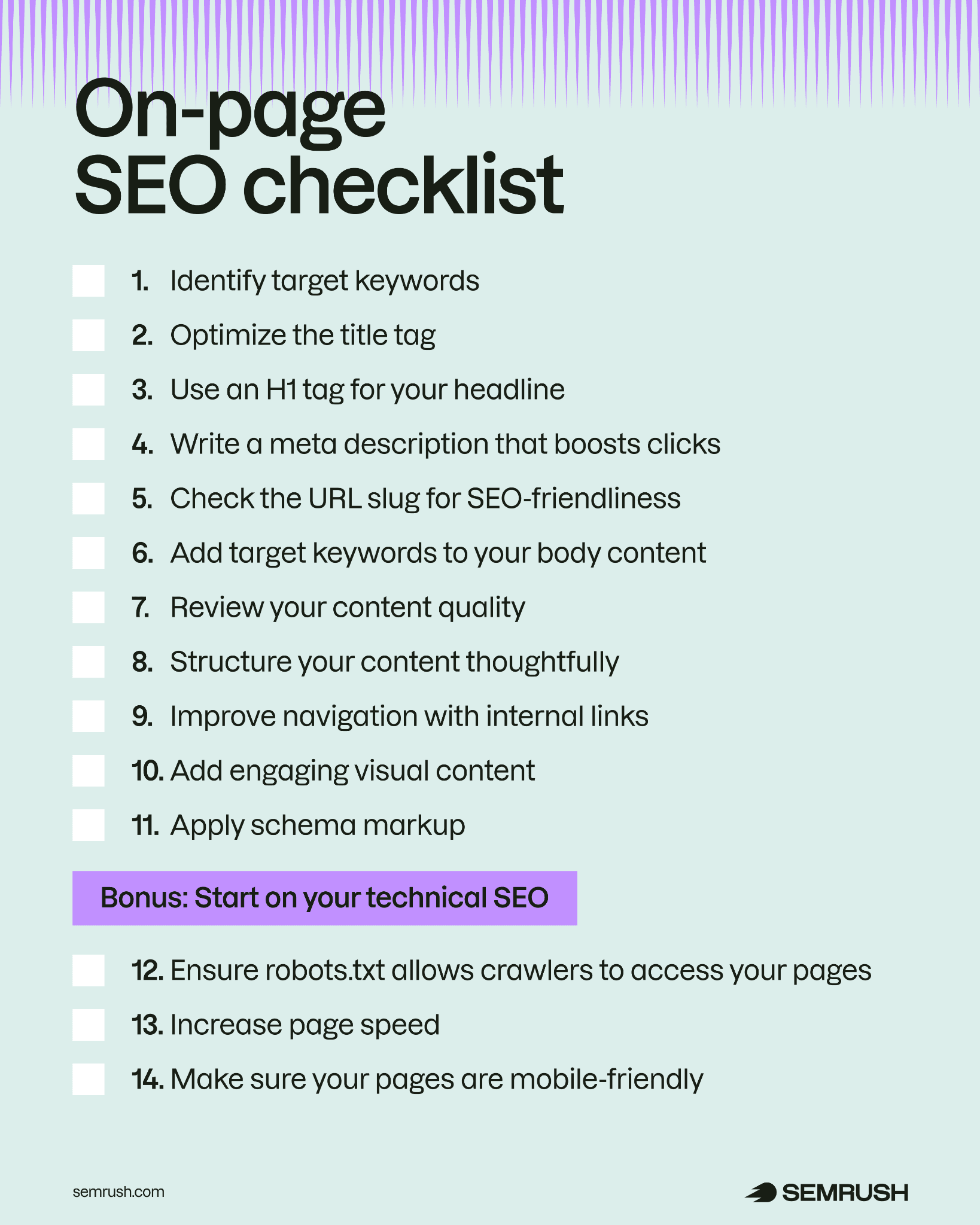
Semrush is pushing on-page SEO as something closer to an operating system for visibility than a cleanup task for title tags and headings. That shift makes sense, because Google keeps saying the best SEO practices still matter for AI features like AI Overviews and AI Mode, and its ranking systems are still built to favor helpful, reliable, people-first content on the page level.

For agencies, that changes the job. You are not just trying to get a page to rank; you are trying to make it easy for AI systems to understand, slice up, cite, and reuse. That matters more every month as AI Overviews scale up, with Google saying they passed 1 billion monthly users in October 2024, 1.5 billion monthly users at I/O 2025, and later 2 billion monthly users. Google has also said those AI Overviews can show prominent links to relevant websites and that testing showed those design changes increased traffic to supporting sites.
What still moves results in 2026
A lot of classic on-page work has become table stakes. You still need a clean title, a sensible meta description, and headings that break the page into readable chunks. But the work that actually moves the needle now is the work that improves how machine systems read the page, not just how humans skim it.
The strongest levers are the ones Semrush puts at the front of the checklist: picking the right keyword, matching the page to the intent behind it, and covering the topic deeply enough that an AI system can treat it as a useful source. That means keyword volume is only one input. Personal keyword difficulty matters too, because agencies need to know whether a client site can realistically compete for a term, not just whether the term looks attractive in a dashboard.
Intent is the other filter that separates useful work from noise. Semrush breaks it into informational, navigational, commercial, and transactional buckets, which is exactly how a good agency QA process should think about a page before it goes live. If the query is informational, the page needs explanation and depth. If it is transactional, the page needs a path to action, not a classroom lecture.
Why AI search rewards clean structure
The easiest way to understand AI search is through query fan-out. An AI system takes a user question and breaks it into subtopics, then looks for pages that cover those subtopics clearly and thoroughly. That is why descriptive headings, natural keyword usage, and strong topical coverage matter so much now. A page that is vague, thin, or stuffed with fluff is harder for a system to extract cleanly.
This is also where on-page QA becomes more operational than creative. Agencies that want repeatable results need to check whether the page answers the obvious follow-up questions, not just whether it contains the target phrase. If the article is about product pricing, it should also cover comparison points, use cases, and practical constraints. If it is about a service, it should explain scope, deliverables, and the decision criteria a buyer cares about.
Google’s own guidance reinforces that logic. Its ranking systems are still designed to prioritize helpful, reliable, people-first content, and they work on the page level. That means the page itself still does the heavy lifting, even when the surface experience is an AI-generated answer.
How agencies should run the QA process
A repeatable on-page QA workflow keeps teams from drowning in low-impact audits. The best version is simple, strict, and easy to apply across multiple client accounts.
1. Start with the query and intent.
Confirm the target keyword, the likely search intent, and whether the page is supposed to inform, convert, compare, or capture navigation.
2. Map the subtopics before editing.
Use the query fan-out idea as a checklist. Ask which related questions the page should answer so it can stand up as a source for AI-generated responses.
3. Check the structure for machine readability.
Headings should be descriptive, sections should have a clear logic, and the copy should use natural keyword language without sounding forced.
4. Verify the technical signals.
Structured data helps Google understand page content and can enable richer search features, but it has to be representative of the main content and follow technical and quality guidelines if you want rich-result eligibility.
5. Review the snippets and title treatment.
Google says snippets are automatically created from page content, and title links are also determined from multiple sources, even though best practices can influence them. That means agencies should improve the actual page content first, then clean up the title and meta description so the page gives search systems better raw material.
That process is useful because it scales. One editorial checklist can be applied across dozens of client accounts, which means faster onboarding, fewer QA misses, and a more consistent standard between writers, editors, and strategists.
The parts people still get wrong
The biggest mistake is treating on-page SEO as a one-time polish pass. Agencies often spend too much time adjusting low-impact details and too little time fixing the things that affect extraction and interpretation. A perfect title tag will not save a page that does not match the search intent or fails to cover the topic comprehensively.
Another common miss is overrelying on metadata while ignoring the main body. Google says snippets are created from page content, and title links are assembled from multiple sources. In practice, that means the content itself is doing more work than many teams think. If the page is thin, confused, or structurally messy, the search system has less to work with.
Structured data is another area where teams can waste time by thinking of it as decoration. It is not decoration. It is a signal that helps Google understand what the page is about, and when it is used properly it can unlock richer presentation in search. Used carelessly, or on content that does not match the markup, it does nothing useful.
Why this matters for client work
The business case is simple: AI-mediated search is not a side channel anymore. With AI Overviews now reaching massive audiences and showing links back to supporting pages, agencies need on-page work that serves both ranking and citation. If the page is clear, complete, and machine-readable, it has a better shot at being surfaced in those new layers of discovery.
That is the practical value of Semrush’s checklist. It is not just a refresher on old SEO basics. It is a playbook for building pages that can survive the old ranking game and the new AI extraction layer at the same time. Agencies that turn that into a repeatable QA process will move faster, make fewer mistakes, and deliver the kind of on-page work that still matters when the search result is no longer just a blue link.
This article was produced by Prism’s automated news system from verified source data, official records, and press releases, then run through automated quality and moderation checks before publishing. The system is built and supervised by the people who set the standards it runs under. Read our full AI policy.
Did this article answer your question?