SEO Agencies Must Embrace AI Tools or Risk Irrelevance in 2026
AI is rewiring how search engines rank content, and SEO agencies still running keyword-first playbooks are already falling behind. Here's the operational roadmap for 2026.
The warning is blunt: agencies that fail to integrate AI tools into their workflows are not just leaving money on the table, they are actively becoming irrelevant to clients who are watching their rankings shift in real time. The shift isn't theoretical. AI-first search engines are already rewriting ranking logic, and the gap between agencies that have adapted and those still relying on legacy keyword stimulation tactics is widening fast.
Strategist Sethu Malaravan laid out this reality in a detailed practitioner piece published on the Leadtap.ai blog, framing the AI search transition as both a survival test and a genuine growth opportunity for forward-thinking agencies. The argument is not that AI replaces SEO. It's that AI fundamentally changes which SEO capabilities are worth paying for.
How AI Is Changing the Ranking Game
The core change is in how search engines evaluate and surface content. Modern AI-powered engines no longer reward pages that are optimized for keyword density and link volume in isolation. They are designed to understand user intent, synthesize authoritative answers, and serve them through voice, visual, and conversational interfaces that often bypass traditional blue-link results entirely. LLM-based systems have been shown to filter down to roughly 117 documents from tens of thousands when formulating answers, which means the competition for visibility is increasingly winner-take-all.
Voice search, Google Lens-style visual queries, and multi-turn conversational sessions are not future-state scenarios. They are current user behavior. Agencies that have not yet audited their clients' content for these formats are already behind. The technical expectations for appearing in AI-generated answers, featured snippets, and position-zero results are categorically different from what ranked a page effectively three years ago.
The New Technology Stack Agencies Need
Getting serious about AI means investing in the right tools, not just licensing one AI writing assistant and calling the work done. Malaravan's guidance points to three distinct capabilities that every competitive agency needs in its stack.
- Predictive analytics: Tools like AWR's forecasting engine use historical ranking data and SERP volatility modeling to anticipate topical demand before it peaks. Agencies that can tell a client "this topic is going to surge in 60 days" are selling a fundamentally different and higher-margin product than agencies reporting on what already happened.
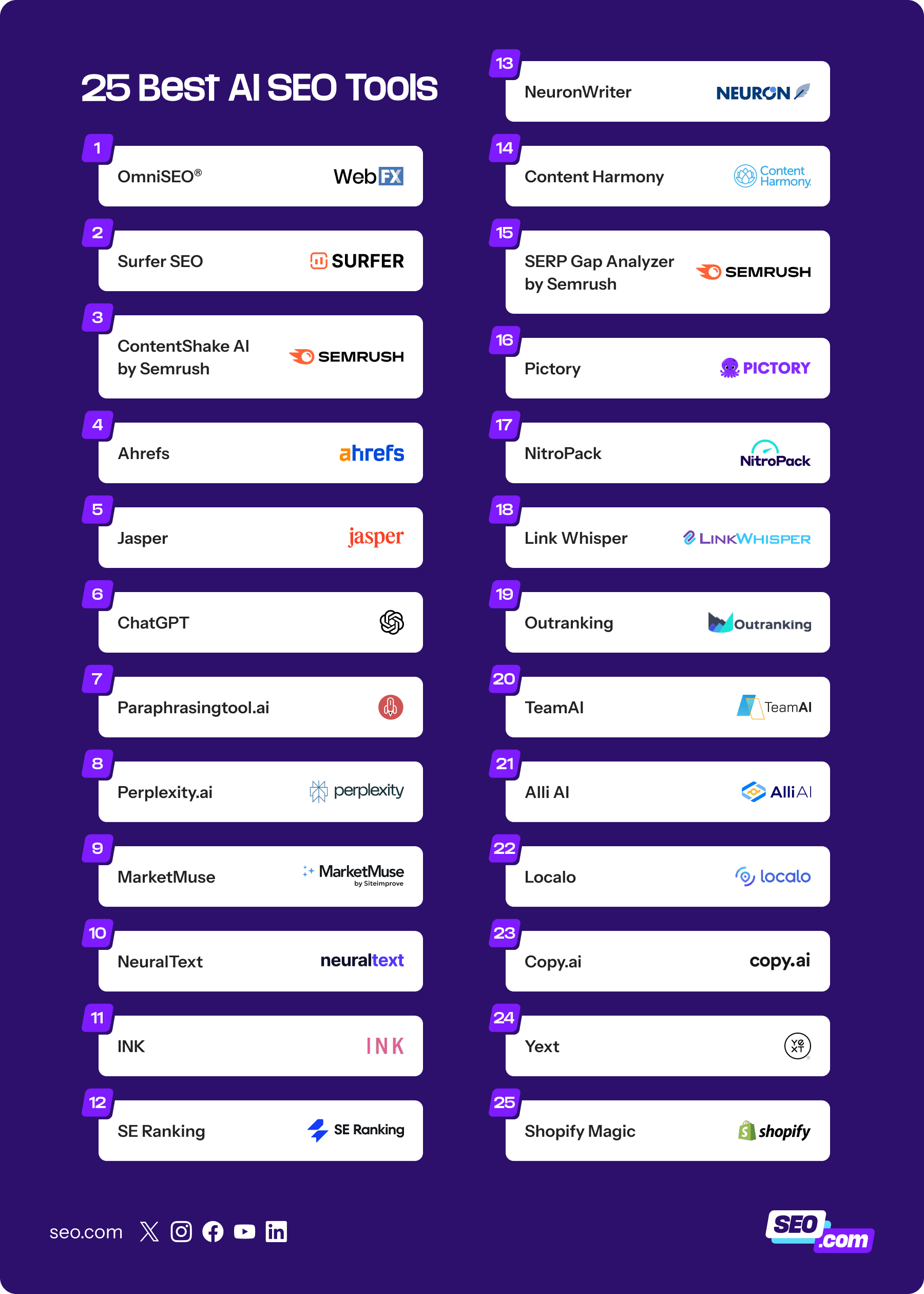
- Automated content optimisation: Platforms such as SE Ranking connect keyword research, technical audits, and content workflows in a single environment. These tools handle keyword grouping, generate SEO briefs from live data, and surface structural and semantic gaps faster than any manual audit process.
- Real-time performance dashboards: SERP volatility in an AI-first environment can move within hours. Agencies need monitoring infrastructure that flags meaningful rank changes and AI Overview appearances in near real-time, not weekly reporting cycles. Tools with white-label multi-client dashboards, including options from Scrunch and Conductor, have become standard expectations at the agency level.
The underlying principle, as Malaravan frames it, is that AI amplifies strategic value while compressing the value of low-skill production tasks. Agencies that redirect their investment accordingly will see margin improve; those that use AI tools only to produce more commodity content faster will simply race to the bottom more quickly.
Productizing for an AI-First World
One of the more actionable sections of Malaravan's framework involves how agencies package and sell their services. Two categories in particular represent genuine growth vectors: Generative Engine Optimization (GEO) and Answer Engine Optimization (AEO).

AEO focuses on winning structured, direct-answer placements in AI-driven results, the kind that voice assistants read aloud and AI summaries surface at the top of the page. GEO addresses how content is structured to be cited and synthesized by large language models. Both disciplines require combining structured data architecture with conversational content strategy, and neither maps cleanly onto how most agency service menus are currently written.
The recommendation is to build discrete, scoped packages around these capabilities: AEO audits, visual search readiness assessments, AI citation monitoring, and intent-mapping workshops for account teams. This kind of productization does two things simultaneously. It creates cleaner revenue lines for the agency, and it communicates clearly to clients that the agency understands the new landscape rather than retrofitting old deliverables with AI terminology.
Retraining Your Team for Consultative Work
The operational shift is as important as the technology shift. Agencies need to retrain account teams on consultative measurement frameworks rather than deliverable checklists. The move is away from reporting on rankings, word counts, and link counts, and toward measuring outcomes: conversions, task completion rates, and for local clients, metrics like in-store foot traffic that connect digital visibility to physical business performance.
This is not a minor internal process change. It requires account managers to understand the intent-mapping logic behind content decisions, to speak fluently about AI visibility rather than just organic rankings, and to advise clients on KPI selection rather than simply confirming deliverable completion. Hybrid teams combining AI-enabled workflow tools with strong editorial judgment are the structure that makes this transition possible at scale.
Vetting White-Label Partners in an AI Environment
For agencies that rely on white-label SEO or content partners to fulfill client work, Malaravan's framework carries a direct implication: the criteria for partner selection have changed. Speed and cost are no longer sufficient filters. The questions that matter now are whether the partner has AI-enabled content workflows, whether they can demonstrate transparent, real-time analytics, and whether their production model maps content to user intent rather than keyword lists.
Partners still operating on template-based content briefs and monthly rank reports are not equipped to support an agency trying to deliver AEO packages or respond to SERP volatility within hours. Vetting for AI competence, data transparency, and operational flexibility is now part of basic due diligence, not an aspirational nice-to-have.
The Pilot-First Growth Playbook
Rather than attempting a full-agency transformation at once, the practical path forward is to pilot AI-enabled services with a small, willing cohort of clients. Select clients where the category is competitive, where intent-driven content has obvious application, and where you can set up clean before-and-after KPI measurement. Track meaningful outcomes: not impressions, but conversions. Not average position, but AI Overview appearances and citation frequency in LLM-generated answers.
Once a pilot demonstrates measurable uplift, the path to scaling is straightforward. The harder part is getting the first proof point, and that requires committing the right staff, the right tools, and the right measurement infrastructure before the results exist to justify them internally. That is the nature of any genuine capability investment.
The agencies that will look back at 2026 as a defining year are the ones that treated this moment as an inflection point rather than a disruption to weather. The tools exist, the framework is clear, and the clients who need this capability are already asking for it.
This article was produced by Prism’s automated news system from verified source data, official records, and press releases, then run through automated quality and moderation checks before publishing. The system is built and supervised by the people who set the standards it runs under. Read our full AI policy.
Did this article answer your question?