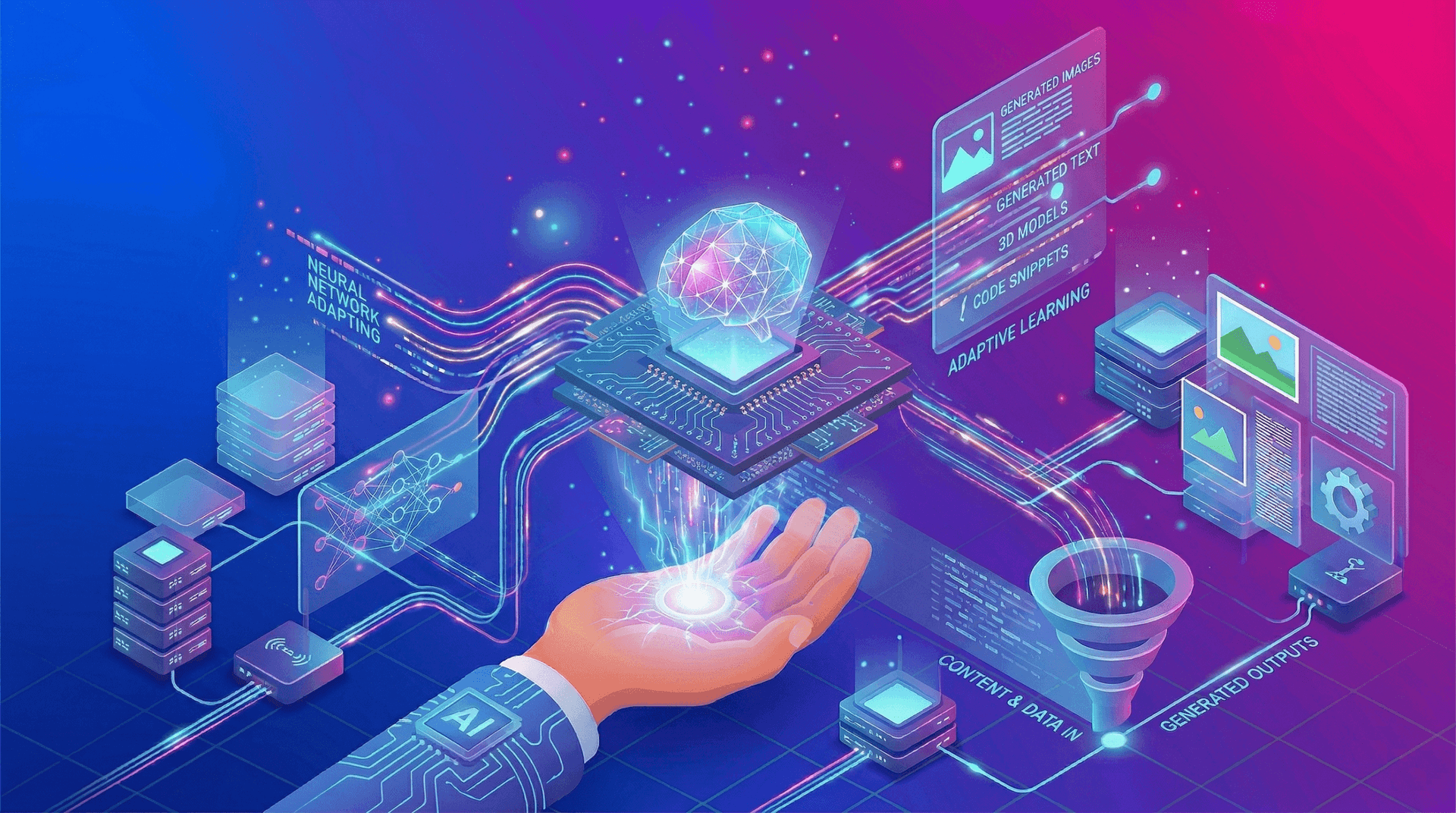
AI visibility starts before search, ends with citations
AI visibility is won in the places people learn first, then lost or won again when models decide what to cite.
The visibility chain starts before the query
The biggest mistake in AI search is treating the answer box as the whole game. Greg Jarboe’s May 4, 2026 analysis gets the framing right: the brands that show up in AI answers usually earned that visibility long before anyone typed a prompt, and they only keep it if a system decides they are worth citing. That means the real contest starts in news coverage, social feeds, niche forums, and other places where people first form opinions and compare options.

That shift matters because discovery is no longer a clean handoff from keyword to ranking. AI systems are pulling from a broader influence economy, one shaped upstream by brand mentions, topical authority, and distribution, then downstream by citation choices. If you only optimize the page you want ranked, you are arriving halfway through the race.
Influence happens everywhere, not just in search
Rand Fishkin’s March 25, 2026 SparkToro analysis gives the clearest evidence that attention is fragmented long before search comes into play. Using Similarweb clickstream data, the study found that search and social together account for nearly half of visits to the top 5,000 web domains. That is the part most teams miss: search is still huge, but it is not acting alone, and it often gets credit for demand it did not create.
Fishkin’s earlier March 2, 2026 report widened the lens even further. It used Datos’ 2025 desktop panel across the United States, European Union member countries, and the United Kingdom, and it looked at 41 domains across search, e-commerce, AI tools, reference sites, travel, real estate, classifieds, and more. The point was blunt and useful: search activity is happening across social networks, content platforms, shopping sites, and reference destinations, not just traditional search engines.
There is a caveat worth keeping in mind. The March 25 analysis also warned that mobile apps are excluded and that AI tools skew heavily toward desktop, which means browser-based data can overstate AI’s apparent share. That matters because it keeps you honest about the numbers. If you are measuring visibility only in browser traffic, you are seeing the funnel through a narrow slit.
Why the upstream work is now part of SEO
Once you accept that influence starts upstream, the playbook changes. Jarboe’s argument is that brands need to win the influence phase first through original data, strong entity signals, and steady presence in the places where audiences actually learn and compare. That is not a soft branding suggestion. It is the precondition for being legible to AI systems later.
In practice, that means your editorial calendar, PR activity, and data generation strategy are all part of search visibility now. Original research gives a model something concrete to trust. Consistent mentions across respected outlets help establish the entity. Distributed presence in the communities where people ask questions creates the pattern of recognition that machines keep tripping over again and again.
If you want a practical test, ask one question: would someone encountering your brand for the first time understand what category you belong to without reading your homepage? If the answer is no, AI systems probably do not have enough context either. The model may summarize you, but it will have trouble explaining why you matter.
Citations are the finish line, not the finish
The downstream layer is just as important. AI systems do not merely answer, they decide what to surface and whether to attribute it. Google’s AI Overviews help page says those answers appear when Google determines generative AI is especially helpful, and it also warns that responses may include mistakes. That warning is not decorative. It is a reminder that visibility in AI answers is probabilistic, not guaranteed.
Perplexity is even more explicit about the citation layer. It describes itself as an answer engine that searches the internet in real time and delivers answers with sources and citations included. OpenAI’s developer documentation says hosted tools such as web search provide automatic inline citations. Different products, same lesson: if the system cannot connect your content to a usable source trail, you are invisible at the exact moment the answer is assembled.
Google’s May 6, 2026 announcement pushed this further by promising more prominent links in AI Mode and AI Overviews, plus a new Further Exploration section and links placed closer to generated text. That is a telling move. Even the biggest search platform is admitting that the answer layer needs better pathways back to the open web.
How to build for citation eligibility
If AI systems are summarizers of a broader ecosystem, then citation eligibility is the thing you are really engineering for. The cleanest way to think about it is in three layers.
- First, create evidence. Original data, useful benchmarks, and first-party reporting make your brand easier to verify and harder to confuse with a lookalike.
- Second, strengthen your entity signals. Keep names, categories, product descriptions, and executive references consistent across owned and earned media so the system can resolve who you are without guessing.
- Third, distribute where the audience already learns. News, social media, communities, and reference sites all feed the perception loop that later influences prompts and summaries.
This is why Jarboe’s point lands so hard. AI visibility is not just about getting found, it is about becoming the source that a model finds obvious enough to cite. If your content does not travel beyond your site, it may still rank in some contexts, but it will struggle to become the source of record inside AI answers.
The traffic story is getting harsher, fast
The downstream business impact is already visible. The Reuters Institute for the Study of Journalism says search engines are turning into AI-driven answer engines and warns that referral traffic may dry up. Its survey of 280 senior media leaders across 51 countries found publishers expect search traffic to fall by more than 40% over the next three years as AI answer engines expand. That is not a marginal headwind. That is a structural reroute.
The referral picture is even starker when you look at AI visibility itself. Similarweb’s 2026 GenAI Brand Visibility Index, as reported by Digiday, found that Reuters and The Guardian receive less than 1% of referral traffic from AI platforms. That is the uncomfortable truth behind all the talk about “being mentioned” by AI. Being visible inside the model is not the same as being sent traffic by it.
So the smart move is not to chase citations as a vanity metric. It is to understand citations as the last mile of a much longer visibility chain. If the brand is not showing up early in the influence cycle, it will rarely appear cleanly at the citation layer. And if it does, it may still fail to convert that presence into meaningful referral traffic.
The practical takeaway
The teams that win this shift will stop treating SEO, PR, content, and analytics as separate lanes. They will use original data to create authority, publish with a clear entity footprint, distribute where real audiences pay attention, and then measure whether AI systems actually cite the work back. That is the full chain: influence first, interpretation second, citation last.
AI visibility is not a search ranking problem with a fancier interface. It is a reputation problem with a machine-readable trail. The brands that understand that will keep showing up, even as the interface keeps changing.
This article was produced by Prism’s automated news system from verified source data, official records, and press releases, then run through automated quality and moderation checks before publishing. The system is built and supervised by the people who set the standards it runs under. Read our full AI policy.
Did this article answer your question?