ChatGPT Ads Move Toward Self-Serve Bidding, Measuring AI Search Demand
ChatGPT’s ad tests moved closer to a real auction, with self-serve buying, CPC bidding and a U.S. Ads Manager beta in play.
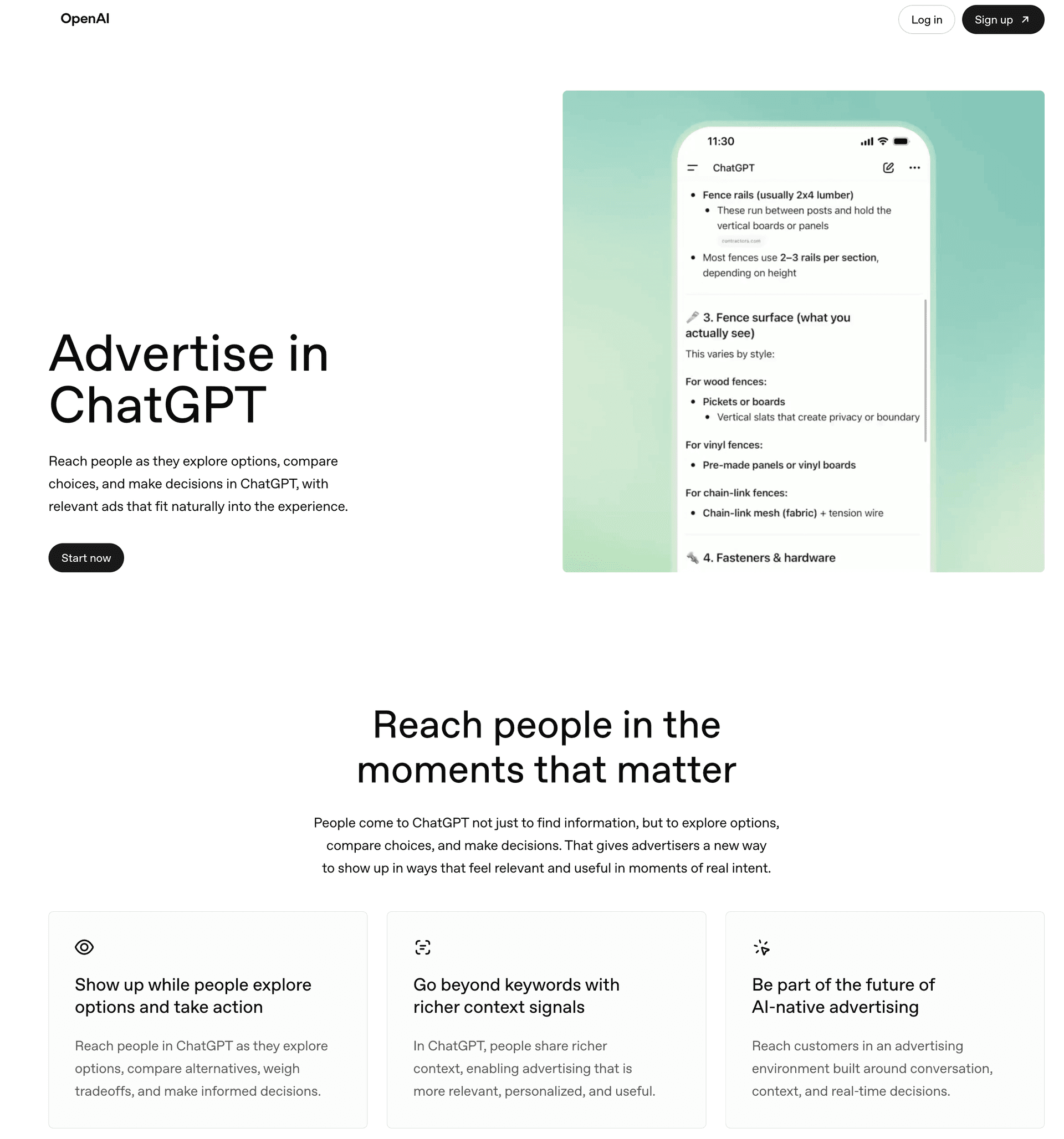
OpenAI’s move toward self-serve ChatGPT ads pushed AI search one step closer to a place where visibility and paid acquisition live in the same interface. The shift from a limited pilot to a more scalable ads model, built around CPC bidding, improved measurement and a beta Ads Manager for the United States, makes the commercial layer inside conversational search harder to miss.
That matters because brands that treated ChatGPT and other AI search surfaces as purely earned-media territory now have to confront a second path into the answer space: buying access. The practical question is no longer only whether a brand can show up in a response, but whether it can pay for more predictable exposure to the intent embedded in a query. As the ad system matures, the interface starts to look less like an experiment in product placement and more like a demand-capture channel with recognizable performance mechanics.
The timing is especially important for search teams that have spent the past year trying to understand how unpaid citations, brand mentions and generative summaries shape discovery. Once ad inventory appears inside a conversational environment, those signals no longer operate in isolation. A user can see an organic mention, a cited source and a paid placement in the same flow, and each one can influence the shortlist before the click ever happens. For marketers, that creates a new layer of competition around attention, not just ranking.

The broader strategic question is budget. If AI discovery becomes a place where users research, compare and narrow choices, paid participation inside ChatGPT could start competing with search, social and other emerging AI surfaces for the same dollars. OpenAI’s direction points to more advertisers, more control and better reporting, but the measurement standards are still taking shape. That leaves brands in a familiar but newly compressed position: move early, or risk watching the next demand channel solidify without them.
This article was produced by Prism’s automated news system from verified source data, official records, and press releases, then run through automated quality and moderation checks before publishing. The system is built and supervised by the people who set the standards it runs under. Read our full AI policy.
Did this article answer your question?