Barcelona climbing gyms blend strength, mobility and social fitness
Barcelona’s climbing gyms turn workouts into grip, mobility and coordination training, with enough route volume and social pull to replace a dull gym routine.
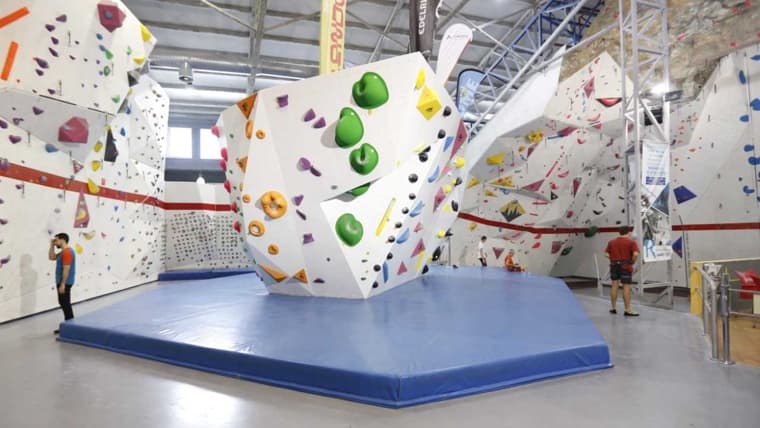
At Climbat La Foixarda, a day ticket priced at 10 gets you bouldering, auto-belay routes and rope climbing from 9 to 23. Barcelona climbing gyms solve a very modern problem: you want to train hard, but you are bored of dumbbells, treadmills and another ten minutes on the same machines. The city’s best walls make a stronger case than a generic fitness floor because they ask for grip strength, hip mobility, balance, problem-solving and a little social pressure to keep showing up.
Why climbing fits the city’s training culture
Climbing is one of the few workouts that hits the upper body, trunk and legs in the same session without feeling like a spreadsheet of sets and reps. The movement patterns reward the same kind of body control that runners, lifters and yoga practitioners already value, but they package it in a format that feels more like play than homework. You are not just pulling on holds; you are learning to stand on your feet, rotate your hips and keep your breathing under control while the wall keeps demanding a decision.
That matters in Barcelona because the city’s climbing options are built for different training moods, not just different skill levels. Some gyms lean into volume and route choice, others make it easy to start without a partner, and one of the most established public walls gives you a low-friction way into the sport with long opening hours and a ticket price that does not look like a boutique-fitness splurge.
Sharma Climbing Barcelona for all-round training
Sharma Climbing Barcelona is built for all levels, and the layout tells you exactly what kind of session it wants to host. Alongside the climbing walls, it includes a yoga-and-fitness area, plus a bar and shop, which makes it more than a place to project a problem and leave. It is set up for warm-up, mobility work, recovery and the kind of lingering that turns a workout into a habit.
If you already run, the climbing walls give you the grip, core tension and shoulder stability that road miles do not touch, while the yoga-and-fitness area helps with the mobility that many runners neglect until something starts tightening up. If you lift, the wall adds coordination and body awareness that do not come from fixed barbells; you have to organize force through your feet and fingers instead of just through your hands.
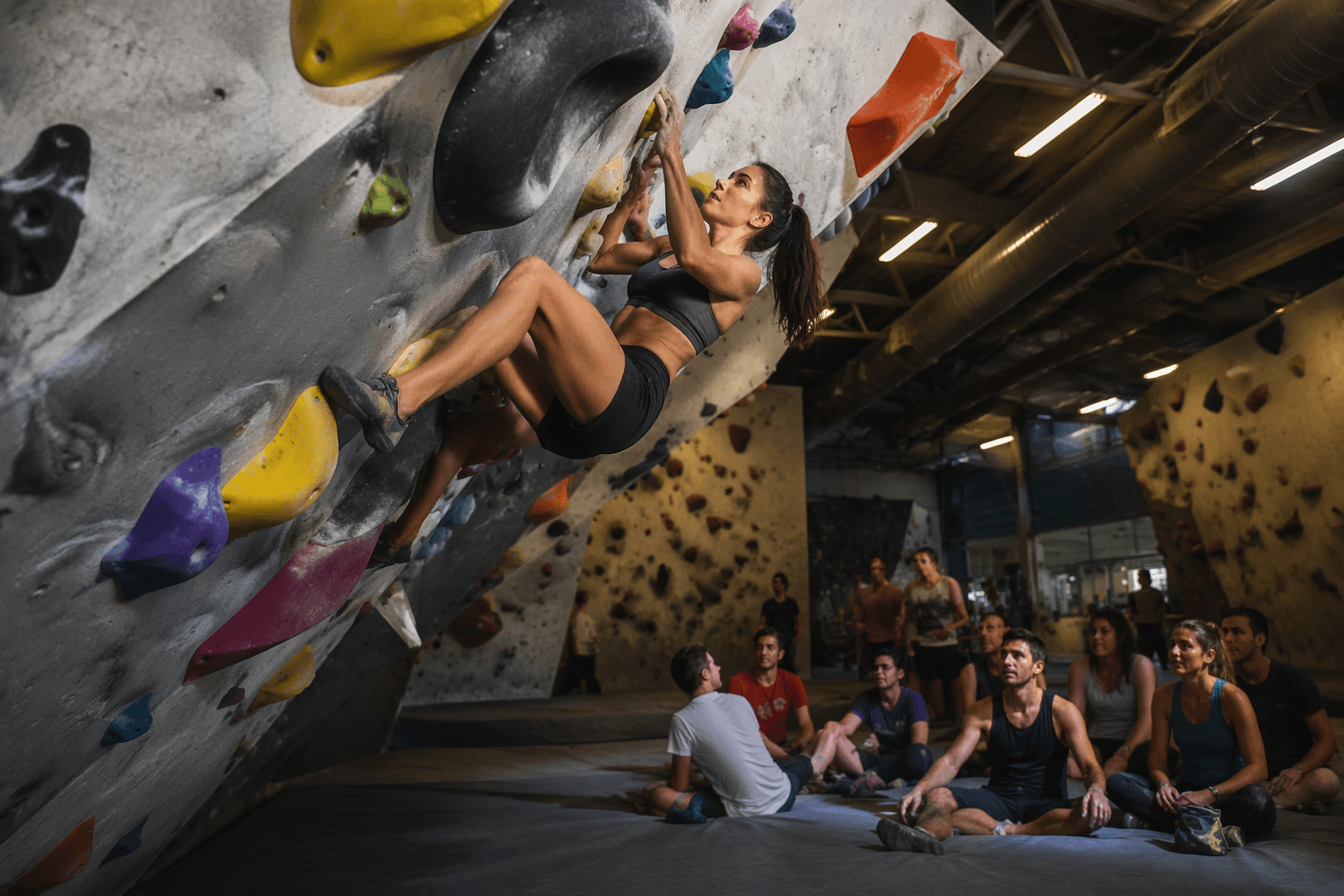
The bar and shop also matter in practice, because climbing is one of those sports where people often stay after the session ends.
BlocDistrict for central access and serious route volume
BlocDistrict makes the strongest case for Barcelona as a climbing city built around convenience and output. It pairs central access with scale: more than 3,000 square metres of bouldering facilities and 1,400 square metres of rope climbing. That is real training volume, the kind that lets a session change shape depending on whether you want power, endurance or just a quick sweat before dinner.
The Marina site has over 90 bouldering problems, while Tetuan has over 130 routes. For a climber, that means you are not walking into a place that burns through novelty after two visits. For a runner or lifter trying climbing for cross-training, it means you can keep sessions short and still have enough variety to work on movement quality rather than just repeating the same holds.
Its split between bouldering and rope climbing is useful for different bodies and different training days. Bouldering suits short, intense efforts and technical problem-solving, which is ideal if you want a power session that does not require a long time commitment. Rope climbing gives you a steadier effort and a better sense of pacing, which can appeal to endurance athletes who want to stretch their lungs and shoulders without turning the whole session into a sprint.
Climbat La Foixarda as the public anchor
Climbat La Foixarda is the clearest entry point if you want climbing to feel less like a specialist hobby and more like a practical fitness option. The centre offers more than 2,000 square metres and activities for all ages and levels, with bouldering, auto-belay routes and rope climbing. That mix matters because auto-belay takes away one of the usual friction points for beginners: you do not need a climbing partner to get started.
The logistics are unusually friendly too, making it easier to turn climbing into a weekday routine instead of a once-a-month outing. If you are testing whether this sport can replace some of your gym time, that low-friction setup lowers the barrier enough to make the experiment realistic.
Barcelona City Council calls La Foixarda one of the country’s reference climbing walls because of its dimensions and the quality of its installations. The three main climbing modes there are bouldering, auto-belay routes and sport climbing, which is exactly the spread you want in a city guide built around fitness payoff. Bouldering gives you compressed intensity, auto-belay offers beginner-friendly solo practice and sport climbing gives you the longer, more sustained work that keeps shoulders and legs honest.
A climbing city with competition depth, not just leisure walls
Barcelona’s climbing scene also has a competition history that gives the gyms extra weight. The first Spanish Youth Bouldering Championship was held at Climbat La Foixarda on June 25, 2017.
The 2026 calendar pushes that point further. FEDME lists the World Climbing Europe Championship Barcelona 2026 - Boulder at Circuit de Barcelona-Catalunya in Montmeló from July 17 to July 19, 2026, and the World Climbing Europe Series Barcelona 2026 - Speed on Friday, July 17, 2026, as part of the GRAVITEO Urban Sports Festival. FEDME lists more than 300 athletes from 15 nationalities.
This article was produced by Prism’s automated news system from verified source data, official records, and press releases, then run through automated quality and moderation checks before publishing. The system is built and supervised by the people who set the standards it runs under. Read our full AI policy.
Did this article answer your question?