Barcelona digital health report signals shift toward AI-led prevention
Barcelona’s fitness operators are moving closer to care, and the Catalonia numbers show why AI coaching, preventive tracking and healthcare partnerships are about to matter more.
Barcelona’s wellness market is starting to look like a health stack
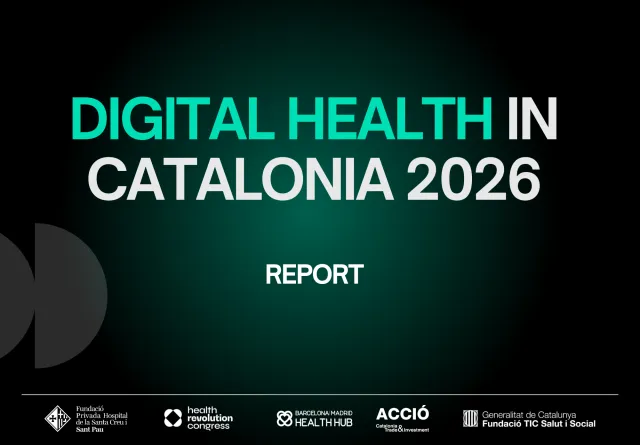
The clearest signal in this Catalonia report is not a shiny AI demo, it is the direction of travel: fitness is getting pulled into prevention, measurement, and care. Barcelona Health Hub’s Digital Health in Catalonia 2026 report is being presented on May 22, 2026 at 11:30 at the Recinte Modernista de Sant Pau in Barcelona, and that institutional setting tells you the study is meant to shape decisions, not just fill a conference slot.
That matters for gyms, studios, trainers, recovery brands, and wellness apps because digital health is no longer being framed as a narrow medical niche. Barcelona Health Hub describes it as a fast-changing field driven by ICT development and spanning artificial intelligence in medicine, telemedicine, digital therapeutics, and medical devices. Once those tools become normal in healthcare, they tend to spill into the places where people already try to stay healthy, which is exactly where Barcelona’s fitness economy now sits.
The scale is big enough to change operator behavior
This is not a small innovation scene trying to sound important. ACCIÓ says Catalonia’s digital-health sector now includes 419 companies and more than 5,300 jobs, while TIC Salut Social says those companies generate 652 million euros in turnover. Barcelona Health Hub also says it has 500+ members across startups, healthcare institutions, universities, corporations, and investors, which explains why the report lands with both commercial and institutional weight.
The earlier 2024 Catalonia digital-health report helps show the pace of growth. It counted 331 companies across the value chain, 592.5 million euros in turnover, and 4,810 jobs, and it said 64.6% of the firms were less than 10 years old. That is the kind of youth-heavy ecosystem that usually moves fast, experiments aggressively, and expects operators to adapt quickly rather than wait for perfect standards.
What will actually change in the next 12 to 24 months
For Barcelona gyms and studios, the biggest shift is likely to be the move from generic memberships to more measurable, individualized services. The report’s framing around AI, telemedicine, digital therapeutics, personalized medicine, and wearables points to a market where clients expect their training plan to look more like a monitored health journey than a fixed class package. In practice, that means more intake data, more recovery checks, and more programs that can show progress in numbers, not just in sweat.
The most practical trend is AI-led personalization, and this is where hype and usefulness part ways. The useful version is not a chatbot pretending to be a coach, but software that helps trainers spot attendance drops, flag plateaus, and adjust programming based on wearable data or recovery signals. For operators, that can support retention because members are less likely to drift away when they feel the plan is responding to them.
Remote care is another real pressure point, especially for premium gyms, rehab-adjacent studios, and app-based coaching businesses. The 2024 report highlighted global digital-health trends including AI, remote care, IoMT, privacy, and cybersecurity, and those same themes now reach into fitness through heart-rate monitors, connected strength equipment, sleep trackers, and app-based check-ins. If a client already uses a telemedicine service or a digital therapy program, they will expect their trainer or studio to speak the same data language.
Recovery and prevention are where the money follows the behavior
Barcelona operators should watch the recovery category closely because it is where fitness and prevention already overlap. Wearables, digital therapies, and medical devices are not just healthcare buzzwords in this context, they are becoming the tools that help clubs sell better outcomes around stress, sleep, mobility, and injury prevention. A recovery brand that can tie its services to visible improvements in readiness or adherence will have a stronger story than one selling vague wellness.
That is also why preventive-care positioning is likely to matter more than performance language alone. The report’s value is that it gives professionals, innovators, and investors a way to read the market as a reference point, and the broad implication is straightforward: Barcelona consumers are being pulled toward products that promise fewer injuries, better monitoring, and earlier intervention. The fitness businesses that win will be the ones that can translate that into simple routines, clearer metrics, and less friction in daily use.
The 2024 report’s global venture-capital figure, 30.5 billion dollars invested in digital-health startups from 2019 to 2023, helps explain why this space is getting crowded with product ideas. Money follows the promise of personalization, and personalization is exactly what many fitness operators are now being asked to deliver. The problem is that a lot of vendors still dress basic automation up as transformation, so operators need to be selective about what actually improves stickiness and outcomes.

Partnerships with healthcare players are becoming part of the business model
This is where Barcelona’s ecosystem structure matters. Barcelona Health Hub’s 500+ members span startups, healthcare institutions, universities, corporations, and investors, which makes cross-over partnerships much easier than they would be in a fragmented market. For a gym or wellness app, that means the next competitive edge may not come from building everything in-house, but from plugging into a healthcare-adjacent network that can validate outcomes and widen referral paths.
The smartest partnerships will probably be the most specific ones. A studio can work with a clinic on post-injury return-to-movement programs, a gym can collaborate with a digital-therapy platform on adherence, and a wellness app can integrate with wearables to personalize coaching and recovery prompts. The common thread is that each side brings something the other cannot easily fake: fitness brings behavior change, healthcare brings credibility, and digital health brings measurement.
The takeaway for Barcelona operators
The Catalonia 2026 report should be read as a roadmap, not a victory lap. The sector is big enough now, with 419 companies, 5,300-plus jobs, and 652 million euros in turnover, that fitness businesses can no longer treat prevention and digital health as side trends. They are becoming part of the operating system for how people train, recover, and stay engaged.
The practical winners over the next 12 to 24 months will be the operators that use AI and wearables to make coaching more personal, use prevention language to improve retention, and build partnerships that connect sweat to care. In Barcelona, the line between gym floor and health platform is getting thinner fast, and the businesses that understand that shift will be the ones that last.
This article was produced by Prism’s automated news system from verified source data, official records, and press releases, then run through automated quality and moderation checks before publishing. The system is built and supervised by the people who set the standards it runs under. Read our full AI policy.
Did this article answer your question?