Barcelona fitness data shows 66.7% of residents exercise regularly
Barcelona measured exercise instead of just marketing it: 66.7% of residents aged 17+ do sport, and women’s regular participation hit 64.2%.

Barcelona’s 2022 adult sports-habits survey put the city’s regular participation rate at 66.7% among residents aged 17 and older, a figure built from 1,500 interviews across all 10 districts. The fieldwork ran from 9 to 27 May 2022, used CATI and CAPI interviews, and carried a stated sampling error of plus or minus 2.7% at a 95.5% confidence level. That is the part Barcelona gets right better than most cities: it does not just promote fitness culture, it measures it.
The Barcelona Sport and Physical Activity Observatory exists to do exactly that. Its job is to analyze and collate the data needed to continuously monitor and evaluate the city’s sports system, and the 2022 survey shows how granular that can get. The sample was stratified by district, sex, age, nationality and unemployment status, with 150 interviews in each district, so the city can read participation by neighborhood rather than relying on broad impressions. The survey also looked at the profile of athletes, the use of sports facilities and the most common physical activities, which gives gyms, clubs and municipal operators a clearer picture of where demand is coming from.
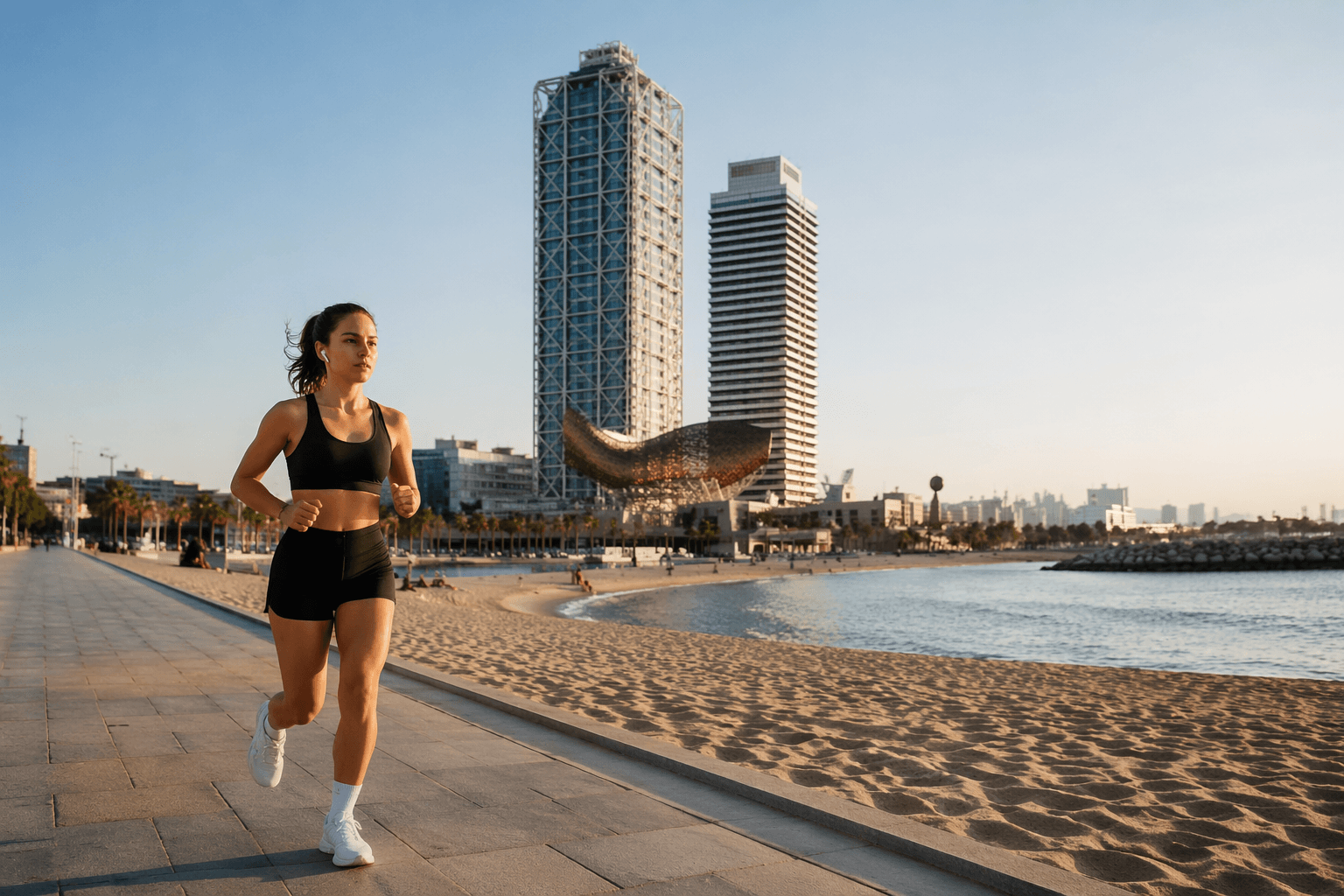
The headline number matters because Barcelona does not present exercise as a niche habit. The city says 66.7% participation is 17.4 points above the European average of 49% from Eurobarometer, and women’s regular participation reached 64.2%. That figure lands in a city that ties sport to education, health, inclusion, training and social cohesion, so the data is not just decorative. It feeds into how Barcelona allocates public programming, how it frames women’s sport, and how the local fitness market reads the market.

The city has also been building this record for decades. Adult sports-habits studies were run in 1989, 1995, 1999, 2006, 2013, 2017 and 2022, but the 2022 report says only the 2017 and 2022 editions are directly comparable because earlier surveys used different age ranges. That matters for anyone trying to track long-term change in Barcelona fitness without mixing incompatible samples, especially since the target population shifted from ages 15 to 59 in the earliest editions to 17 and older in the latest ones.
Barcelona’s Gender Equality Office adds another layer to the picture. The office says it works to strengthen women’s role in sport, including participation and decision-making, which makes the 64.2% women’s participation rate more than a feel-good stat. The city’s open-data portal, with more than 450 reusable datasets, shows the same instinct for visibility that runs through the sports observatory: if Barcelona wants to shape fitness behavior, it first wants to count it.
This article was produced by Prism’s automated news system from verified source data, official records, and press releases, then run through automated quality and moderation checks before publishing. The system is built and supervised by the people who set the standards it runs under. Read our full AI policy.
Did this article answer your question?