Barcelona prepares mobility plan for 2026 Tour de France Grand Départ
Barcelona's Grand Départ mobility plan adds reinforced metro service, 50-plus crossings and route changes for July 2-6, aiming to keep daily movement working.
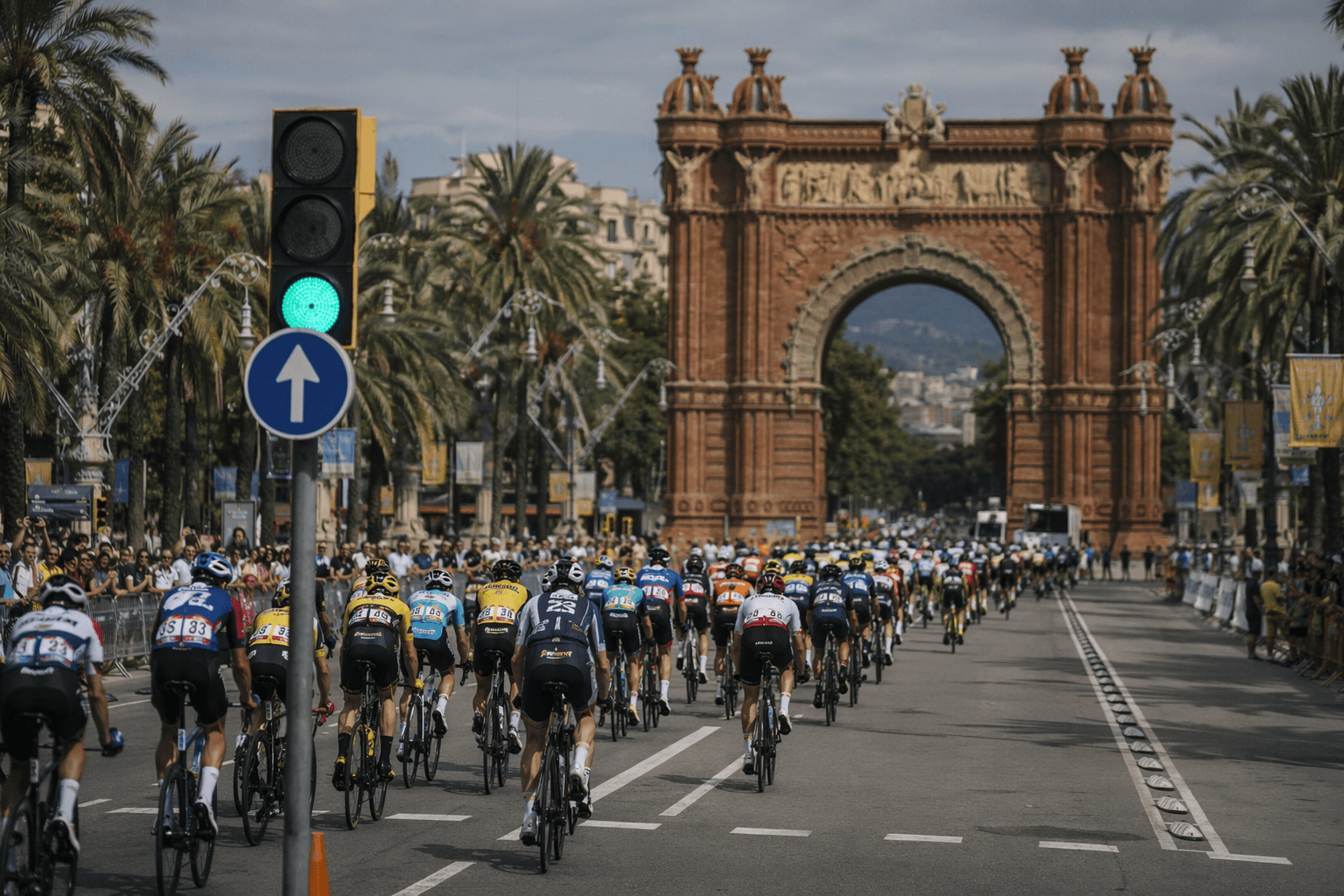
Barcelona has put its 2026 Tour de France Grand Départ logistics on the table with a mobility plan built for residents as much as spectators. The city’s June 15 announcement called for reinforced metro services, more than 50 pedestrian crossing points and information measures meant to reduce disruption while the race turns Barcelona into a cycling hub.
The calendar is already set. Barcelona’s official mobility page lists a team presentation on July 2, Stage 1 from Barcelona on July 4, Stage 2 from Tarragona to Barcelona on July 5 and Stage 3 from Granollers toward Les Angles on July 6. For the first time, the Tour will start in the capital of Catalonia, and the race organizer says Barcelona will host the first Grand Départ in the city and only the third Tour start in Spain, after San Sebastián in 1992 and Bilbao in 2023.
The scale of the operation is wide enough to matter far beyond the race course. Local coverage has put attendance at about 850,000 spectators, with traffic cuts in six districts and disruptions expected to buses, the tram, Bicing and the Aerobús. Some coverage also said the metro would be reinforced by roughly 40 percent, a sign that the city wants people shifting toward rail, walking and cycling rather than trying to thread through the race by car.
That is the stress test for Barcelona’s active-city model: whether a mega-event can coexist with the daily movement of people heading to workouts, club sessions, coaching jobs and beach routes without freezing the city’s circulation. The plan’s pedestrian crossings and transit emphasis point in that direction, and officials have said emergency services will keep dedicated routes while parking restrictions are posted in advance. That matters in a city where crossing points, metro changes and bus detours can decide whether a commute to Montjuïc, a ride near Parc del Fòrum or a session in the city center stays on schedule.
Barcelona has also wrapped the Grand Départ in a wider civic program. The city launched its official event website a year ahead of the race to centralize updates and practical information, and it has paired the Tour with cycling- and mobility-themed programming tied to its public-space identity. City officials have described the start as Barcelona’s biggest sporting event since the 1992 Olympic Games, which is why the mobility plan reads less like event administration than a test of how well the city can keep moving while the world’s biggest bicycle race rolls through it.
This article was produced by Prism’s automated news system from verified source data, official records, and press releases, then run through automated quality and moderation checks before publishing. The system is built and supervised by the people who set the standards it runs under. Read our full AI policy.
Know something we missed? Have a correction or additional information?
Submit a Tip