Barcelona sees outdoor gyms as core public health infrastructure
Barcelona is treating outdoor gyms as health infrastructure, using parks, beaches and circuits to widen access while indoor operators absorb less pressure.
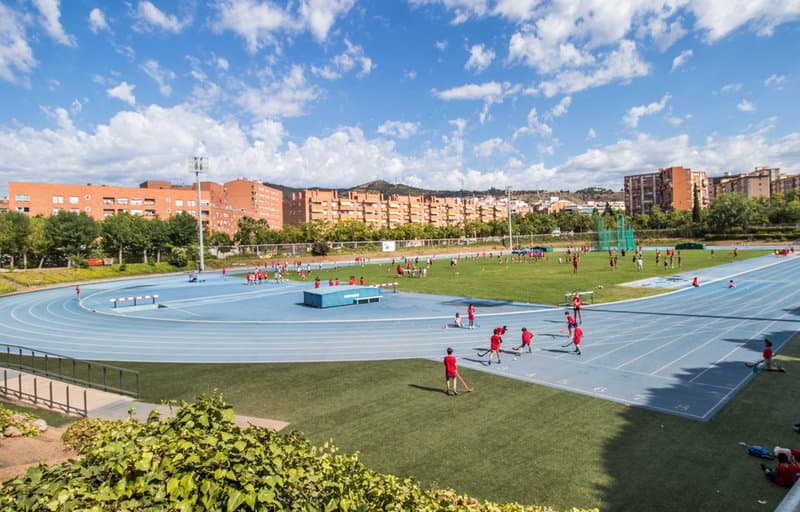
Barcelona’s parks and gardens already host the city’s “Activa’t” exercise and health program. The city is treating outdoor gyms less like a perk and more like part of its public-health grid. In a place where parks, beaches and neighborhood streets are already pulled into daily life, the question is how to widen access without crowding the same indoor facilities again and again.
Outdoor gyms as municipal health infrastructure
The argument for open-air training is not really about machines or calisthenics bars. It is about removing the first barrier to exercise: the cost, the social friction and the feeling that you need to belong to a club before you can begin. In Móstoles, officials have already been debating gradual installation of outdoor gyms in parks and public spaces, and that conversation fits a wider Spanish pattern where municipalities are starting to frame fitness infrastructure as a public service rather than a lifestyle extra.
Barcelona is one of the clearest examples of that shift because sport in public space is part of the city’s operating model. The Ajuntament’s “Activa’t” or “Get Active” program is an outdoor physical exercise and health programme in parks and gardens, designed to improve health, support an active lifestyle, strengthen psychological and social well-being, and reduce illness risk.
Why Barcelona is the right test case
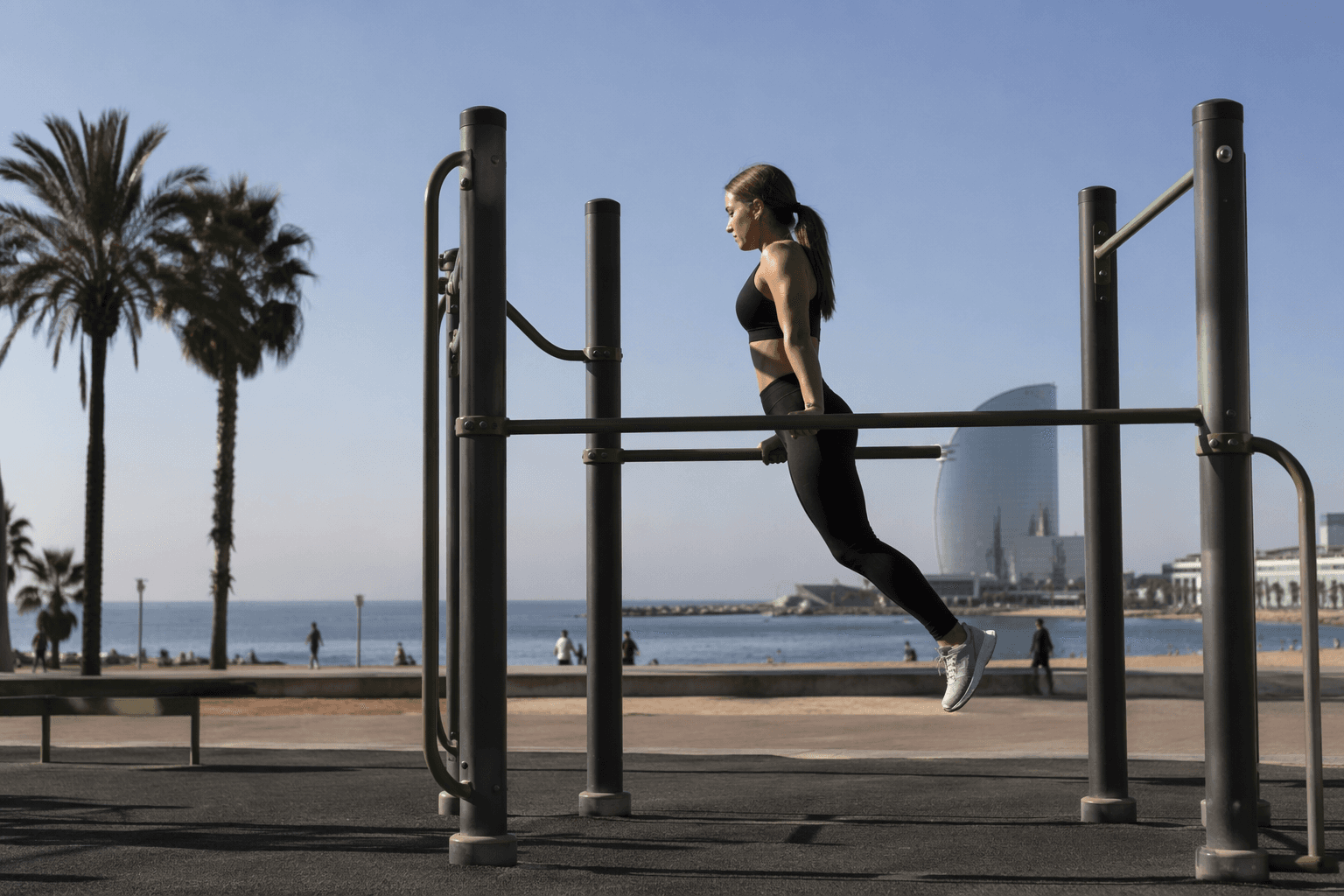
Barcelona has spent years building a fitness identity around public space. The city’s public sports network makes physical activity accessible to any resident, and the city’s official pages promote running circuits, walking circuits and gymnastic circuits in public space. Add the non-organized free activities on the beaches, and the pattern is clear: Barcelona is using open urban land as a distributed training network.
That matters in a dense city where public space is contested and heavily used. A resident who will not sign up for a gym membership may still step into a park circuit in Horta, walk a beach route in Poblenou or use one of the city’s outdoor exercise points without having to make a bigger commitment first.
What Barcelona already knows about public space and exercise
Barcelona does not have to guess how people use redesigned urban space. Its health-reporting history spans 40 years through the city’s “Health in Barcelona” series, and that long-running reporting culture has helped normalize the idea that built environment shapes health behavior. The Barcelona Public Health Agency and city health planning have long treated streets, parks and neighborhood design as parts of the city’s health story, not separate from it.
The Superblock model gives that idea a concrete example. A study of the Sant Antoni Superblock found that residents used the newly developed space for physical activity in its first year.
Why the policy case is stronger than the gear case
Outdoor gyms are also attractive because they can support several public-policy goals at once. They promote activity, they invite social inclusion, they are free to use and they make better use of urban land that would otherwise sit idle or be underused for large parts of the day. Barcelona wants exercise to feel easier to approach, less intimidating and more compatible with ordinary routines.
Barcelona’s public sports pages also highlight gym circuits designed for older users and for people with reduced mobility. A park circuit built with different levels of challenge is more useful than a row of generic equipment that only serves already-trained users.
Where national policy still leaves gaps
The municipal push is moving faster than the national policy framework around it. The World Cancer Research Fund’s MOVING policy snapshot rates Spain poorly on structures and surroundings that promote physical activity, and it identifies weaknesses in active-design guidance for open and green spaces, walking and cycling infrastructure, and policies that support activity outside school hours.
Spain does have a national strategy in the background, including the National Strategy for the Promotion of Sport against Sedentarism and Physical Inactivity 2025-2030, and the Recovery, Transformation and Resilience Plan assigned €300 million to Component 26 for the sports sector. But those national signals do not automatically create good local routes, safer park access or more useful neighborhood-level exercise points. Barcelona and other municipalities are left to do the practical work of turning policy ambition into places people actually use.
What this means for Barcelona’s fitness market
Public and private fitness are not separate worlds. Outdoor infrastructure can build comfort, routine and awareness, which can later feed into memberships, coaching and class purchases. Barcelona’s sports system already reflects that overlap: the Barcelona Sports Institute helps shape it, and the Barcelona Sport and Physical Activity Observatory analyzes and collates data that continuously monitor and evaluate it.
Barcelona put sports participation at 66.7% of residents in 2022.
Móstoles has publicly positioned itself as Ciudad Europea del Deporte 2026.
This article was produced by Prism’s automated news system from verified source data, official records, and press releases, then run through automated quality and moderation checks before publishing. The system is built and supervised by the people who set the standards it runs under. Read our full AI policy.
Did this article answer your question?