Barcelona studios bet on belonging as functional fitness evolves
Barcelona’s functional-fitness market is turning into a retention battle, and belonging now matters more than another strip of turf.

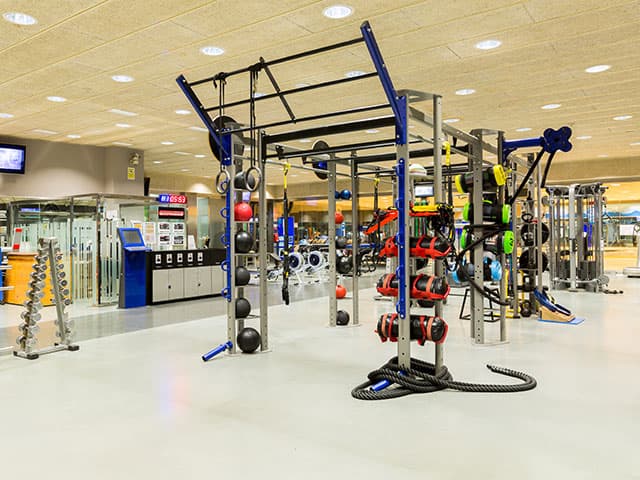
Barcelona’s functional-fitness scene is moving past the old arms race over rigs, turf, and square footage. The studios that keep winning are the ones that make a workout feel personal, social, and rooted in the neighborhood, not just well equipped. In a market this crowded, the real product is no longer the floor plan, it is the reason people come back.
The market is big enough, but sameness is expensive
Spain’s fitness sector already serves 8.4 million users, including 7.1 million who are also members of a center, which tells you how deeply gym-going has settled into the country’s habits. OBS Business School puts the market at 4,561 gyms and 5.4 million users, with 16.5% of the population going to the gym. That is not a niche anymore, and it is exactly why operators cannot rely on equipment alone to stand out.
The wider European picture points in the same direction. EuropeActive and Deloitte reported 67.6 million memberships across Europe in 2023, up from 62.9 million in 2022, with revenues of €31.8 billion. Spain’s own sector was later estimated at about €3.235 billion in 2025. Those numbers show a market that is still growing, but they also show a business where the next gains are likely to come from retention, not just opening more doors.
Why belonging is becoming the differentiator
The central shift is simple: spreadsheets do not explain why someone becomes loyal to a studio. People return because the session makes them feel better, more connected, and more like themselves. That is a much harder thing to copy than a rig or a turf strip, and it is why community design is moving from a nice extra to a core operating decision.
In practice, that means the strongest studios are building an experience that goes beyond floor space. Instructor quality matters because it shapes the energy in the room and the confidence of the member. Social belonging matters because it turns a workout into a habit, and habit is what drives repeat visits in a market where premium, low-cost, and boutique offers all compete for the same customer.
For Barcelona operators, the lesson is especially sharp. The city is full of choices, so the winning studio is the one that feels like a fit, not just a facility. Language and neighborhood identity matter here in a way they do not in a generic chain model, because members are choosing a place they expect to return to week after week, not a one-off class they visit once out of curiosity.
Barcelona is already a proving ground
F45 Training’s move into Barcelona makes the point in concrete terms. The company opened its first Barcelona studio at Aribau 172 in the Eixample’s Quadrat d’Or on July 5, 2025, placing the brand in one of the city’s most visible central areas. That location matters because it signals how seriously the brand sees the market, and how tightly it is tying itself to a premium urban catchment rather than a low-friction, low-commitment model.
The Spain growth plan is just as telling. Reporting in September 2024 said F45 was seeking franchisees and investors with a goal of reaching 20 clubs in Spain by 2026, with Barcelona and Madrid identified as strategic cities. That is not expansion for its own sake. It is a bet that the Spanish market can support more than one premium functional-fitness concept, provided the studios feel local, consistent, and worth repeating.
FS8 is making a similar move, but with a slightly different signal. A March 2025 expansion plan said the brand would grow beyond Madrid into cities including Barcelona and Málaga, and FS8 reached 100 studios worldwide on May 27, 2026. Once a format crosses that kind of scale, it stops looking like a curiosity and starts looking like an operating model that can be transplanted into major urban markets.
What the best operators are actually selling
The smartest Barcelona studios are not selling access to gear. They are selling recurring habit, and they are packaging it in a way that feels easy to maintain. The session has to work physically, but it also has to reduce friction: people should know what they are walking into, who is coaching them, and why they belong there.
That is why community is now a business asset rather than a branding word. In the functional-fitness world, it shows up through familiar faces, a coach-led atmosphere, and a studio identity that feels consistent enough to become part of a member’s week. When those pieces line up, the studio becomes less like a place to exercise and more like a place that organizes part of a person’s routine.
The economics follow from that. An equipment-heavy investment can impress at launch, but it does not guarantee repeat usage. A studio that keeps members engaged through belonging, good coaching, and a premium experience is more likely to improve lifetime value, because the member is not shopping purely on hardware anymore.
Barcelona’s acquisition story proves the point
Lapso Studios is the clearest local example of how community-driven concepts can turn into real market value. The brand grew to three gyms in Barcelona before being acquired by Mexico’s Commando Studio on March 24, 2026. That kind of outcome matters because it shows that a loyal following and operational density can be more valuable than a bigger machine count.
The acquisition also underlines a broader strategic truth for Barcelona: the market rewards concepts that build a recognizable rhythm across multiple sites. A studio does not need to be the biggest room on the block if it can keep members coming back, if it feels native to the neighborhood, and if it creates a social reason to stay. In a city where premium, low-cost, and boutique formats are all fighting for attention, that is the difference between a full timetable and a forgettable one.
The new competitive line
Functional fitness in Barcelona is no longer a contest over who has the flashiest buildout. The competition is now about who can create the strongest repeat relationship with the member. The studios that understand that are moving ahead of the curve, while the ones chasing it with more equipment are learning that square footage does not equal loyalty.
The next phase of the market belongs to operators who treat community as part of the product, not a side effect. In Barcelona, that is becoming the clearest path to retention, and retention is where the real money is.
This article was produced by Prism’s automated news system from verified source data, official records, and press releases, then run through automated quality and moderation checks before publishing. The system is built and supervised by the people who set the standards it runs under. Read our full AI policy.
Did this article answer your question?