CEM Colom’s Murph challenge shows Barcelona’s fitness facilities evolving
CEM Colom is turning a free Murph session into a test case for how Barcelona’s municipal gyms compete on access, coaching and community, not luxury.

A municipal gym trying to feel indispensable
CEM Colom is using a free Murph challenge to make a simple point: a municipal gym in central Barcelona can still feel fresh, social and worth showing up for. The session lands on May 23, 2026, with two slots at 9:00 and 10:30 in the Outdoor Box area, and members have to book through the Lleuresport Fitness app. Coaches will guide the workout and adapt it to each participant’s level, which is exactly the kind of low-friction setup that keeps a public facility relevant in a city full of boutique studios and premium training concepts.
The event is not being framed as a stand-alone stunt. CEM Colom presents it as a community experience and explicitly invites participants to “share the effort with the community.” That matters, because the most valuable part of this kind of programming is not just the challenge itself, but the reason it gives people to return, train with others and feel like they belong somewhere beyond a drop-in class.
Why the Outdoor Box format works
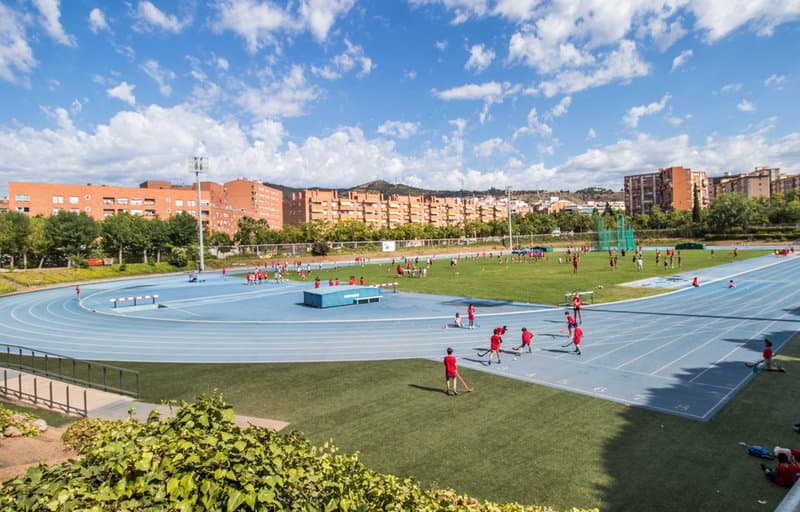
The Outdoor Box is pitched as an outdoor crosstraining boutique focused on strength and high-intensity training, and that positioning explains why the Murph challenge fits so naturally. CEM Colom says the space offers more than 60 hours per month of open-box use, plus guided sessions led by coaches specialized in crosstraining, metcon and mobility. In other words, this is not a bare patch of pavement with a few racks. It is a programmed training environment built to make harder workouts feel more approachable.
That coaching layer is the real differentiator. A high-intensity challenge can easily become intimidating, especially for members who know the format by reputation but not by experience. By promising that coaches will adapt the workout to each person’s level, CEM Colom turns what could be an exclusive-feeling test into something scalable, which is a smart move for a municipal centre trying to serve beginners and more serious athletes in the same room.
For residents weighing where to spend their fitness budget, the value proposition is hard to ignore. The session is free for members, and the booking flow lives inside the app people already use for the centre’s services. That combination of no added cost, clear scheduling and guided participation is where public facilities can beat private gyms on more than just price. It reduces hassle, gives members a reason to commit, and adds a little event energy without forcing anyone into a luxury membership model.
What this says about price-value in central Barcelona
Barcelona’s fitness market is crowded enough that simply existing is not a winning strategy. Private boutiques sell atmosphere, specialization and branding; low-cost chains sell volume and convenience. Municipal centres like CEM Colom have to win on something else, and this event shows the playbook clearly: use community-led programming to turn a standard facility into a habit-forming destination.
That is why the Murph challenge is more interesting as a retention tool than as a one-off promotion. A neighborhood or city-centre resident might come for the novelty of the challenge, but the real win is if the visit leads to future bookings, more use of the open-box space and a stronger sense that the centre is part of a weekly training routine. In a dense part of Barcelona, where people have plenty of ways to exercise, the facilities that stick are the ones that make it easy to start, easy to return and hard to drift away from.
CEM Colom appears to have understood that long ago. The centre has already used similar app-booked, free, community-style challenge formats, including The Open 2026 at the Outdoor Box. That matters because it suggests a programming habit, not a random marketing push. When a municipal facility repeats this model, it starts to behave more like a training club and less like a fallback option.
A historic venue with a modern job
Part of CEM Colom’s appeal is the building itself. The centre says it is one of Barcelona’s municipal sports centres with the most history and character, and both CEM Colom and Club Lleuresport describe it as a facility restored for the 1992 Olympic Games and adapted as a sports centre. Club Lleuresport places it on La Rambla in Barcelona’s city centre, which gives it both visibility and symbolic weight in a part of town where foot traffic, tourism and local routines all collide.
That Olympic legacy is not just decorative. Barcelona’s 1992 Games used 38 competition venues, and 28 existing facilities were refurbished for the event. The city still leans on that legacy today, and CEM Colom is a good example of how that investment keeps paying off. A building restored for the Games can still serve a current civic purpose if the programming evolves with the market, and the Outdoor Box is exactly that kind of update.
The space also fits neatly into the city’s broader sports policy. Barcelona says its municipal network makes sport accessible to residents across the city, and it now counts 40 municipal sports centres. The Barcelona City Council also frames sport as a tool for education, health, inclusion and social cohesion, while the Barcelona Municipal Sports Council serves as a consultative and participatory body for stakeholders. That is the policy backdrop that makes a small challenge feel bigger than its attendance list.
The wider model Barcelona is building
Barcelona’s official sports planning goes beyond a single gym floor. The city has outlined a 35.7-million-euro first stage for new or transformed facilities, with delivery planned through 2025, which shows that municipal sport is being treated as infrastructure as much as programming. That investment matters because it helps explain why centres like CEM Colom can keep refreshing their offer without abandoning their public mission.
The bigger lesson from the Murph challenge is that central Barcelona does not need more empty branding around fitness. It needs places that are easy to book, affordable for members and socially sticky enough to turn one visit into a pattern. CEM Colom’s Outdoor Box is doing that by mixing access, coaching and a community frame inside a historic facility that still feels tied to the city. In a market crowded with boutique promises, that combination looks less like a novelty and more like the future of municipal fitness.
This article was produced by Prism’s automated news system from verified source data, official records, and press releases, then run through automated quality and moderation checks before publishing. The system is built and supervised by the people who set the standards it runs under. Read our full AI policy.
Did this article answer your question?