David Lloyd Clubs in Barcelona redefines gyms as all-day wellness hubs
Barcelona’s premium clubs are becoming day-long living rooms for work, family and training, and David Lloyd is making the category feel more like a second home.
Barcelona’s new fitness club logic
David Lloyd Clubs is not being sold in Barcelona as a place to squeeze in a workout. It is being framed as a second home, where teleworking, family time and high-performance training can all coexist under one roof. That shift says as much about the city’s lifestyle market as it does about the brand: in Catalunya, the real demand is no longer just for sweat, but for spaces that make conciliation possible.
The backdrop is a country where physical activity has become mainstream enough to shape the club market. The 2025 Sports Statistics Yearbook says 55.4 percent of Spain’s population now practices physical activity regularly, a figure that sits inside the long-running annual Statistical Yearbook of Spain published by INE since 1858. In other words, the habit is established. The competition is now about where people want to spend their time, and whether a club can hold part of the day, not just an hour of it.
The Barcelona clubs are built for lingering
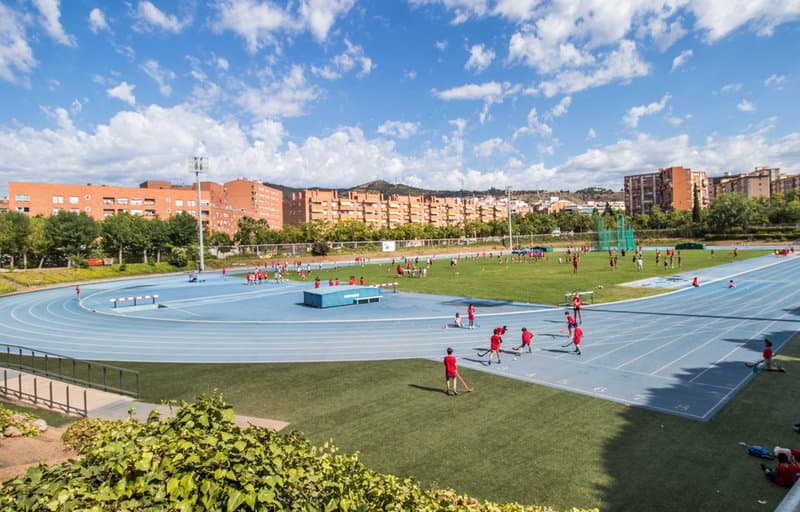
David Lloyd’s Barcelona offer is centered on two clubs: David Lloyd Turó and David Lloyd Gavà Mar. Turó sits just outside Barcelona’s city centre, overlooking Parc de Cervantes, while Gavà Mar is positioned by the sea on the edge of the city. Together they show how strongly the brand is leaning into place, lifestyle and convenience rather than the old gym logic of machines, mirrors and exit after the session.
- Two pools
- Tennis and padel courts
- A spa
- Crèche services
- DL Kids activities
- An outdoor Battlebox area
- A business lounge
- Family dining
What stands out is how much more is bundled into each club than fitness floor space. David Lloyd says Turó includes:
- Indoor and outdoor pools
- An adults-only spa retreat
- Crèche services
- DL Kids activities
- Family dining
- Free parking
- A business lounge
- Eight padel courts
Gavà Mar is positioned in a similarly full-day way, with:
The timetable reinforces the pitch. David Lloyd says the two Barcelona clubs offer more than 170 classes each week, which turns the clubs into a programming-heavy environment rather than a simple access product. That matters in a city where consumers are increasingly buying a rhythm of the day, not just entry to a room with equipment.
The real product is convenience with polish
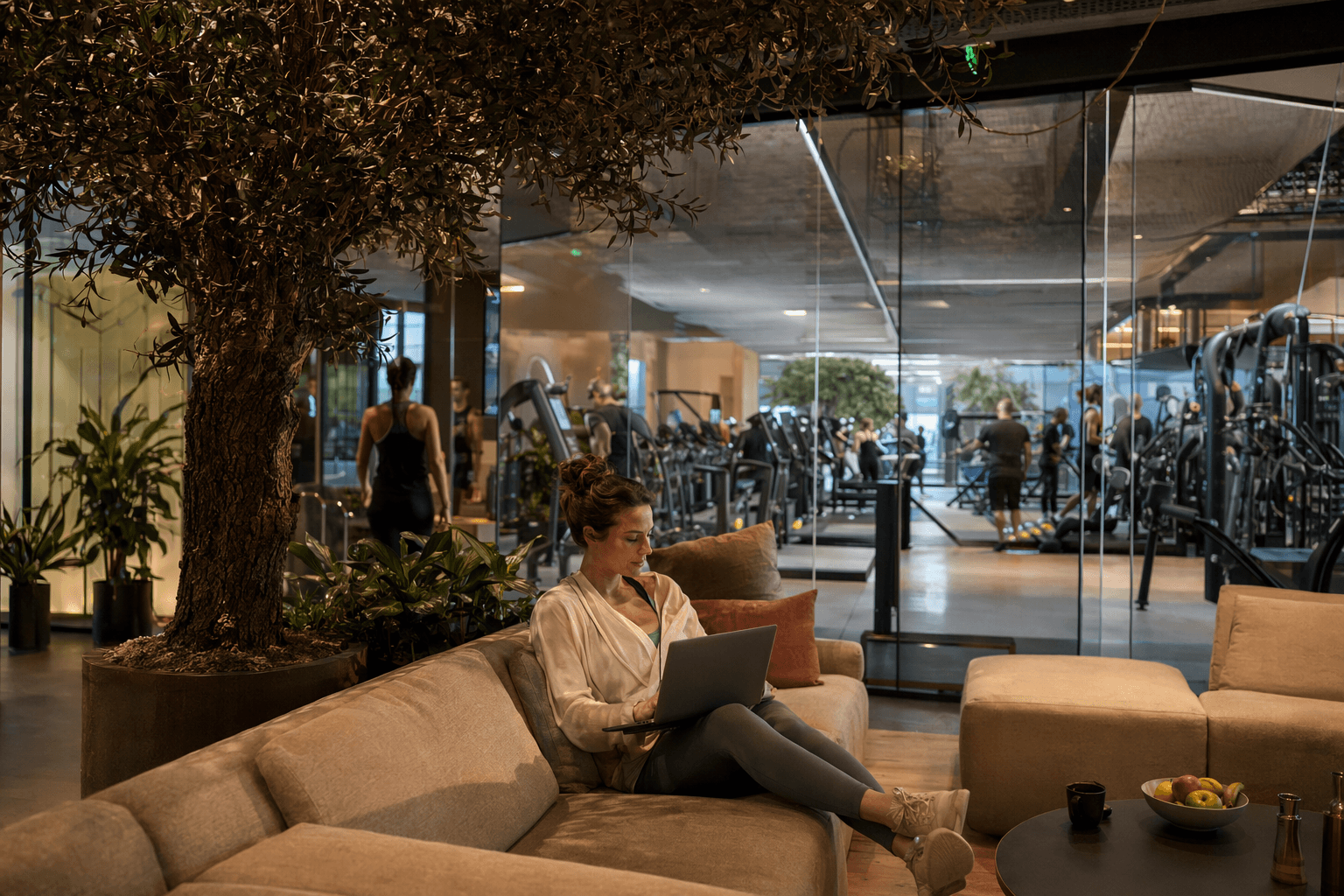
The most revealing detail in David Lloyd’s Barcelona strategy is its explicit “Work and Social” space. The company markets these areas as places to get through emails, have coffee, eat meals and meet others, which is a very different proposition from the traditional gym model. It acknowledges how much of urban life now happens in fragments, and how attractive it is when one membership can absorb work, childcare, exercise and a meal without a commute in between.
That is why the club is resonating with urban professionals and families who want to stay inside one ecosystem for more of the day. The appeal is not only that the facilities are premium, but that the club reduces friction. A parent can train while children are in crèche or DL Kids activities, take a meeting in the business lounge, and stay on for family dining. A remote worker can answer emails, grab coffee and still make a class before the school run. The value proposition is time, not just equipment.
Who this model is really for
This is the part of the story that matters most for Barcelona’s fitness market. The all-day club model is not chasing everyone. It is clearly aimed at households with enough flexibility, and likely enough disposable income, to pay for a bundled experience that folds in wellness, social life and childcare. That makes it especially relevant to time-poor professional families, remote workers and members who are willing to trade a basic gym price for a wider lifestyle infrastructure.
It also sharpens the split inside the market. Traditional gyms still compete on access, square footage and straightforward training utility. Premium clubs like David Lloyd are competing on design, atmosphere and the ability to host a whole day. In that sense, the Barcelona clubs are not just upscale gyms. They are convenience-led social environments, built for people who want the club to function as an extension of home and office.
Barcelona’s gym culture is becoming more explicit
Barcelona has long had a social side to its gym culture, but the expectation is becoming more visible and more commercial. The brand describes Turó as one of Barcelona’s most iconic clubs, and says it brings together sport, wellbeing and social connection. That language captures the broader shift: the club is no longer simply a place to train, but a setting where health, family life and status all intertwine.
If consumers continue rewarding this format, the market will keep moving toward lounges, recovery spaces, childcare, flexible working zones and richer social programming. Experience design will matter more than raw floor space. David Lloyd’s Barcelona clubs show where the category is headed: toward premium wellness hubs that try to hold the whole day, not just the workout.
This article was produced by Prism’s automated news system from verified source data, official records, and press releases, then run through automated quality and moderation checks before publishing. The system is built and supervised by the people who set the standards it runs under. Read our full AI policy.
Did this article answer your question?