Pilates10 pivots from women’s gym to scalable Pilates franchise model
Pilates10 did not win by adding more offerings. It won by narrowing the brief, turning Pilates into a repeatable studio model that is easier to teach, trust and franchise.
The real move was not Pilates. It was discipline.
Pilates10 is a clean case study in how a Barcelona fitness brand can scale by getting narrower, not broader. The company started as a women-oriented gym, but the founders eventually made the harder call: strip away the noise, build around a single specialty and make that specialty operationally repeatable. That shift turned Pilates10 from a local concept into a franchise-friendly platform with a clearer identity, stronger retention and a model that can travel.

At the center of that pivot is Albert Montserrat, who framed the strategy in plain terms: the company needed to find a powerful specialization and differentiate in a crowded market. That is the part operators often talk around. Pilates10 actually acted on it, and the result is a brand that looks less like a generic fitness chain and more like a tightly edited product.
From women’s gym to Pilates brand
Pilates10 traces its roots to a first Dona10 women’s fitness studio opened in Barcelona in 2005. The original model made sense in its moment, but the business environment changed fast. After the 2008 financial crisis, VAT increases and competition from international operators made the old women’s-gym formula less viable, so the company converted the model toward Pilates in 2011.
That was not a cosmetic rename. It was a response to pressure on pricing, positioning and customer expectations. By leaning into Pilates, the company moved into a category that could support health-led messaging, clearer method identity and a more consistent service standard across sites. Additional studios followed in 2013, 2014, 2016 and 2017, and the concept later expanded to mixed-gender studios under the Pilates10 brand in 2019.
The timeline matters because it shows the brand did not scale by chasing every fitness trend. It scaled by tightening the offer until the business had a shape investors, franchisees and customers could understand quickly.
Why Pilates became the scalable product
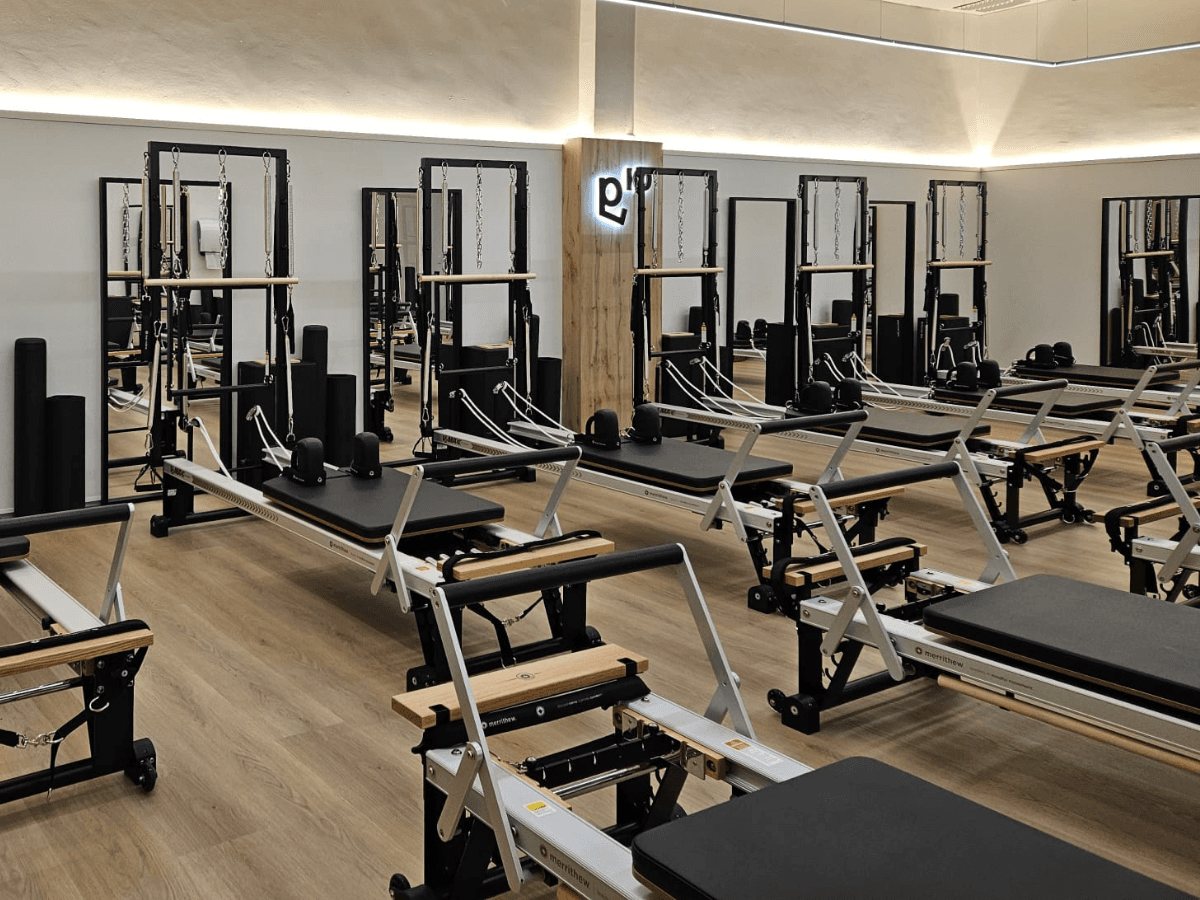
Pilates works for this kind of model because the format is inherently disciplined. Pilates10 says it offers mat and reformer classes for all levels, which is a strong franchise signal because it gives each studio a clear class architecture without requiring a one-off personality-led concept. The company also says its Barcelona classes are adapted for beginners, older adults and people in rehabilitation, which broadens the customer base without changing the core method.
That is the sweet spot. Small-group Pilates is more accessible than expensive one-to-one sessions, but still personal enough to feel coached rather than commoditized. It is also easier to standardize than many boutique fitness formats because the exercises, progressions and class flow can be taught, repeated and audited. For a fitness brand, that combination is gold: it supports consistency, makes staff training easier and gives members a reason to come back on a schedule.
Pilates10’s own positioning also underlines the practical benefits customers are buying into. The brand emphasizes reduced stress, flexibility, mobility and weight and metabolism benefits. In a market where fitness consumers are increasingly looking for performance and quality of life at the same time, that kind of messaging lands better than pure aesthetics.
The demographic tailwind is real
The broader market backdrop makes the pivot look even smarter. Spain’s Instituto Nacional de Estadística says the country had 48,619,695 inhabitants as of 1 January 2024, with an average age of 44.4 years and 20.4% of residents over 64. Another INE release put the population at 48,592,909 on the same date, showing a country that is large, aging and still growing.
That matters because Pilates sits neatly inside the preventive, joint-friendly, functionality-focused training category that aging consumers increasingly seek out. More than half of Spain’s population is now over 45, and that shifts demand toward services that feel sustainable rather than punishing. Pilates10 is clearly betting that the next wave of fitness demand will reward brands that help people move well, not just sweat hard.
For Barcelona operators, that is the strategic lesson. Trendy interiors and clever branding are not enough anymore. The city’s boutique fitness scene is maturing, and the brands that last will be the ones that can answer three questions cleanly: what do you do, who is it for, and can your staff deliver it the same way in every location?
How Pilates10 built a franchise-ready operating model
A franchise only works when the product can be repeated without losing its edge. Pilates10 seems to understand that better than most fitness operators. The company says it has more than 100 daily classes and a team of more than 40 professionals trained through its own academy. That is not just scale, it is process. A lot of studios can fill a timetable; fewer can build an internal training pipeline that keeps method quality from drifting as they expand.
Pilates10 Academy, which says it was born in 2017, trains in Barcelona, Girona, Sevilla, San Sebastián and Madrid. That kind of academy structure is a serious signal to franchise candidates because it reduces dependence on informal coaching and founder intuition. If you want the brand to travel, you need a common language, common standards and a visible route for onboarding new instructors.
The company’s footprint shows that the model is already being pushed beyond a single local cluster. Pilates10 says it has centers in Barcelona, Sevilla, Marbella, Girona, Huelva, Fuengirola, Esplugues and Madrid. It also says franchising began after 2023, after earlier franchise plans were delayed by the pandemic. That delay is worth noting because it suggests the company waited until it had enough operational confidence to move, instead of franchising a half-finished concept.
Growth targets tell you where the company sees the prize
In 2025, Pilates10 said it was targeting more than 5 million euros in revenue and 16 studios. In another 2025 projection, the group expected to open around ten centers in 2026. It also described a broader network that includes six Dona10 centers, 12 Pilates10 centers, eight owned centers, eight franchises and an academy serving 6,500 members.
Those numbers show a company trying to balance control with reach. Owned studios protect method and brand discipline. Franchises provide geographic expansion. The academy keeps the teaching line consistent. For this category, that balance is the whole game. If the method slips, the brand weakens. If the brand stays too narrow and never grows, it stalls. Pilates10 is trying to thread the middle path.
What Barcelona operators can learn from the playbook
The lesson for local fitness operators is not that everyone should become a Pilates brand. It is that scale gets easier when the offer gets more specific. Pilates10’s evolution shows how specialization can create a better business case than generalism, especially when the service is built around recurring attendance, visible instructor quality and a format that can be taught across sites.
- a clear method, not a vague wellness promise
- a studio format that can be reproduced without constant reinvention
- staff training that protects the product as the company grows
- a customer base that returns because the service solves a real physical need
- a positioning line that feels health-led, not trend-chasing
The brands most likely to win in Barcelona now will probably share the same traits:
Pilates10’s story is useful because it is not about making fitness louder. It is about making it sharper. That is what turns a local studio into a system, and a system into a franchise network that can keep its shape while it grows.
This article was produced by Prism’s automated news system from verified source data, official records, and press releases, then run through automated quality and moderation checks before publishing. The system is built and supervised by the people who set the standards it runs under. Read our full AI policy.
Did this article answer your question?