Planet Fitness faces investigation over investor disclosure concerns
Planet Fitness is facing a probe after a sharp stock drop and a weaker outlook, putting its investor disclosure practices under a microscope.

Planet Fitness is back under a microscope after Bleichmar Fonti & Auld LLP said it was investigating whether members of management or the board may have committed irregularities in what the company told investors. The scrutiny follows the May 7 earnings update, when Planet Fitness disclosed weaker-than-expected membership growth, cut its 2026 outlook, and saw its stock fall sharply.
That matters well beyond Hampton, New Hampshire. In Barcelona, where global gym brands compete for franchise capital, retail sites, and member loyalty, Planet Fitness is a reminder that the market now judges fitness chains on more than cheap dues and rapid unit growth. Investors, lenders, and franchise partners want a clean story on disclosure discipline, especially from brands that sell a low-cost growth model across Europe and Iberia.

The company’s latest numbers still show scale. Planet Fitness reported first-quarter 2026 revenue of $337.2 million, up 21.9% from a year earlier, with approximately 21.5 million members and 2,909 total clubs at the end of the quarter. System-wide same-club sales rose 3.5%, and Planet Fitness updated its 2026 outlook on May 7 after saying it had paused its Black Card promotion in March.
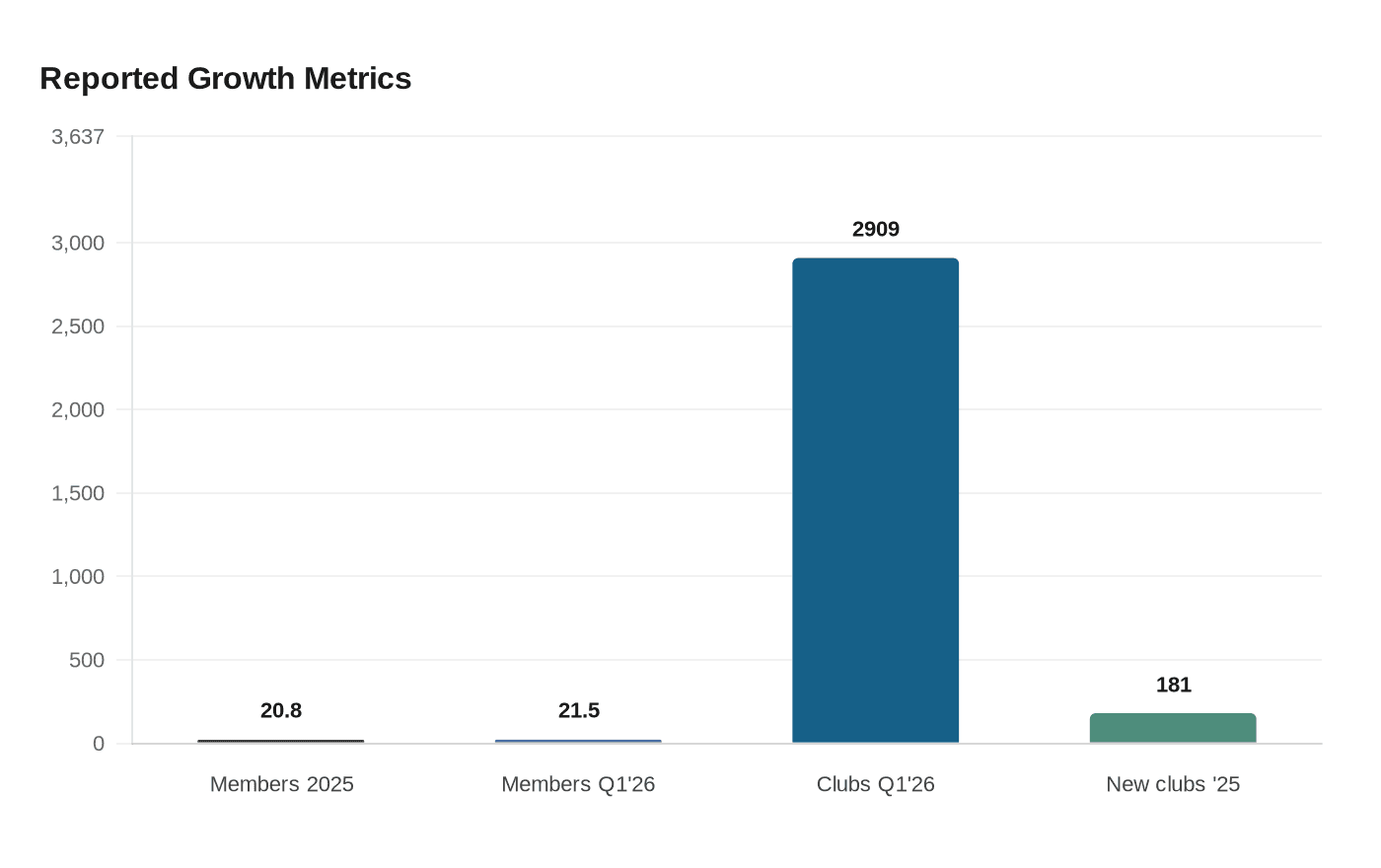
Those figures sit against a much bigger franchise machine. Planet Fitness ended 2025 with approximately 20.8 million members, opened 181 new clubs that year, and placed equipment in 152 new franchised locations. Its 2024 SEC filing said the current U.S. franchise agreement calls for a 7% monthly royalty on monthly dues and annual membership fees, but only 57% of clubs were paying that rate as of December 31, 2024 because of older agreements. For an operator built on scale, that kind of detail matters because it shapes how reliable the growth story looks from the outside.
The legal pressure is not about Barcelona operations specifically. It is about U.S. investor communications, growth targets, and market expectations after the May 7 reset. Levi & Korsinsky also launched a probe, underscoring how quickly a disappointing quarter can turn into governance scrutiny when a public company leans hard on expansion and recurring revenue.
Planet Fitness has also made a leadership change that adds to the governance backdrop. Former CFO Tom Fitzgerald was named interim CFO after Jay Stasz’s departure. For a brand that still sells itself as a simple, predictable category leader, that combination of softer guidance, shareholder investigations, and a finance-team transition is exactly the kind of signal that makes franchise-heavy fitness markets pay attention.
This article was produced by Prism’s automated news system from verified source data, official records, and press releases, then run through automated quality and moderation checks before publishing. The system is built and supervised by the people who set the standards it runs under. Read our full AI policy.
Did this article answer your question?