Spain’s fitness sector pushes data and advocacy agenda at annual meeting
Spain’s fitness lobby paired a new advocacy campaign with a data-heavy annual report at the CSD, aiming to win more policy weight, funding and local partnerships.
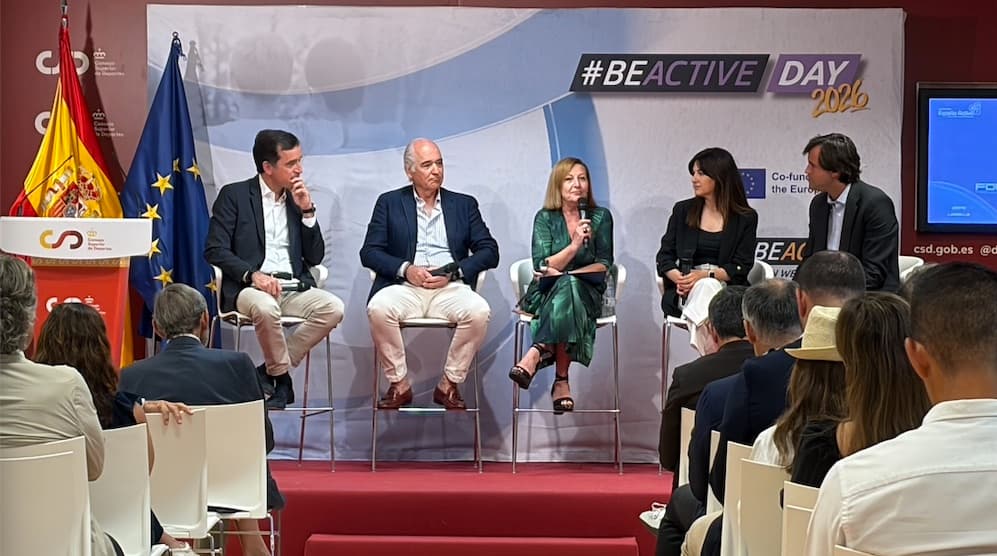
Fundación España Activa used its annual meeting at the Consejo Superior de Deportes in Madrid to put hard numbers behind its push for more influence on sport policy. At the June 30 gathering, the foundation presented #BEACTIVE DAY 2026 and mapped out how to strengthen its annual fitness-sector report, turning the event into a bid for more legitimacy with public institutions, not just another industry showcase.
The report is built to look beyond a simple market snapshot. Its new executive summary says it draws on a database of all active sports and fitness centers in Spain in 2025, questionnaires sent to operators and 50% representation of chain-managed centers. It also folds in the EuropeActive Consumer Survey 2026 and structured interviews with health professionals and public-administration specialists, giving the sector a broader analytical frame for decisions on participation, retention and public partnerships.
That data push matters because the sector wants to be treated as a serious economic and health actor. Fundación España Activa says Spain’s fitness sector surpassed 3.2 billion euros and 8 million users in 2025. 2Playbook put the figure at 3,235 million euros, with 8.3 million users and 16.5% penetration among people over 15. The foundation’s mission is to promote physical activity to fight sedentarism and obesity, conditions it links to diabetes and hypertension. That message lands in a policy climate that is already shifting, with the government’s 2025-2030 National Strategy to Promote Sport Against Sedentary Behavior and Physical Inactivity backed by 87 million euros.
The wider stakes show up in the labor and business data. The Consejo Superior de Deportes said sport-related employment reached 270,200 people in 2025, while sport-related companies stood at 46,510 at the start of the year. More than half are concentrated in Catalonia, Andalusia, Madrid and Valencia. For Barcelona, that is not abstract. A separate market study presented in June 2026 counted 929 operational fitness centers in the city, 20 upcoming openings and 476 million euros in business volume at the end of 2025, with supply concentrated in Eixample, Sant Martí and Sants-Montjuïc.
#BEACTIVE DAY 2026, developed under Erasmus+ and coordinated in Spain by Fundación España Activa, fits that strategy neatly. The campaign and the report are meant to do the same job: make physical activity easier to measure, easier to defend in public policy and more useful to clubs, municipal programs and private operators trying to prove their value in Barcelona’s crowded fitness market.
This article was produced by Prism’s automated news system from verified source data, official records, and press releases, then run through automated quality and moderation checks before publishing. The system is built and supervised by the people who set the standards it runs under. Read our full AI policy.
Did this article answer your question?