Americas agriculture could supply more SAF with aligned standards
IICA and CPBIO said the Americas could supply more SAF feedstocks if countries align sustainability rules. The bottleneck is certification, not crop availability.
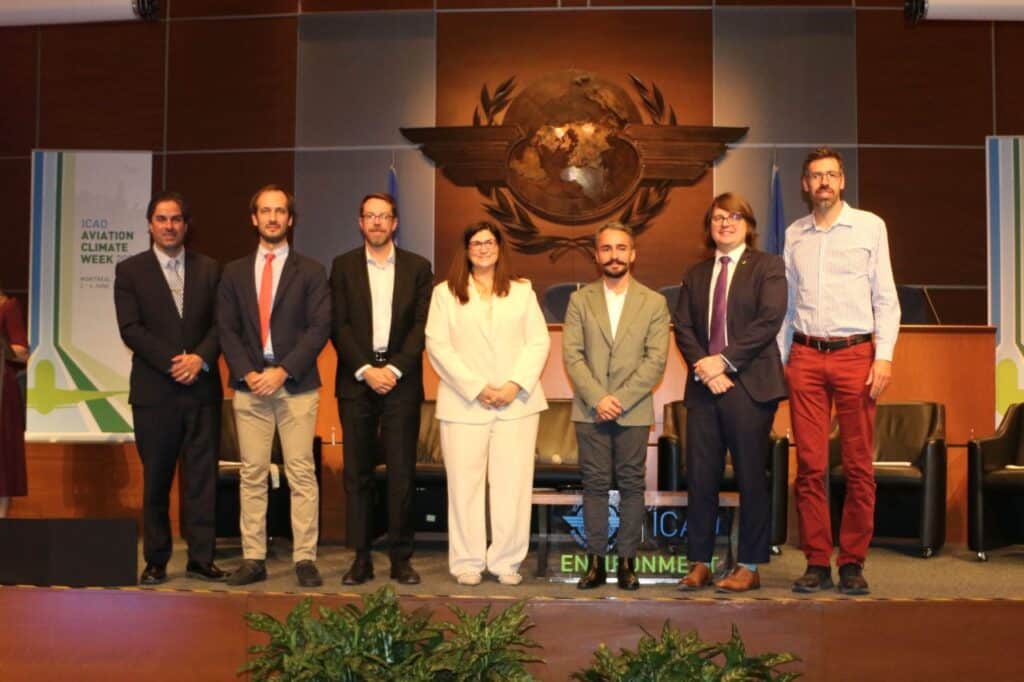
IICA and CPBIO on June 15 said SAF still made up less than 1% of global aviation fuel use, and argued the Americas could supply more feedstocks if standards align. The Montreal meeting, held during Climate Week 2026, brought together senior officials, international organizations, aviation representatives, technical experts and energy-sector stakeholders.
The coalition’s core message was that sustainable aviation fuel needs clearer, more compatible rules across borders. In its statement, IICA said the lack of mutual recognition between methodologies adds certification costs, duplicate paperwork and trade barriers that slow investment. The group framed agriculture as more than a fuel input: crops, waste, vegetable oils, fats and other biomass streams can be routed into renewable fuel, creating rural employment and new value-added markets across Latin America and the Caribbean.

That pitch fits a region that already has major agricultural and industrial capacity in biofuels. IICA and the Pan American Liquid Biofuels Coalition said the Americas can turn that base into a larger SAF supply chain if governments and buyers accept interoperable sustainability methods. The policy case is not limited to aviation emissions. It links energy security, farm income and decarbonization, with certification treated as trade infrastructure rather than a back-office compliance exercise.
The timing also followed a broader ICAO push. ICAO’s Aviation Climate Week 2026 ran June 2-4 at ICAO headquarters in Montréal under the theme “One Global Path: Advancing Net-Zero Aviation.” ICAO defines SAF as renewable or waste-derived aviation fuel that meets sustainability criteria, and its global framework carries a collective aspirational vision to cut international aviation CO2 emissions by 5% by 2030. ICAO says SAF and other cleaner energies are expected to deliver the largest share of aviation CO2 reductions by 2050.
The market backdrop remains tight. IATA says SAF currently accounts for less than 1% of global aviation fuel use. In a June 2026 update, the airline group estimated global SAF production would reach about 2.4 million tonnes in 2026, equal to 0.8% of aviation fuel use, at a cost of $4.3 billion to airlines. IATA also says SAF remains several times more expensive than conventional jet fuel because of feedstock costs, developing production technologies, limited infrastructure and high upfront investment needs.
ICAO and IRENA launched Finvest@ETAF in September 2025 to connect SAF and clean aviation-energy projects with financing partners and help de-risk projects. ICAO’s ACT-SAF program is also supporting feasibility studies, business implementation studies and capacity-building, with recent work in Costa Rica, Peru, Uganda and Nigeria. CPBIO, created in 2023, brings together business and industrial associations tied to sugar, alcohol, maize, sorghum, soybeans, vegetable oil and grains, and IICA said it joined CPBIO in Rosario in August 2025 to call for regional SAF development.
This article was produced by Prism’s automated news system from verified source data, official records, and press releases, then run through automated quality and moderation checks before publishing. The system is built and supervised by the people who set the standards it runs under. Read our full AI policy.
Know something we missed? Have a correction or additional information?
Submit a Tip