Biofuel demand could help stabilize US farm incomes as yields rise
S&P Global Energy says more biofuel demand can absorb surplus corn and oilseeds as yields climb, offering a buffer for farm income and land values.
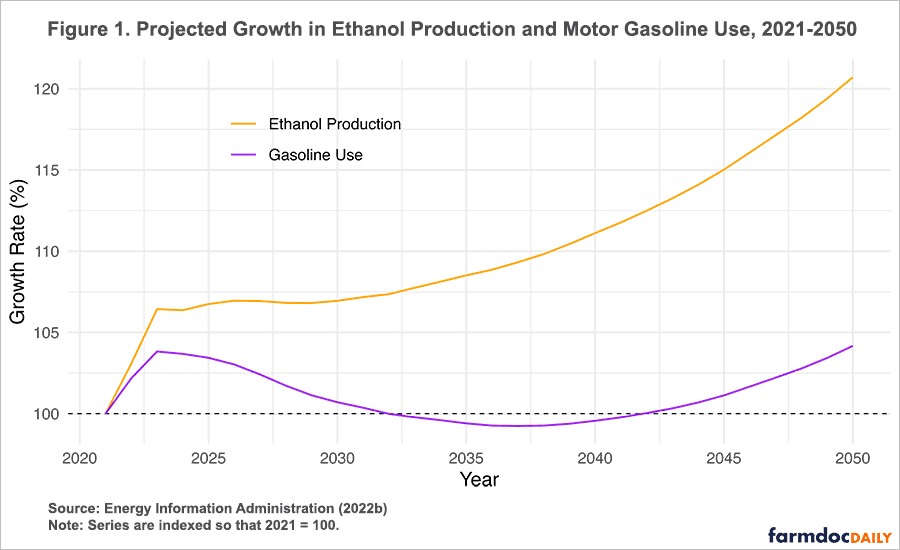
S&P Global Energy on June 16 said expanding biofuel demand is one of the few levers that can absorb more of the nearly 45% of U.S. corn already flowing to ethanol. The firm’s June study argues that higher yields are improving productivity while pressuring prices, leaving farm income, land rents and credit metrics exposed if industrial demand does not keep pace.
Biofuels as the demand valve
The report, titled *Fueling agriculture: biofuels as the catalyst*, frames biofuels as more than a fuel policy debate. Its table of contents points to a longer adjustment in agriculture, with sections on slowing population growth, slowing food consumption growth, biofuel demand under pressure, agricultural yields outpacing food and fuel demand, and the risk of a prolonged agricultural downcycle.
That framing matters because it puts ethanol, biodiesel, renewable diesel and other clean-fuel outlets at the center of the crop balance sheet. S&P Global Energy’s analysis says more biofuel demand could pull additional corn and oilseeds into industrial use, which would help steady farmer income and support farmland values even as production technology keeps lifting yields faster than food and feed demand.
The study also lays out a U.S.-specific case, including biofuels driving agricultural growth and market resilience, policy frameworks supporting biofuel deployment, biofuel blend rates suggesting significant market potential for agriculture, and preserving crop acreage. S&P Global Energy said the work combines proprietary datasets, quantitative modeling, scenario analysis and field insights from across the agribusiness and biofuels value chain.
US farm income still looks uneven
USDA’s Economic Research Service on May 7 projected 2026 net farm income at $153.4 billion, down 0.7% from 2025 in nominal terms. The same forecast put 2026 net cash farm income at $158.5 billion, up 3.0% in nominal terms, while average net cash farm income for farm businesses was expected to rise 18.7% to $135,000 per farm in nominal terms.
USDA also forecast farm sector equity at $3.92 trillion in 2026, up 2.9% from 2025. That combination points to a farm economy that is under pressure in some measures but still supported by cash flow and land-based wealth. For the biofuels sector, that split is central: crop demand can soften the downside in commodity prices even when asset values and liquidity have not fully cracked.
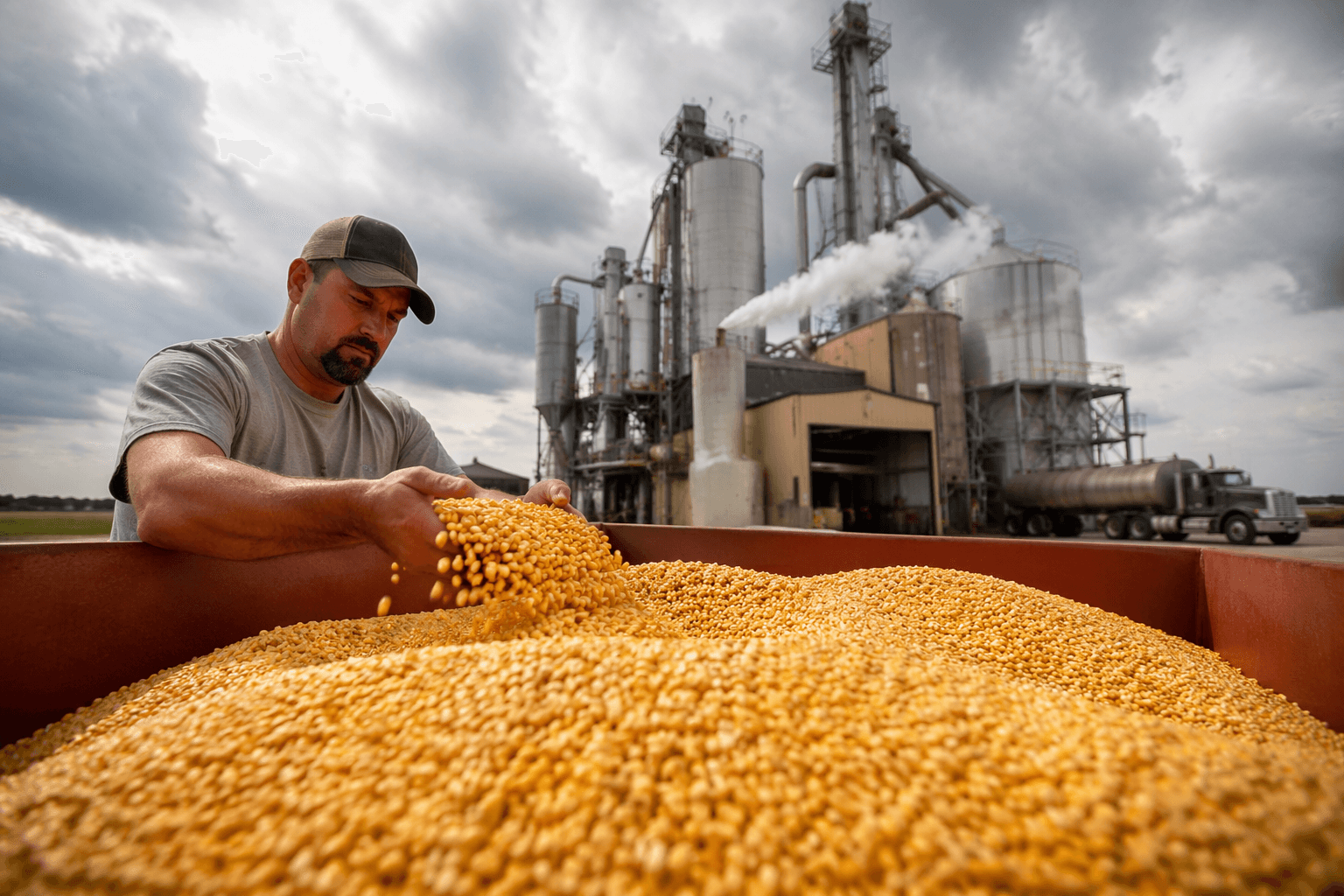
The policy debate around renewable fuels is increasingly tied to that gap. If more corn and oilseeds are locked into fuel use, the market has a better chance of avoiding persistent oversupply, which can weigh on grain prices and weaken the economics behind planting, storage and equipment investment.
Land values have held up, for now
Federal Reserve district data show farmland remains resilient even as crop-sector stress builds. The Federal Reserve Bank of Kansas City said on June 3 that farmland values in the Midwest and Plains states increased slightly in the first quarter of 2026, with nonirrigated cropland values about 3% higher than a year earlier. The bank said land values remain near record levels even as farm finances tighten and credit conditions deteriorate.
The Federal Reserve Bank of Chicago reported on May 14 that Seventh District farmland values in the first quarter of 2026 were 3% higher than a year earlier, while good agricultural land was 1% lower than in the fourth quarter of 2025. Together, the two district reports suggest the land market is still absorbing weaker crop returns, but the cushion is not unlimited.
That is where S&P Global Energy’s argument lands hardest. If biofuel demand can keep more bushels moving into industrial channels, the acreage base and the rent stream behind it are less likely to soften sharply. If not, farmland values can stay elevated for a time while the underlying crop economy keeps weakening.
Industry is already warning about the supply-demand gap
Iowa Public Radio reported in January 2026 that nearly 45% of all U.S. corn goes to ethanol, and that Iowa and Illinois account for about one-third of U.S. corn production. In the same reporting, Iowa Corn Growers Association president Mark Mueller said farmers need new and expanded corn and ethanol markets as they face high input costs, low commodity prices and steadily rising production.
That same coverage said a study prepared for the Iowa Corn Growers Association and the Iowa Renewable Fuels Association projects the gap between corn supply and demand will keep growing over the next decade without new or expanded markets. The warning is straightforward: yields can keep rising even when domestic food and feed demand does not, and biofuels become the pressure release valve.
For ethanol producers, biodiesel plants and feedstock processors, the strategic message is clear. Policy certainty around blend mandates, tax credits and access to fuel markets now carries weight beyond refinery margins. It also feeds directly into the income line for growers, the value of Midwest farmland and the durability of rural credit.
The bigger question is structural, not cyclical
S&P Global Energy’s report treats biofuels as a buffer against a structural productivity problem in agriculture, not just a climate or energy tool. That is the key distinction. If technology keeps pushing yields higher while population and food consumption growth slow, then the farm sector needs another demand sink to prevent a deeper and longer downcycle.
USDA’s bioenergy data pages already track corn used for ethanol, along with biodiesel production capacity and utilization. USDA’s oil crops data also track the vegetable oils that feed biodiesel, renewable diesel and sustainable aviation fuel. Those series underline the same point the S&P report makes: industrial demand is part of the farm balance sheet, not a side story.
The market has not broken yet. USDA’s income outlook, the Federal Reserve’s land-value data and the persistent role of ethanol in corn demand all show a sector still standing. But the next phase of farm stability may depend less on another yield gain and more on whether biofuel demand can keep absorbing the crop surplus that higher productivity keeps creating.
This article was produced by Prism’s automated news system from verified source data, official records, and press releases, then run through automated quality and moderation checks before publishing. The system is built and supervised by the people who set the standards it runs under. Read our full AI policy.
Know something we missed? Have a correction or additional information?
Submit a Tip