Cemvita scales FermOil to 75,000 liters using biodiesel byproduct
Cemvita proved FermOil at 75,000 liters, turning crude glycerin from biodiesel into a SAF-ready oil that fits HEFA systems.
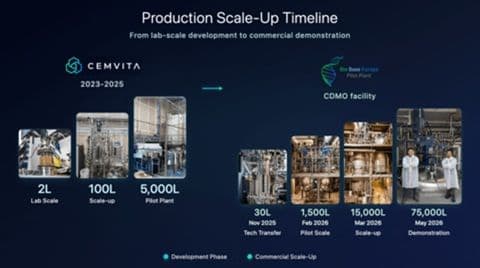
Cemvita on June 3 said it completed a 75,000-liter industrial fermentation campaign at the Bio Base Europe Pilot Plant, pushing its FermOil platform from bench-scale work into a demonstration run built around crude glycerin from biodiesel production. The company said the step-up matters because industrial biotech often fails at scale, where control systems, feedstock variability and vessel performance become harder to manage.
Cemvita said the process advanced through 2-liter, 30-liter, 1,500-liter and 15,000-liter fermentations before reaching the 75,000-liter campaign. The company and Bio Base Europe Pilot Plant said the run validated reproducibility and process stability, two milestones that matter for investors weighing whether a future commercial plant can deliver consistent output rather than one-off lab results.
The commercial case is broader than a single pilot. FermOil turns crude glycerin, a low-value biodiesel byproduct, into renewable natural oil, creating a higher-value outlet for a residual stream that is often treated as a disposal problem. Cemvita said the platform is compatible with existing HEFA and co-processing infrastructure used to make sustainable aviation fuel, which gives the route a direct path into refinery assets and a market segment that already understands drop-in fuel economics.
Policy also lines up with the feedstock story. Cemvita said crude glycerin is recognized under RED III Annex IX Part A, and the company pointed to European Union policy that places feedstocks in that category when they can only be processed with advanced technologies. That makes the glycerin-to-SAF route strategically relevant in Europe, where advanced feedstocks are central to aviation decarbonization and where Annex IX can shape which pathways attract capital.
Cemvita has been building the same commercial narrative in Brazil. In January 2025, Cemvita and Be8 signed a memorandum of understanding to develop glycerin into low-carbon feedstock for SAF, and Cemvita later described Be8 as the crude glycerin supplier for a co-located plant in Brazil. The company has also said its first industrial-scale bioconversion plant is planned for Rio Grande do Sul, a state it cites for crude glycerin availability, industrial infrastructure and low-carbon policy support.
Cemvita said in July 2024 that its technology could support output of up to 500 barrels per day from its first commercial plant, a target it originally tied to 2029. The 75,000-liter campaign gives that plan a more credible industrial footing, and if it converts into bankable supply, it could widen the SAF feedstock base while improving the economics of biodiesel byproducts themselves.
This article was produced by Prism’s automated news system from verified source data, official records, and press releases, then run through automated quality and moderation checks before publishing. The system is built and supervised by the people who set the standards it runs under. Read our full AI policy.
Know something we missed? Have a correction or additional information?
Submit a Tip