US reaches first cow manure to sustainable aviation fuel breakthrough
Circularity Fuels said a six-month pilot near Madera turned dairy-manure biogas into ASTM-grade SAF, a first for a farm-linked jet-fuel pathway.
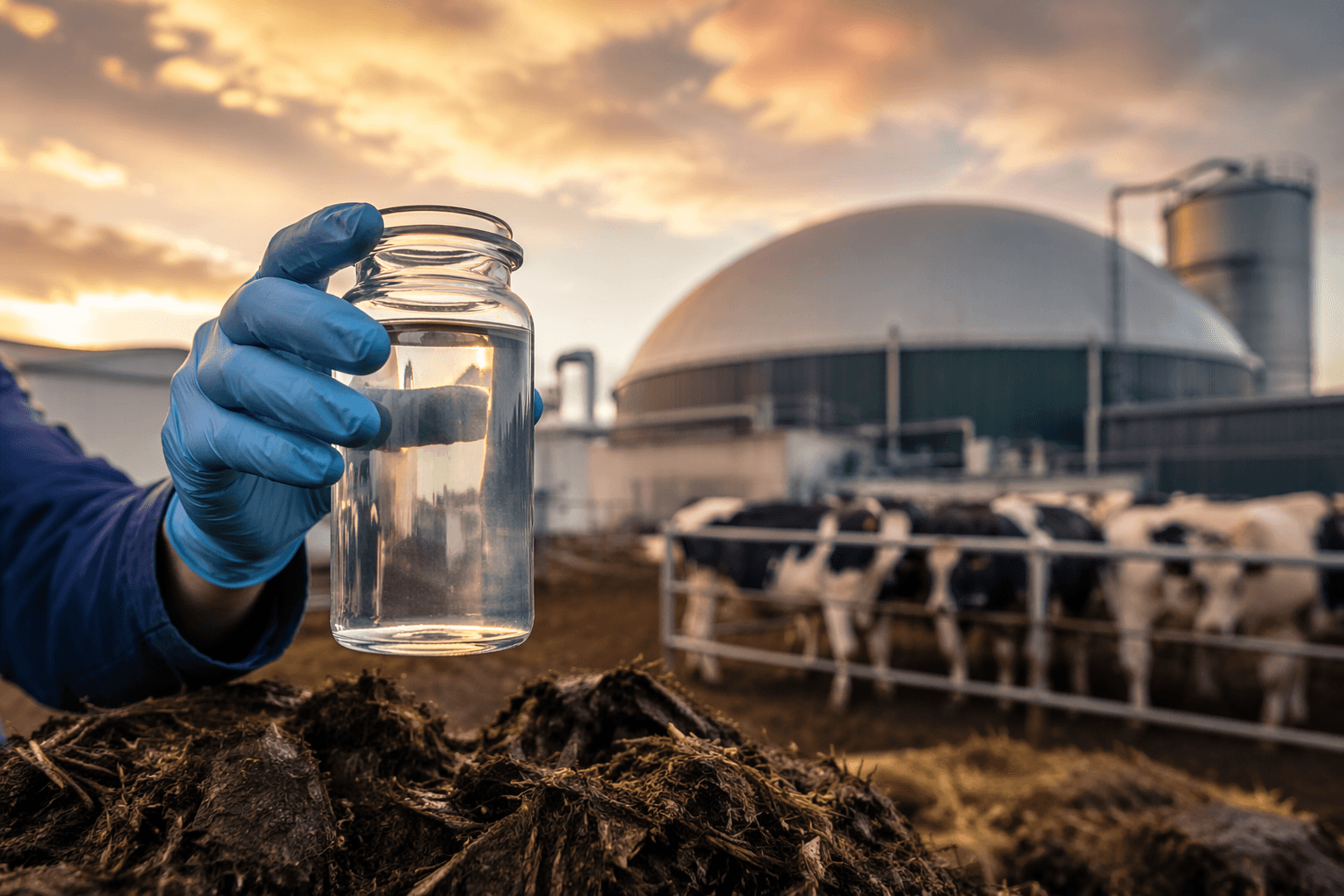
Circularity Fuels on June 16 said it ran a six-month pilot that turned raw dairy-manure biogas into ASTM-grade sustainable aviation fuel. The California startup said the system ran near Madera, California, on biogas from a manure digester serving more than 5,000 cattle.
Circularity described the demonstration as the first end-to-end conversion of raw cow-manure biogas into jet fuel. The company said its two-reactor system ran for thousands of operating hours on raw biogas that was about 65% methane and 35% carbon dioxide, then produced finished fuel that met ASTM D7566 Annex A1 specifications.
That standard matters because ASTM-compliant SAF can be blended into certified jet fuel streams. Circularity also said its modular system could be built at roughly one-fifth the capital cost of SAF plants now under construction in Europe, and that commercial-scale installed capacity could come in below $100,000 per barrel-per-day. The company says it is developing AI-controlled, mass-manufacturable reactors designed to turn waste carbon and renewable power into drop-in hydrocarbons.
The timing lands in a market where SAF supply remains thin and feedstocks are crowded. The International Air Transport Association estimated global SAF production in 2025 at about 2 million tonnes, while aviation may need roughly 500 million tonnes by 2050 to reach net zero. IATA said the only commercially scaled SAF facilities today use HEFA, often from used cooking oil, and that competition for the same feedstocks is a major bottleneck.
On the manure side, the U.S. Environmental Protection Agency says dairy manure is the nation’s largest source of methane from livestock manure management. EPA data showed 400 manure-based anaerobic digestion systems in the United States as of June 2024, and the agency said biogas recovery systems are technically feasible at more than 8,000 large dairy and hog operations. The Federal Aviation Administration describes SAF as a drop-in fuel that can be used with existing aircraft and infrastructure.
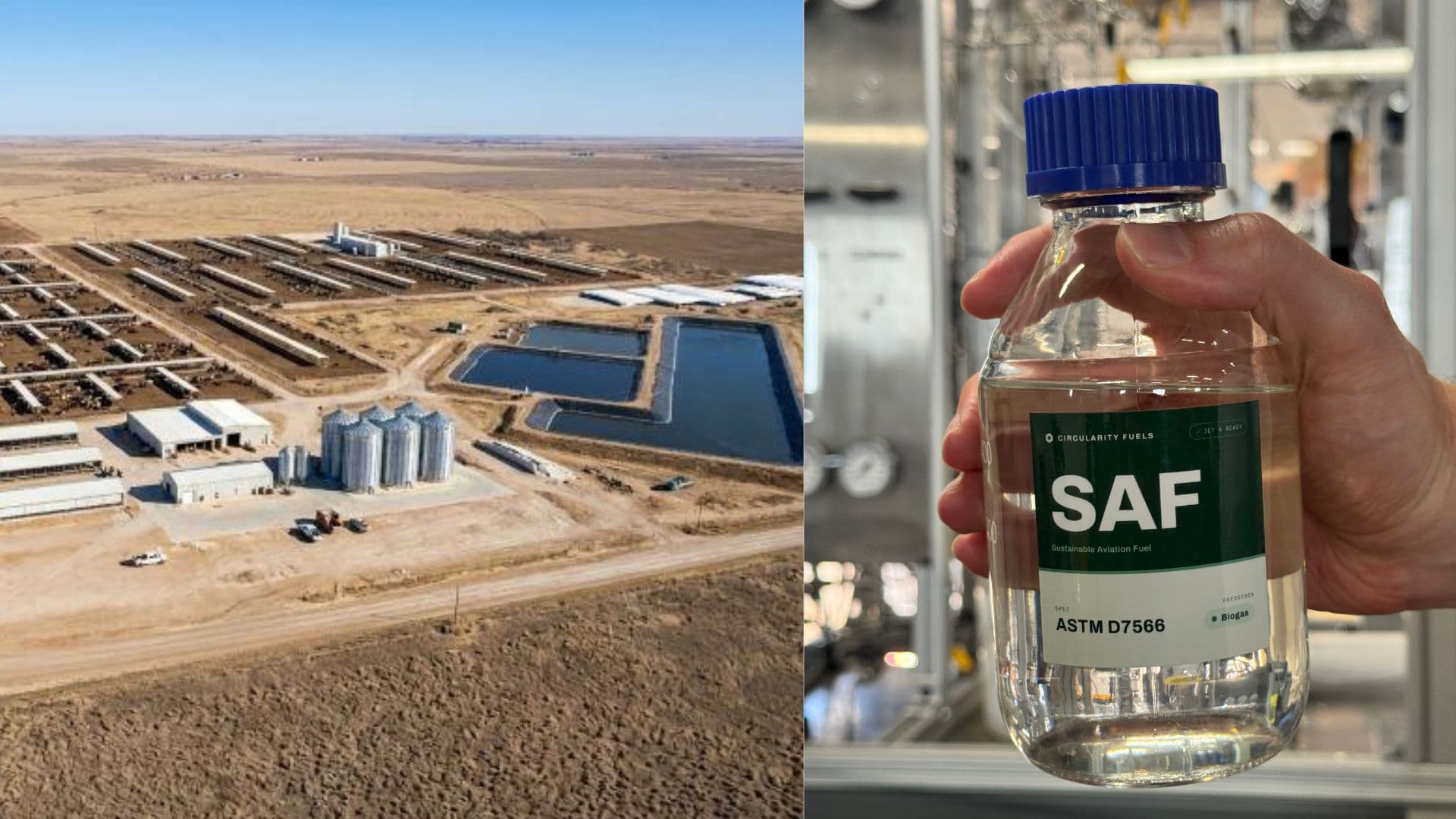
For Circularity, the commercial test is whether a digester-linked fuel route can scale beyond a single dairy and into repeatable units that compete on capital cost as well as on feedstock availability. If it does, manure management, methane abatement and aviation decarbonization would start to sit in the same project economics.
This article was produced by Prism’s automated news system from verified source data, official records, and press releases, then run through automated quality and moderation checks before publishing. The system is built and supervised by the people who set the standards it runs under. Read our full AI policy.
Know something we missed? Have a correction or additional information?
Submit a Tip