IATA says Brazil could become a global SAF powerhouse by 2030
IATA said Brazil could supply 12 million tonnes of SAF by 2030, but only if feedstock, logistics and policy line up before the market stays mostly aspirational.

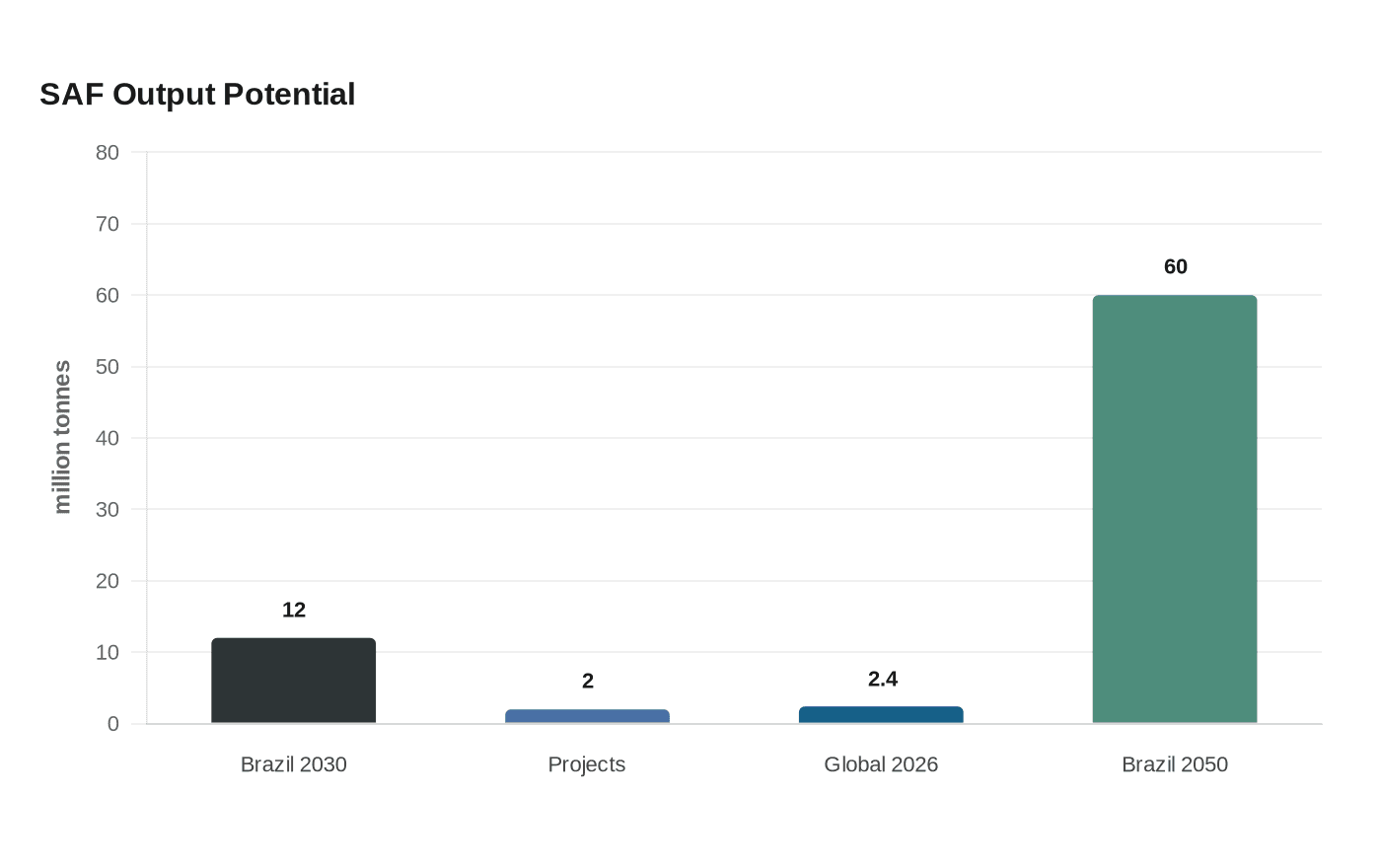
Brazil’s SAF pitch moved from conference language to a hard commercial test at IATA’s annual meeting in Rio de Janeiro: the country could reach about 12 million tonnes of SAF production potential by 2030, but only if feedstock supply, export logistics and policy certainty all arrive together. IATA said Brazil has around 15 SAF projects under way, yet if every one is completed they would bring only about 2 million tonnes online, a fraction of the scale needed to turn the country into a true supply hub.
The association’s case rested on feedstock math. IATA said airlines will need about 500 million tonnes of SAF by 2050 to reach net zero CO2 emissions, while Brazil has roughly 180 million tonnes of biomass feedstock potential by then, enough to generate around 60 million tonnes of SAF. By 2030, IATA said Brazil’s sustainably sourced sugar-based ethanol, plus virgin and waste oils, could reach about 18 million tonnes of feedstock, translating into roughly 12 million tonnes of SAF, about five times the 2.4 million tonnes of global SAF production IATA expects in 2026.
Willie Walsh, IATA’s director general, said Brazil had “all the ingredients” to become a global SAF powerhouse, pointing to one of the world’s cleanest electricity mixes, the country’s position as the second-largest producer of liquid biofuels and its developed infrastructure. Even so, IATA described Brazil’s SAF base as still early stage and said the country will need conversion technology, better logistics, policy support and investment before those advantages become exportable barrels rather than conference talking points.
That reality check ran through the broader meeting. IATA said global SAF production in 2026 will reach only about 2.4 million tonnes, or 0.8% of aviation fuel use, at a cost of US$4.3 billion to airlines. Walsh also said global jet fuel prices were expected to be 70% higher year on year, adding about US$100 billion to airlines’ fuel bill in 2026, underscoring why even well-capitalized carriers are still hesitant to underwrite expensive new supply chains.
Brazil’s policy and aviation backdrop gives the pitch some weight. Vice President Geraldo Alckmin said Brazil transported nearly 130 million passengers in 2025, with domestic traffic topping 100 million passengers for the first time and international traffic reaching 28.4 million. He also cited 42 airport infrastructure projects completed in 2024, 3.2 billion reais in investments, and the Ampliar Program, which could fold up to 102 regional airports into concession contracts and unlock another 3.4 billion reais. The Fuel for the Future Law, passed in October 2024, gives Brazil a legal framework for alternative fuels, but IATA’s message in Rio was clear: Brazil’s SAF edge is real, yet commercial scale will depend on whether the country can turn feedstock abundance and airline demand into a functioning industrial and export platform.
This article was produced by Prism’s automated news system from verified source data, official records, and press releases, then run through automated quality and moderation checks before publishing. The system is built and supervised by the people who set the standards it runs under. Read our full AI policy.
Know something we missed? Have a correction or additional information?
Submit a Tip