IMO ruling boosts Brazilian corn ethanol as shipping fuel candidate
IMO set Brazilian corn ethanol’s default footprint at 20.8 gCO2e/MJ. Producers said the ruling could open shipping-fuel demand.

The International Maritime Organization in May set Brazilian corn ethanol’s default carbon footprint at 20.8 grams of CO2e per megajoule, creating a formal emissions value for shipping markets. The benchmark matters because the IMO says shipping’s current average greenhouse gas fuel intensity is 93.3 grams of CO2e per megajoule.
The ruling sits inside the IMO’s wider life-cycle framework, which covers well-to-tank, tank-to-wake and well-to-wake emissions for marine fuels and energy carriers. It also comes under the organization’s draft net-zero package, approved in April 2025, which pairs mandatory emissions limits with greenhouse-gas pricing across shipping and is aimed at net-zero international shipping by 2050.
For Brazilian second-crop corn ethanol, the commercial point is market access. A defined carbon value gives fuel buyers, shipowners and regulators a common reference for comparing marine fuels on a lifecycle basis, which can determine whether the fuel clears a decarbonization threshold or gets priced out of the market.
Gustavo Mariano, vice president of trading at Inpasa, called the move a “historic and symbolic milestone” and said it consolidated the position of Brazilian and South American corn ethanol as a fuel for decarbonization. Rafael Abud, chief executive of FS Fueling Sustainability, said producers could benefit from premiums on greener fuels once biofuels are approved for shipping use. Abud said FS has invested in cutting emissions from biomass use and industrial efficiency, along with a bioenergy with carbon capture and storage project that could eventually make its ethanol carbon negative.
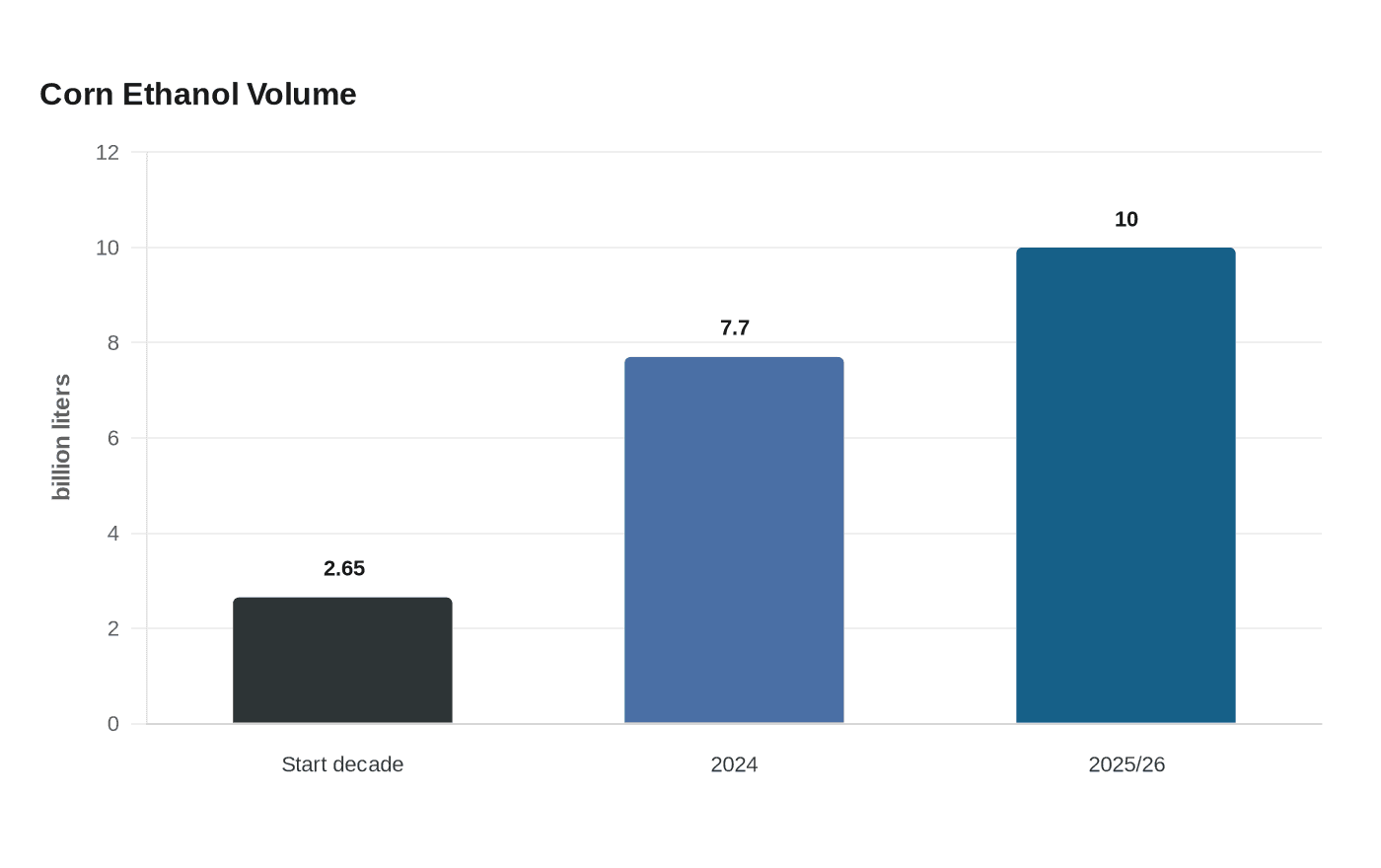
Brazil’s corn ethanol industry has scaled fast enough to press the case. UNEM says output rose to almost 10 billion liters in the 2025/26 season from 2.65 billion liters at the start of the decade. UNICA reporting showed Brazil’s 2024 ethanol supply hit a record, with 7.7 billion liters coming from corn.
Brazil’s representative to the IMO, navy captain Flavio Mathuiy, said the fuel became the first biofuel compatible with marine transport to have its carbon footprint defined and approved by the regulator. Even so, the ruling is only one gate in the market structure: it gives Brazilian corn ethanol a credible pathway into shipping decarbonization, while the next hurdle is turning a technical carbon score into approved offtake and paid premiums. For now, the fuel looks set to complement sugarcane ethanol and biodiesel rather than displace them in maritime demand.
This article was produced by Prism’s automated news system from verified source data, official records, and press releases, then run through automated quality and moderation checks before publishing. The system is built and supervised by the people who set the standards it runs under. Read our full AI policy.
Know something we missed? Have a correction or additional information?
Submit a Tip