Philippines pushes coco-biodiesel blend hike to 5% for energy security
The Philippines backed a jump in coco-biodiesel blending to 5%, with officials saying the move could support 2.5 million to 3.5 million coconut farmers.

The Philippine Department of Agriculture on June 27 backed an immediate jump in coco-biodiesel blending to 5%, from 3%, as the government moved to steady fuel supply and lift coconut incomes.
The endorsement covered Resolution No. 03, Series of 2026, approved by the Philippine Council for Agriculture and Fisheries-National Sectoral Committee on Coconut and forwarded to the Senate and the Department of Energy. The proposal sits under Republic Act 9367, the Biofuels Act of 2006, which promotes coconut methyl ester blending in petroleum products to revive the coconut industry, strengthen energy security and support environmental goals.
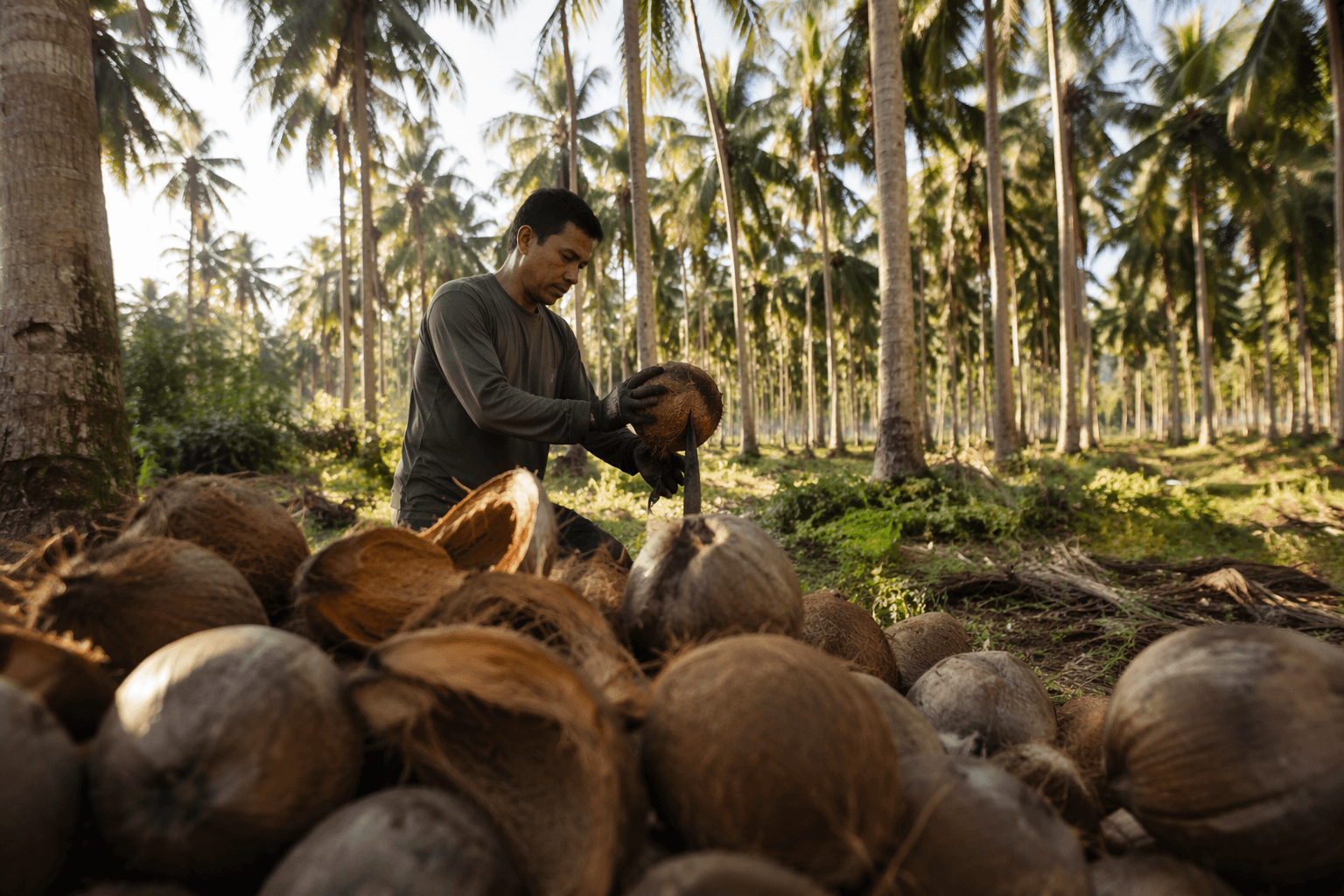
Agriculture Secretary Francisco Tiu Laurel Jr. supported the transition to a B5 mandate, and Philippine Coconut Authority Administrator Dexter Buted also backed the proposal. The DA said the higher blend could support an estimated 2.5 million to 3.5 million coconut farmers, expand demand for coconut products and help stabilize farmgate prices across the value chain.
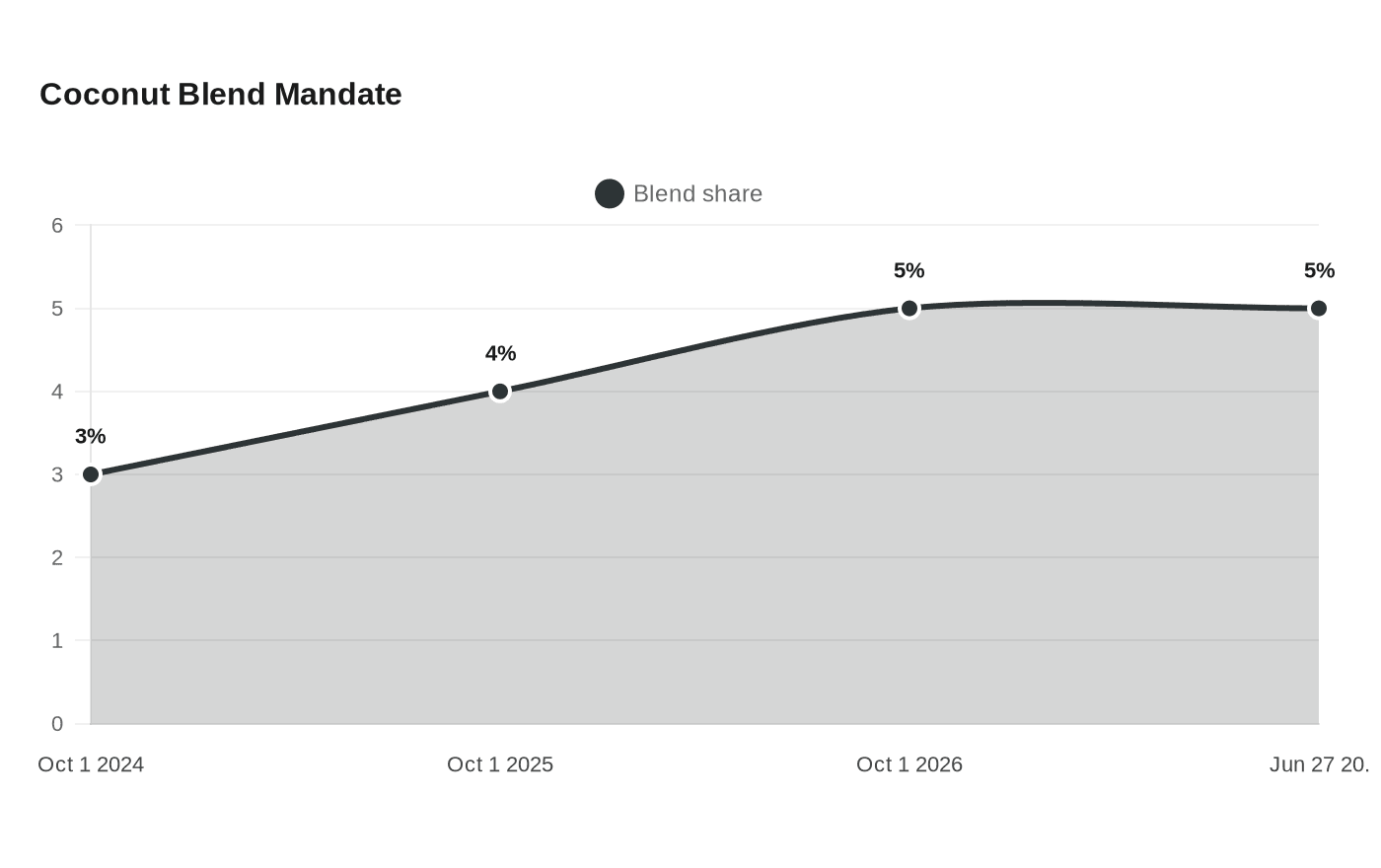
The policy push builds on the Philippines’ B3 mandate, which took effect on October 1, 2024. Under Department of Energy Circular No. 2024-05-0014, downstream oil industry participants were scheduled to raise the coconut methyl ester blend to 4% on October 1, 2025 and to 5% on October 1, 2026. That rollout was delayed after coconut oil prices spiked sharply, but the agriculture department now says market conditions are more favorable for the higher blend.
The feedstock math remains tight. USDA Foreign Agricultural Service data show that about 900 million coconuts are needed to produce the 100 million to 120 million liters of CME required for each 1 percentage-point increase in the mandate. A move from B3 to B5 would therefore require two more percentage points of supply, adding a large pull on domestic coconut output and reinforcing the case for keeping more of the crop inside the fuel market.
Government and industry backers are framing B5 as a way to cut reliance on imported fuel, create jobs and preserve a domestic outlet for coconut oil. For coconut growers, the higher mandate would turn a policy floor into a larger guaranteed market, provided the supply base can keep pace with the blend target.
This article was produced by Prism’s automated news system from verified source data, official records, and press releases, then run through automated quality and moderation checks before publishing. The system is built and supervised by the people who set the standards it runs under. Read our full AI policy.
Know something we missed? Have a correction or additional information?
Submit a Tip