University of Surrey spinout BiofuelAi wins Manchester Prize for biogas AI
BiofuelAi won the Manchester Prize with a £1 million award after pilot trials showed 6% to 10% higher revenue and a 28% cut in carbon emissions.
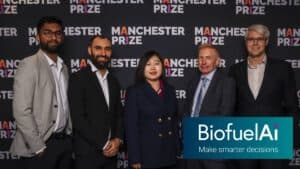
The University of Surrey on June 9 said its spinout BiofuelAi won the Manchester Prize, taking home £1 million for software designed to lift biogas output, cut costs and reduce emissions.
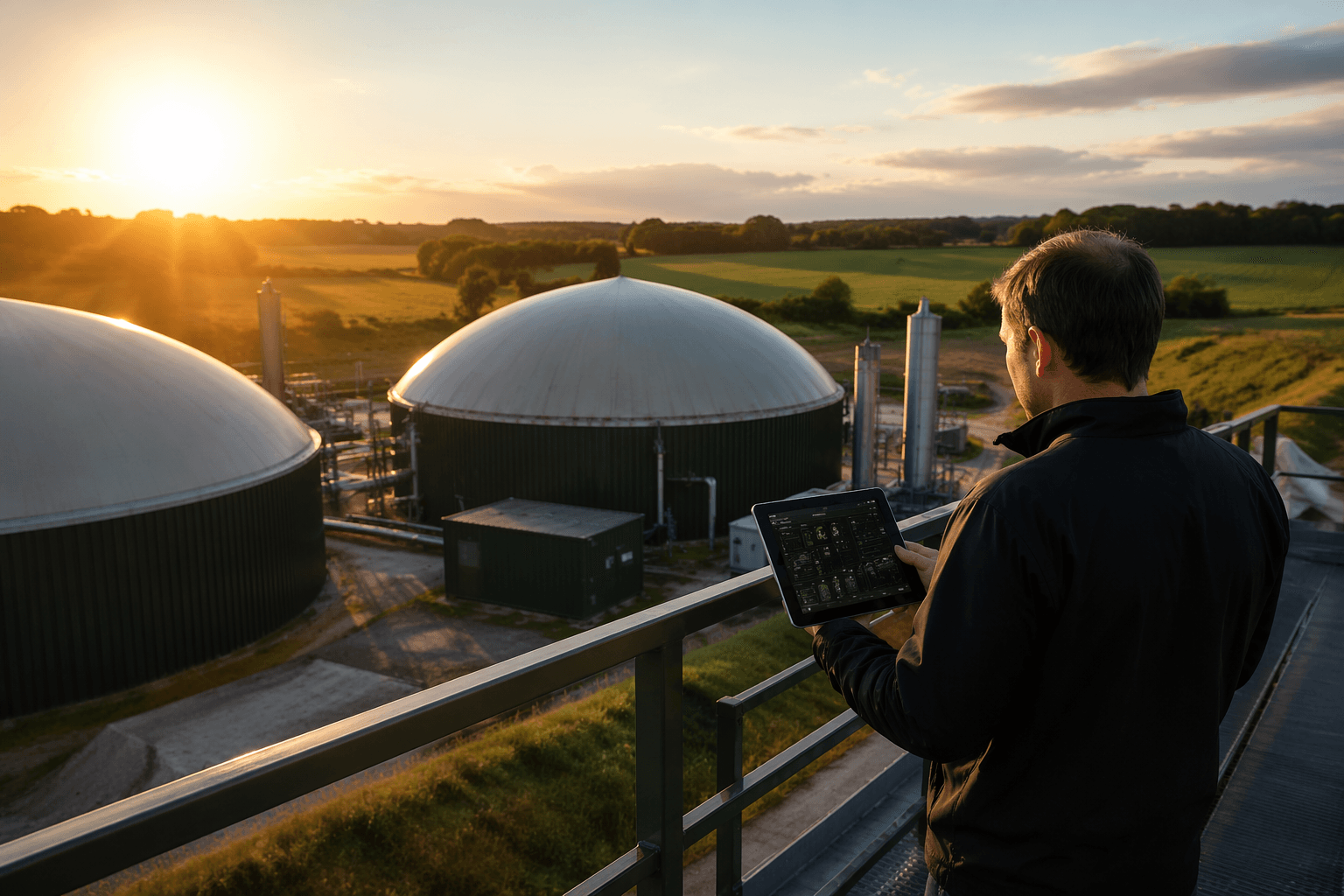
BiofuelAi’s platform combines mechanistic models, machine learning and digital-twin tools to show anaerobic digestion operators what is happening inside a digester in real time. The university said pilot trials at participating sites delivered revenue gains of 6% to 10%, profit improvements of 7% to 13% and a 28% reduction in carbon emissions. For plant owners managing feedstock swings, slow biological responses and uptime risks, those figures are the clearest signal yet that AI can move beyond presentation-layer automation and into day-to-day plant economics.
The Manchester Prize is a UK government-backed competition run by the Department for Science, Innovation and Technology. Its second round launched in November 2024, shortlisted 10 finalists on June 11, 2025 and offered up to £100,000 in seed funding plus up to £60,000 of compute before the £1 million grand prize was awarded in spring 2026. The government described BiofuelAi as bringing cutting-edge AI and machine learning to the biofuel industry by optimising complex, variable processes in real time and creating a digital twin of each site for whole-system optimisation.
BiofuelAi was co-founded by Professor Michael Short of the University of Surrey. Companies House lists Biofuel AI Ltd as incorporated on August 8, 2025, with a registered office at Surrey Research Park in Guildford, Surrey. The company’s roots sit in earlier Surrey work on AI-enabled biogas production, including research into feedstock variation, sensors and computational tools for creating virtual copies of digesters.
The prize lands in a sector that is already large and operationally complex. The Anaerobic Digestion and Bioresources Association says it was established in September 2009 and now represents more than 300 organisations across the UK anaerobic digestion and bioresources industry. The University of Surrey says anaerobic digestion breaks down organic matter to produce biogas for electricity generation or upgrading into a substitute for natural gas, a pathway that puts a premium on methane yield, plant uptime and tighter compliance reporting. If BiofuelAi can translate its pilot numbers into commercial deployments, biogas operators processing food waste, agricultural residues and wastewater sludge could see lower operating costs and more consistent biomethane production from the same infrastructure.
This article was produced by Prism’s automated news system from verified source data, official records, and press releases, then run through automated quality and moderation checks before publishing. The system is built and supervised by the people who set the standards it runs under. Read our full AI policy.
Know something we missed? Have a correction or additional information?
Submit a Tip