USDA carbon markets could boost farmer income, new biofuel opportunities
USDA’s feedstock carbon rules and clean-energy grants are linking corn, soy and sorghum to lower-CI fuel markets, with analysts eyeing new income streams for growers.

USDA on January 15 published interim technical guidelines for corn, soy and sorghum, giving biofuel feedstock growers a federal carbon-accounting framework. The rule is meant to quantify, report and verify greenhouse-gas emissions tied to reduced tillage, no-till, cover cropping and nutrient management, including nitrification inhibitors, in clean transportation fuel programs. It builds on a market that USDA has already described as promising but constrained by measurement costs.
USDA is trying to turn practice changes into market access
USDA’s October 23, 2023 assessment on agriculture and forestry in carbon markets called the sector one of “potential and the challenges” for agriculture. The agency said farmers can generate carbon credits by adopting practices that reduce emissions or sequester carbon, but high transaction costs for greenhouse-gas quantification, verification and reporting have kept participation limited.
That assessment was USDA’s first deliverable under the Growing Climate Solutions Act, which was signed into law on December 29, 2022. USDA framed the report as a broad look at market activity, barriers to participation and ways to improve access for farmers and forest landowners, a sign that carbon-market rules are being written with farm records and field practices in mind rather than abstract climate claims.
The biofuel link now runs through corn, soy and sorghum
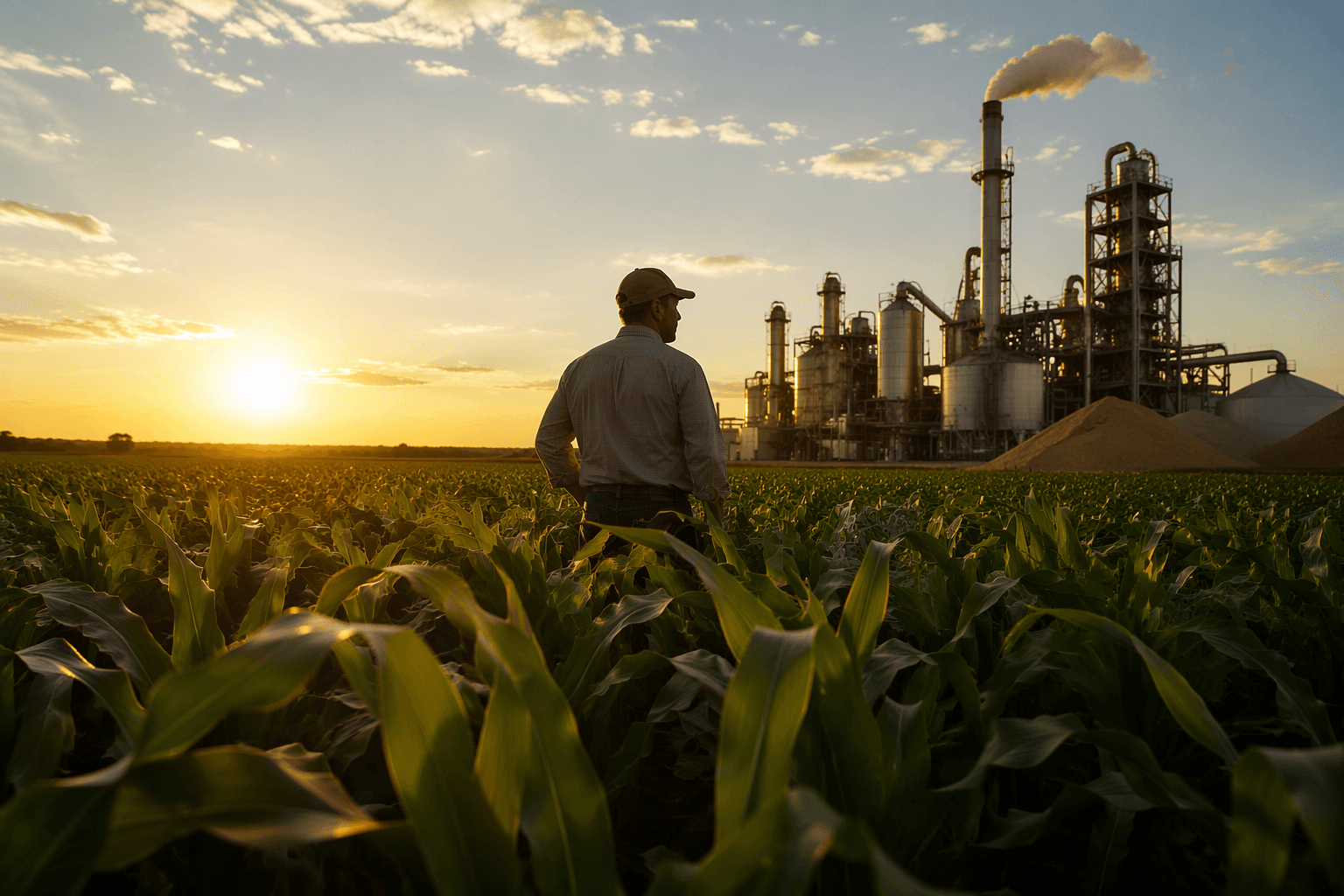
The January 15 interim rule is the clearest federal signal yet that carbon scoring for farm commodities is being folded into fuel policy. USDA said the guidelines are designed to recognize climate-smart agriculture in clean transportation fuel programs, which puts corn, soy and sorghum directly into the accounting chain for lower-carbon ethanol, biodiesel and other renewable fuel pathways.
That matters because the rule does more than describe practices. It establishes a method for quantifying the greenhouse-gas emissions associated with biofuel feedstock crops grown in the United States, which gives buyers and aggregators a common basis for evaluating lower-carbon supply. For growers, the listed practices, reduced tillage, no-till, cover cropping and nutrient management, including nitrification inhibitors, are now linked to a federal framework that can be used in carbon claims attached to fuel markets.
USDA paired that policy work with money. On January 10, 2025, the department said it was funding nearly $180 million for 586 biofuels and clean-energy projects across 42 states, Guam, Puerto Rico and the U.S. Virgin Islands. USDA said the projects were intended to create new market opportunities and revenue streams for American producers, and added that it had already invested more than $1.3 billion from the Inflation Reduction Act in 8,012 Rural Energy for America Program clean-energy projects and more than $287 million in 345 Higher Blends Infrastructure Incentive Program projects.
The voluntary market is still small, but analysts see room to grow
BloombergNEF said agricultural carbon markets remain underdeveloped, but it still modeled sizable upside. In its analysis, carbon farming could produce $13.7 billion of carbon credits annually by 2050, even though agricultural carbon credits made up just over 1% of the 1.7 billion credits issued in the voluntary carbon market as of 2022.
The same analysis underscored how thin soil-based crediting still is. BloombergNEF said only 344,800 of 22 million agriculture carbon credits were removal credits that store carbon in soils, a reminder that most farm-linked credits in the market have not yet come from durable sequestration. For biofuels, that leaves a narrow but potentially valuable lane: if the market can trust the data, lower-carbon farm practices could support feedstock premiums, carbon credits or both.
45Z is shaping the next round of buyer behavior
A 2023 DTN Progressive Farmer report said Mitchell Hora, founder and chief executive of Continuum Ag, saw the Section 45Z carbon-intensity system as a possible $50 billion annual market for corn and soybeans. Hora said payments from an acre of corn or soybeans could be worth hundreds of dollars under that system, a level that would put farm practice data directly into the value stack for ethanol and other low-carbon fuels.
ADM was already testing that concept through a pilot program with Farmers Business Network, paying growers based on bushels and carbon-intensity score. That model matters because it shows how a buyer can move from broad sustainability claims to a contract structure tied to yield data and CI scoring, the kind of arrangement that could be replicated if more processors, grain buyers and fuel companies decide lower-CI feedstocks are worth paying for.
Taken together, USDA’s 2023 assessment, the January 2025 feedstock guidelines and the private-sector 45Z pilots point to the same pressure point: measurement. The market can expand only if quantification, verification and reporting become cheap enough to support more acres, more credits and more fuel-linked premiums, but the policy architecture is now in place for farmers to be paid not just for what they grow, but for how they grow it.
This article was produced by Prism’s automated news system from verified source data, official records, and press releases, then run through automated quality and moderation checks before publishing. The system is built and supervised by the people who set the standards it runs under. Read our full AI policy.
Know something we missed? Have a correction or additional information?
Submit a Tip