World Fuel Services backs Syzygy Plasmonics’ future SAF output
World Fuel Services reserved future NovaSAF capacity from Syzygy Plasmonics, backing a project that Honeywell said could make more than 350,000 gallons a year.
Syzygy Plasmonics on June 9 struck a capacity reservation agreement with World Fuel Services for future NovaSAF output, giving the developer an early commercial backstop for a project that Honeywell said could produce more than 350,000 gallons a year in Uruguay. The deal covers a portion of production from future commercial-scale plants planned for Central and South America, after Syzygy’s flagship NovaSAF-1 facility in Durazno, Uruguay, which is progressing toward construction.
The reservation structure matters because it locks in a buyer before the plants are running, a step many SAF developers struggle to secure while they are still working through financing, construction and fuel qualification. Syzygy said the agreement follows continued interest in scalable pathways for producing SAF from biogas. Trevor Best, Syzygy’s chief executive, said the deal reflects that interest. Michael Ranger, World Fuel Services’ senior vice president for supply in EMEAA, said the company is evaluating supply opportunities that support increased access to lower-carbon fuels in line with emerging regulatory requirements and customer demand.
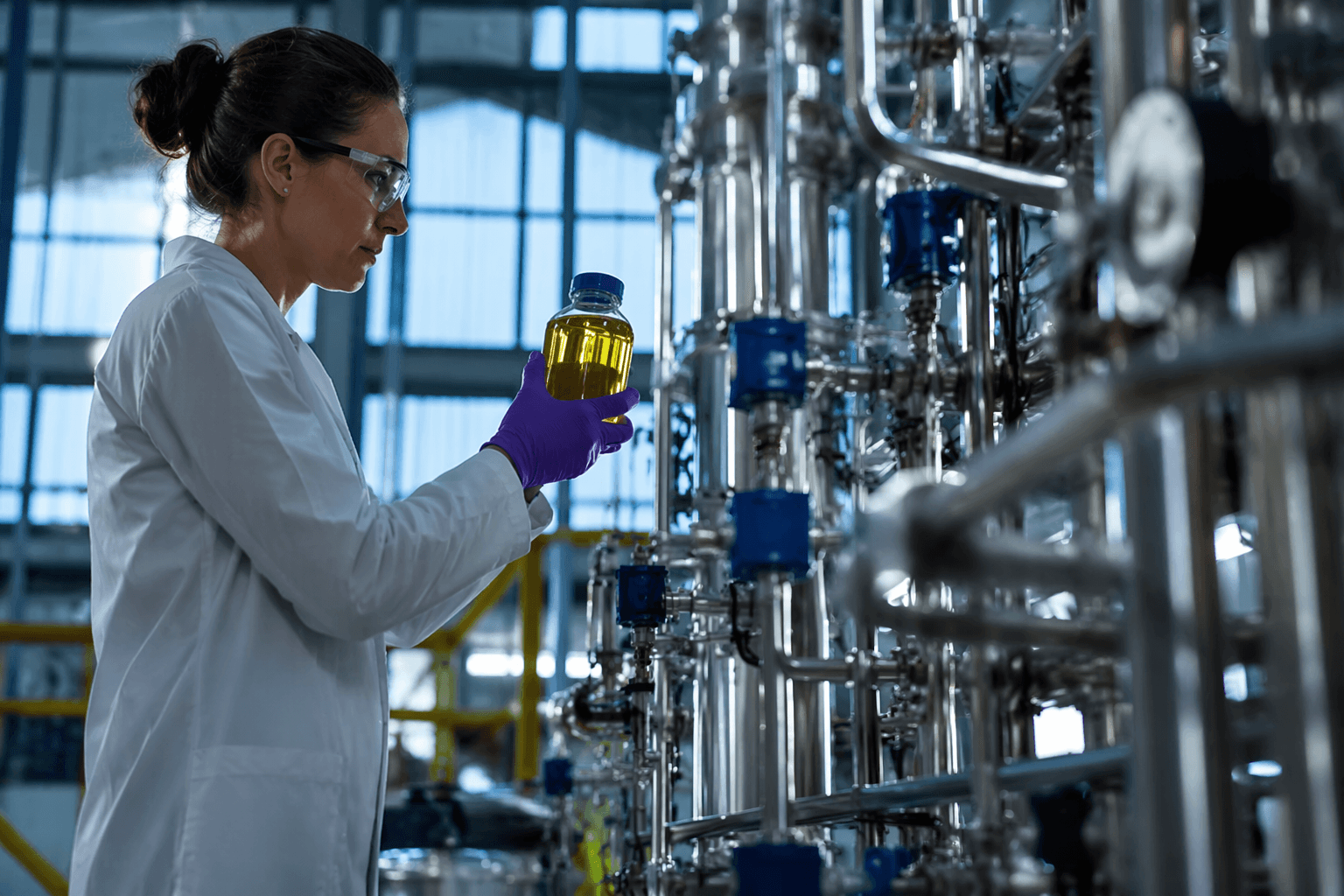
NovaSAF is Syzygy’s proprietary light-driven reactor platform, designed to convert waste biogas and renewable electricity into low-carbon aviation fuel. The company says the pathway has been independently assessed as eligible for both RFNBO and Advanced BioSAF certification, with formal ISCC audit and certification to follow upon NovaSAF-1 commissioning. Syzygy has also said the platform uses modular cell-stack architecture intended to aggregate stranded biogas assets from landfills, dairy operations and agricultural waste streams into commercial fuel volumes.
Honeywell said in August 2025 that NovaSAF-1, in Durazno, was expected to be the world’s first electrified biogas-to-SAF facility and to produce more than 350,000 gallons of SAF a year when fully operational in 2027. Syzygy said in June 2025 that FEED had started with Kent on the project, which it described as the first commercial-scale deployment of its light-driven reactor technology for SAF production. The World Fuel agreement suggests the market is willing to reserve future output ahead of startup, even as the project still has to clear construction and certification milestones.
World Fuel has already delivered more than 45 million gallons of SAF to business and commercial aviation customers worldwide since 2015, and in February 2026 it extended its SAF relationship with Neste to widen availability at more than 100 airports across its UK and European network. That distribution footprint positions World Fuel to place future Syzygy volumes if NovaSAF moves from reservation into operating supply.
This article was produced by Prism’s automated news system from verified source data, official records, and press releases, then run through automated quality and moderation checks before publishing. The system is built and supervised by the people who set the standards it runs under. Read our full AI policy.
Know something we missed? Have a correction or additional information?
Submit a Tip