Vertafore says workflow speed now drives carrier client experience
Vertafore's latest case is blunt: carrier CX lives in the workflow, not the interface. In a softer P&C market, the carriers that connect data fastest will feel the difference first.

Carriers keep talking about client experience as if it starts on the screen. Vertafore’s real point is tougher and more useful: experience now lives in the workflow architecture underneath it. If your systems do not move data cleanly, automate handoffs, and let staff act fast, the policyholder and broker feel the drag immediately.
Client experience starts in the back office
In its June 9, 2026 blog, *Scaling Carrier Client Experience Starts Behind the Scenes*, Vertafore argues that connected workflows are what let insurers reduce friction and serve clients better as they grow. That sounds simple, but it cuts against the way a lot of carriers still talk about modernization, where the focus stays on the visible front end and the real bottlenecks stay buried in operations.
Vertafore’s framing is practical. The company names onboarding agents, sending compensation, providing quotes for end-insureds, and processing claims as the kinds of workflows that shape whether the customer experience feels responsive or stalled. Those are not abstract IT functions. They are the moments when a broker is waiting on a answer, an agent is waiting on payment, or a claimant is waiting for movement, and every delay compounds the impression that the carrier is slow or hard to work with.
Why workflow speed matters more in a soft market
The timing matters because the market is getting less forgiving. A June 2026 market update from M3 Insurance said the commercial P&C market began to soften in Q1 2026 and that average premiums declined across account sizes for the first time since Q3 2017. That is the kind of shift that changes carrier behavior fast: when pricing pressure rises and premium growth gets harder to defend, service quality becomes part of the competitive pitch.
Swiss Re’s January 2026 U.S. Property & Casualty outlook also described a softening market environment, with rising competition and easing premium rates. S&P Global Market Intelligence said the same basic thing in its January 2026 U.S. P&C outlook, pointing to softening pricing and increased competition as key issues facing insurers this year. Put those pieces together and Vertafore’s argument lands where it should: when the market is softer, carriers cannot afford workflow friction that slows response times or frustrates distribution partners.
The bottlenecks that actually break the experience
The worst back-office problems are usually not dramatic system failures. They are the boring, repeated delays that force people to rekey data, chase approvals, or move information manually between systems that should already be connected. That is where the customer experience gets crushed in P&C, because one slow handoff turns into a slow quote, a delayed payment, or a claim that feels like it has vanished into a queue.
The bottlenecks that most often damage the experience are easy to spot once you look for them:
- Agent onboarding that still depends on manual review and duplicate data entry.
- Compensation workflows that do not reconcile quickly across systems, forcing staff to chase corrections.
- Quoting workflows that require too many handoffs before an answer reaches the broker or end-insured.
- Claims processes that trap information in separate tools, so service teams cannot see the full picture fast enough.
Vertafore’s core message is that these are not just operational annoyances. They are client-experience failures, because the person on the outside does not care which internal team caused the delay. They care that the answer did not arrive when it should have.
The strategic shift: data as an asset, not a byproduct
Vertafore’s broader message is that data should be treated as a strategic asset and technology should make people better at their jobs instead of adding another layer of complexity. That is an important distinction for carriers that are trying to modernize without creating a bigger support burden for already stretched teams. If the new platform still makes people swivel-chair between screens, you have only repackaged the problem.
That is why the company keeps returning to efficiency, accuracy, and collaboration. In its January 16, 2026 carrier predictions post, Vertafore said those were the themes it was focusing on across teams and partners. That lines up neatly with the June blog post: if the carrier ecosystem is going to work better, the systems inside it have to share clean data and support decisions without making people hunt for context.
AI and automation only matter if they reduce friction
Vertafore’s 2026 messaging also shows that it is not treating workflow improvement as a narrow back-office cleanup. Reporting on its April 2026 Accelerate event said the company outlined an agentic AI strategy aimed at reducing friction and increasing productivity across insurance distribution workflows. That matters because AI in insurance gets overhyped fast, but the useful version is usually much less glamorous: fewer manual touches, faster routing, better triage, and less time spent on repetitive admin.
The same logic shows up in Vertafore’s January 6, 2026 independent-agent report, which said policyholders want agents to blend trusted expertise with digital convenience. That is the standard carriers are really being measured against now. You still need human judgment, but it has to be backed by digital workflows that do not slow the conversation down.
What carriers should modernize first
The best takeaway from Vertafore’s argument is also the most actionable: do not start modernization with the prettiest customer-facing screen. Start with the process layers that determine how fast information moves between policy, compensation, service, and claims. If those systems are disconnected, any front-end redesign just exposes the same old delays in a cleaner interface.
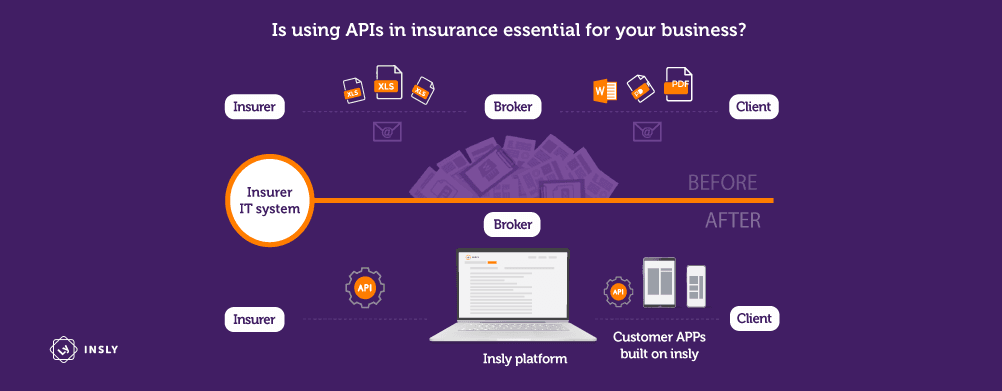
For carriers trying to improve service without adding headcount, this is where the wins live. Faster handoffs reduce rework. Better API connectivity cuts down on manual entry. Cleaner data movement helps staff answer questions on the first try instead of circling back later. And when the market is softening, that kind of operational speed becomes more than an internal efficiency play. It becomes part of the carrier’s market position.
Vertafore’s message is straightforward enough to be uncomfortable: carrier client experience is no longer a design problem. It is a workflow problem, and the carriers that treat it that way will be the ones that feel more responsive, more consistent, and harder to replace.
This article was produced by Prism’s automated news system from verified source data, official records, and press releases, then run through automated quality and moderation checks before publishing. The system is built and supervised by the people who set the standards it runs under. Read our full AI policy.
Know something we missed? Have a correction or additional information?
Submit a Tip