AI-designed miniproteins target GPCRs, opening path to precise drugs
AI-guided protein design has produced miniproteins that can switch GPCRs on or off, with 11 targets already yielding functional leads.
A new protein-design push has turned one of drug discovery’s most stubborn target classes into something that can be programmed in the lab. UW Medicine and Skape Bio reported that computationally designed miniproteins, each fewer than 100 amino acids long, were built to activate or block GPCRs for the first time, including functional lead molecules against 11 different receptor targets.
That matters because GPCRs sit in the plasma membrane and govern a huge share of human biology. They respond to hormones, neurotransmitters and sensory molecules, and they sit behind therapies for pain, cancer, diabetes, obesity, migraine, itch and other conditions. Roughly one-third of approved drugs act on GPCRs, but the receptors are hard to tame with conventional small molecules or biologics because they move between active and inactive states inside flexible pockets embedded in the membrane. The new work, published in Nature under the title De novo design of miniproteins targeting GPCRs, argues that AI-guided protein design can now repeatedly hit those receptors with custom binders that are more precise than traditional drug scaffolds.
The team’s screening system is built for scale, not one-off luck. It can test up to 100,000 designs in living human cells while keeping receptors in their natural membrane environment, a setup that matters for a target family as conformationally slippery as GPCRs. Several of the designed proteins closely matched their computational models in structural studies, a sign that the design rules are landing on the receptor surfaces the way the software predicts.
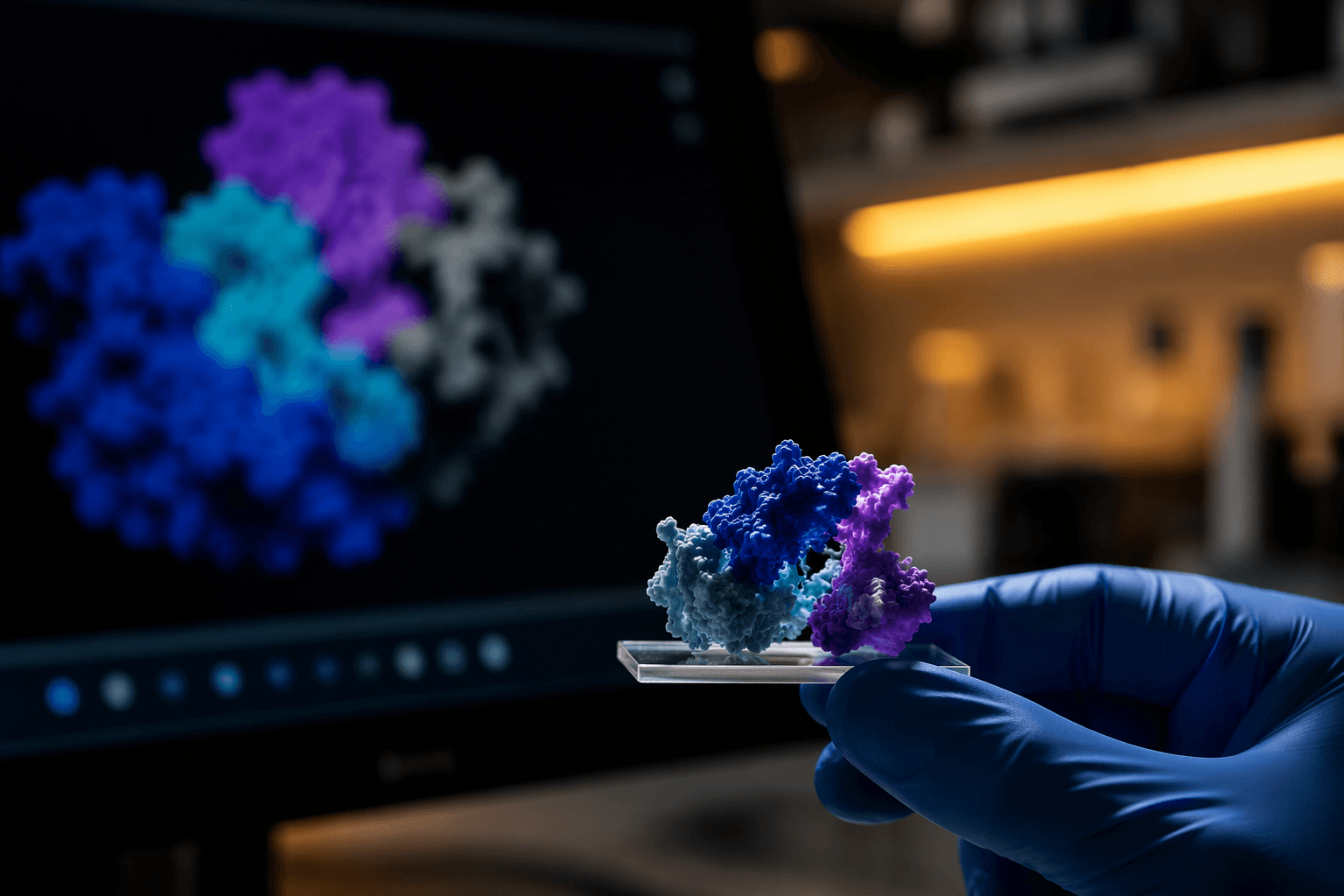
One mouse study went a step further. A designed miniprotein performed comparably to a clinically used drug while showing fewer side effects, the kind of result that makes medicinal chemists and biologic engineers pay attention. If that profile holds as the platform scales, it opens a practical route to therapies that do more than broadly hit a receptor: they could dial GPCR signaling up or down with much finer control.
David Baker, senior author of the study and director of the UW Medicine Institute for Protein Design, said the work shows protein design can be used “repeatedly for different GPCRs” and may generalize across receptor families. That is the real prize here. Skape Bio says its platform combines AI-enabled protein design with high-throughput screening in living human cells to generate agonists and antagonists, setting up a pipeline aimed at GPCRs that have been notoriously difficult to drug.
This article was produced by Prism’s automated news system from verified source data, official records, and press releases, then run through automated quality and moderation checks before publishing. The system is built and supervised by the people who set the standards it runs under. Read our full AI policy.
Did this article answer your question?