Alt-dairy resets around scale, cost and manufacturing reality
Alt-dairy’s next winners look less like moonshots and more like manufacturers, with infrastructure, feedstock and processing costs now setting the rules.

The reset is already underway
Animal-free dairy is moving into a harder, less glamorous phase, and that is exactly where the category may finally get serious. The newest playbook is not about proving a protein can be made in a lab and hoping the market catches up. It is about designing around existing infrastructure, real manufacturing constraints and cost discipline from day one, because taste alone will not save a product that cannot scale profitably.
That shift matters most in alt-dairy, where the winning ingredient is not just scientific novelty but the ability to make casein, whey and related proteins efficiently enough to compete with conventional dairy. In other words, this market is being judged like an industrial category, not a concept pitch. Companies that cannot clear the manufacturing bar may never reach commercial relevance, no matter how elegant the biology looks on paper.
Infrastructure is becoming the moat
The clearest sign of that reset is the growing focus on physical capacity. FoodNavigator-USA reported that BioMADE is launching three pilot facilities in California, Iowa and Minnesota with federal funding to close U.S. precision-fermentation infrastructure gaps. That is a meaningful signal because it puts scale-up, not just discovery, at the center of the conversation.
The broader implication is that public policy is starting to treat biomanufacturing capacity as strategic. When pilot plants become national infrastructure, the competitive field changes. The companies best positioned to benefit are the ones that already think in terms of throughput, downstream processing and industrial reliability, not just proof-of-concept success.
Cost is now the product design brief
The Good Food Institute has been consistent about the same pressure point: fermentation-derived ingredients may match conventional ingredients in taste and functionality, but manufacturing capacity and cost parity remain major hurdles. Its 2025 materials add a critical detail, noting that feedstock costs can account for more than half of the total cost per kilogram in precision fermentation. That makes cost engineering central to the business model, not a back-office concern.
GFI’s materials also point to milk proteins such as casein and whey as key emerging applications for the technology, which helps explain why alt-dairy is attracting so much attention. These are not niche ingredients. They sit at the heart of cheese, milk and other staple dairy products, so any alternative route must clear demanding cost and performance thresholds if it wants broad adoption.
The new winning model starts with manufacturing, not magic
The first wave of alt-dairy startups often followed a familiar biotech script: build the ingredient first, then figure out scaling, pricing and market fit later. The current reset flips that logic. A startup that plans around existing processing lines, supply chains and realistic ingredient economics is likely to have a better shot than one that starts with a perfect molecule and then tries to force the market to adapt.
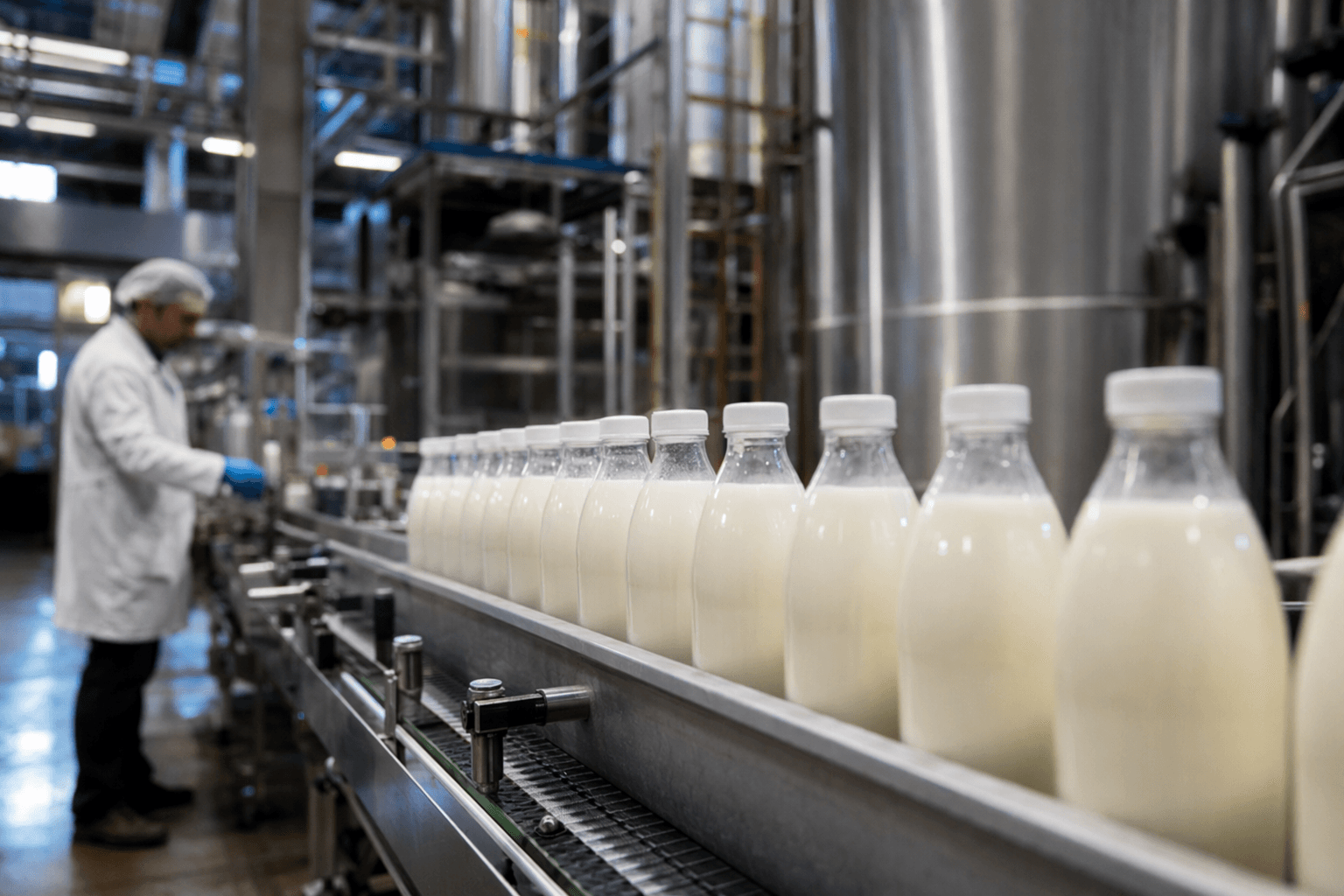
That is the practical meaning of “scale and cost from day one.” It means thinking about where fermentation output will go next, how much downstream processing it will require, how much capex that step demands, and whether the product can fit into current industrial workflows without forcing buyers into a rebuild. It also means pricing architecture has to be built around manufacturing reality, because a product price that ignores feedstock costs, processing losses and infrastructure constraints is not a strategy.
Companies are already reorganizing around that reality
The shift is showing up in company plans and financing. Mozza Foods is targeting a late-2028 launch for soybean-grown casein, and CEO Adam Tarshis has been blunt about why the model matters: “The capex required for DSP is a lot less because we can leverage existing soy and dairy infrastructure.” That is the kind of statement that captures the new playbook in one line. The advantage is not only scientific; it is industrial reuse.
Nutropy’s fundraising arc tells a similar story. The French foodtech company raised €2 million in pre-seed funding in 2022, then followed with €7 million in October 2025 to accelerate industrial-scale production and global commercialization. Standing Ovation, another precision-fermentation casein developer, raised €3.75 million in September 2024 to expand development and sales. Taken together, these rounds show how the sector has shifted from proving technical possibility to financing the machinery of commercialization.
Why first-wave expectations fell short
The first alt-dairy boom was shaped by optimism about what precision fermentation could do in principle. What it often underestimated was the difficulty of making those ingredients at scale, at a price buyers can live with, and inside a manufacturing system that already has decades of efficiency built into it. The reset is a recognition that beautiful science is not enough if the industrial pathway is broken.
McKinsey & Company’s 2026 view of U.S. and European dairy processors adds useful context here. Those businesses are dealing with persistent cost inflation, labor constraints and input volatility, which means the bar for any new ingredient is higher than ever. A startup entering that environment with an expensive, hard-to-integrate product is fighting against the market itself.
What the next alt-dairy winners will look like
The companies most likely to break through will probably look less like moonshot labs and more like disciplined food manufacturers with a fermentation platform attached. They will choose ingredients based on downstream manufacturability as much as on technical elegance. They will know where their feedstock advantage comes from, how their processing footprint works, and why their price can survive contact with real procurement teams.
That is the real lesson of the current reset. Alt-dairy is not losing momentum so much as losing its tolerance for vague scale promises. The winners will be the companies that treat infrastructure, cost and manufacturing reality as the core product, because in this category, that is exactly what the market will buy.
This article was produced by Prism’s automated news system from verified source data, official records, and press releases, then run through automated quality and moderation checks before publishing. The system is built and supervised by the people who set the standards it runs under. Read our full AI policy.
Did this article answer your question?