Balanced dairy gains traction as consumers soften on hybrid proteins
Hybrid dairy is moving from experiment to category test, as brands bet that familiar taste, lower emissions and softer prices can win over cautious shoppers.
Why balanced dairy is back on the radar
Balanced dairy is gaining attention because it tries to solve a problem that has frustrated food companies for years: how to deliver nutrition, taste and sustainability in the same package without making consumers feel they are settling. By blending animal and plant proteins, the category aims to preserve the creamy familiarity of dairy while reducing cost pressure and environmental impact, a combination that could make it more than a novelty if shoppers embrace it as a real protein format.
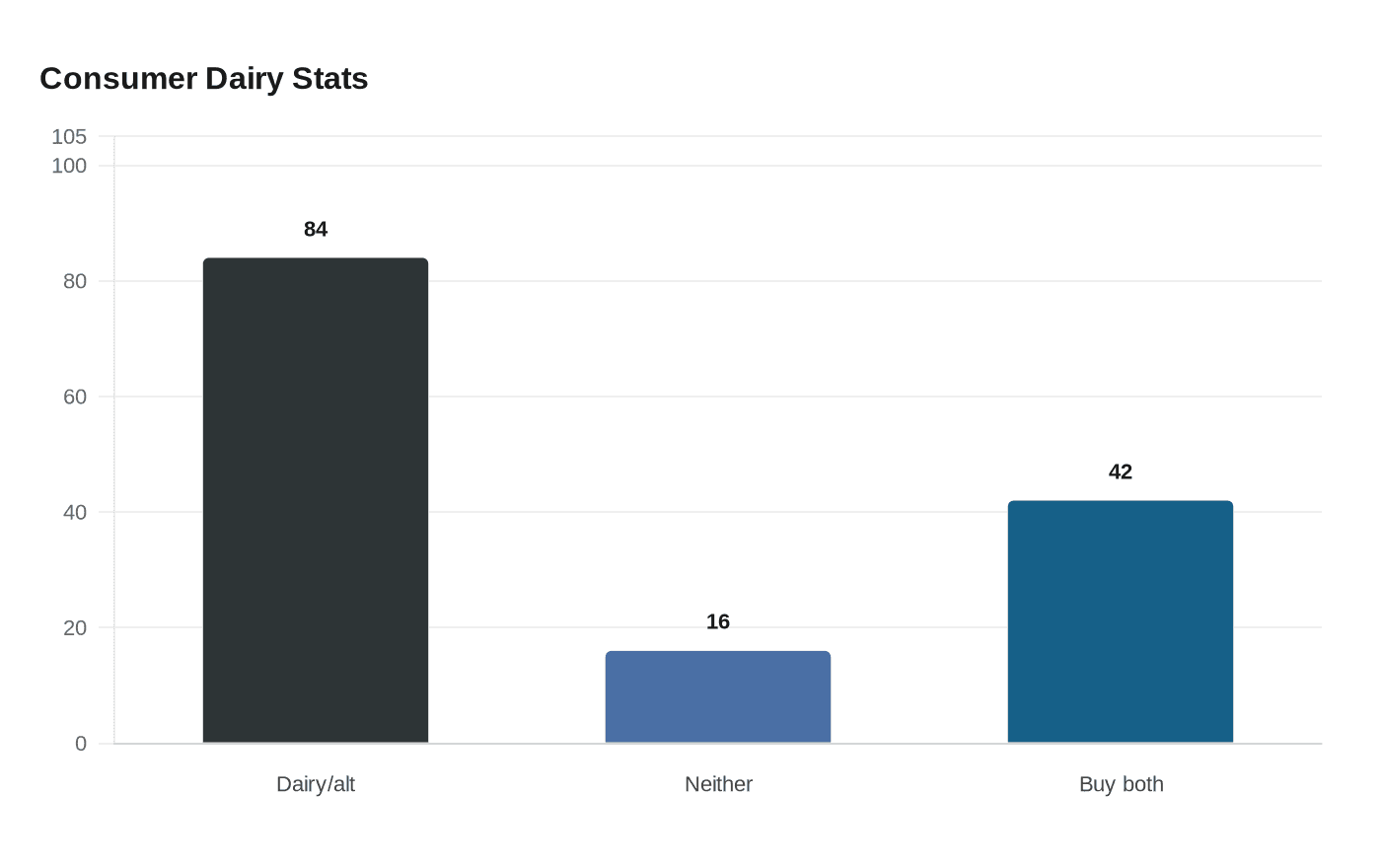
That matters because the audience is already there. McKinsey estimated that 84% of U.S. consumers eat or drink dairy or dairy alternatives, while only 16% consume neither. In other words, most households are already active in one side of the category, and many are active in both. That creates a logical opening for products that sit between traditional milk and fully plant-based alternatives, especially as consumer interest in flexible eating habits keeps growing.
Why earlier hybrid dairy launches mattered
This is not a brand-new idea. The U.S. has already seen hybrid dairy products try to break through, and those attempts provide the clearest evidence of what the category still needs to solve. Live Real Farms, a brand of Dairy Farmers of America, launched Dairy Plus Milk Blends in 2019 as 50/50 blends of lactose-free dairy milk with oat or almond milk. The brand tested the products in Minnesota at Walmart, Fresh Thyme and Cub Foods, priced at about $3.99 to $4.69 for a half gallon, and planned a national rollout for early 2020.
Live Real Farms said 42% of consumers purchase both dairy milk and plant-based alternatives, which helped define the target shopper as someone already moving between categories. That insight still feels relevant today. The challenge was not proving that a blended audience exists, but proving that it would adopt a blended product often enough to sustain distribution, velocity and repeat purchase.
Shamrock Farms followed with Swirled in January 2021, a chocolate milk hybrid from its Phoenix base that combined real milk with plant-based ingredients such as coconut cream and almonds. Sampling was a key part of the launch strategy, but the pandemic disrupted that effort and the product was later discontinued. Together, those two cases show that the concept has been tested before, but the path from curiosity to scale has remained fragile.
What consumer research says about the format
The strongest signal in favor of balanced dairy is that consumer choice in hybrid foods appears to depend heavily on the protein source itself. A 2024 conjoint-analysis study of hybrid yogurt found that protein source was the single most important attribute in consumer choice, ahead of protein content, flavor, price and claims. That finding is crucial for balanced dairy because it suggests shoppers are not simply scanning for a cheaper or greener option. They are deciding whether the protein story feels credible and appetizing.
Another study of Uruguayan consumers found that dairy yogurt remained the most preferred option, but acceptance varied significantly by protein source. That is the heart of the category challenge. Consumers may accept hybrids in principle, but each formulation still has to earn trust through flavor, texture and a convincing nutritional story. If the blend tastes diluted or sounds like a compromise, it risks falling into the space between two established categories without winning either one.
Why formulation and framing are make-or-break
Balanced dairy succeeds or fails at the sensory level. Brands cannot assume that the sustainability message alone will carry the product, especially in a dairy aisle where taste expectations are high and traditional benchmarks are clear. The product has to feel familiar enough to reassure dairy buyers and interesting enough to persuade plant-based shoppers who may be open to hybrid nutrition.
That means framing matters as much as formulation. A product positioned as a way to lower environmental impact, manage costs or preserve a favorite dairy flavor may be easier to sell than one that sounds like a compromise on both taste and nutrition. For manufacturers, the message is not to replace dairy wholesale, but to build a bridge between formats that already coexist in many households.
Europe offers the clearest working models
If the U.S. market has been cautious, Europe has been more visibly experimental, especially in Scandinavia and the Netherlands. PlanetDairy has developed hybrid milks and cheeses that blend traditional dairy with plant ingredients such as fava bean protein, potato flour, rapeseed oil and coconut oil. The company says its products can cut CO2 emissions by up to 50% compared with traditional dairy while keeping pricing similar to conventional products.
The product details show how far the category has already moved beyond theory. One report on PlanetDairy’s pizza-cheese mix said it is 31% plant-based ingredients, 40% mozzarella content and includes milk protein. Another report said Albert Heijn launched a new hybrid dairy drink range created with Farm Dairy and PlanetDairy, described as a first for the European retail sector. Those launches suggest that large retailers are willing to test the format when the sustainability message is clear and the product can sit naturally in existing dairy occasions.
Reports from the region have also described Dutch and Denmark-linked hybrid milks as aiming to cut emissions by 20% to 30%, which shows how central the climate argument has become. That pitch is especially relevant in a market where both dairy companies and plant-based brands are already trying to claim sustainability leadership. Balanced dairy enters a crowded conversation, not an empty one.
What has kept balanced dairy from scaling
The biggest barrier is not consumer apathy, but category ambiguity. Hybrid dairy asks shoppers to rethink a familiar product, yet it does not fit cleanly into either of the two labels they already understand. That creates a packaging, pricing and positioning problem. If the product is too close to dairy, it can look unnecessary; if it leans too far toward plant-based, it can lose the flavor and nutritional cues that made it appealing in the first place.
Distribution and trial are another hurdle. Live Real Farms and Shamrock Farms both show that product testing, merchandising and sampling can matter enormously, but those levers do not guarantee durable demand. To scale, balanced dairy needs repeated purchase, not just curiosity. It also needs manufacturers to prove that the product can deliver on more than one promise at once, particularly when the category is competing against both conventional dairy and plant-based alternatives that are improving on their own sustainability claims.
What would prove the category is real
The evidence that balanced dairy has moved from experiment to mainstream would be straightforward, even if the path there is not. Look for products that hold shelf space beyond the initial launch window, show repeat purchase instead of one-time trial, and maintain clear value against conventional dairy. Just as important, watch whether consumers start treating hybrid products as a preferred protein format rather than a fallback.
If that happens, balanced dairy could become a useful tool for menu engineering, inflation management and carbon reduction all at once. The category does not need to replace dairy to matter. It only needs to prove that blending animal and plant proteins can feel purposeful, not compromised, in the eyes of the shopper.
This article was produced by Prism’s automated news system from verified source data, official records, and press releases, then run through automated quality and moderation checks before publishing. The system is built and supervised by the people who set the standards it runs under. Read our full AI policy.
Did this article answer your question?