CRISPR tool gives precise control over protein production in cells
TAPIR lets researchers dial protein output up or down by turning on ribosomal RNA production, opening a more precise path than blunt gene knockouts.
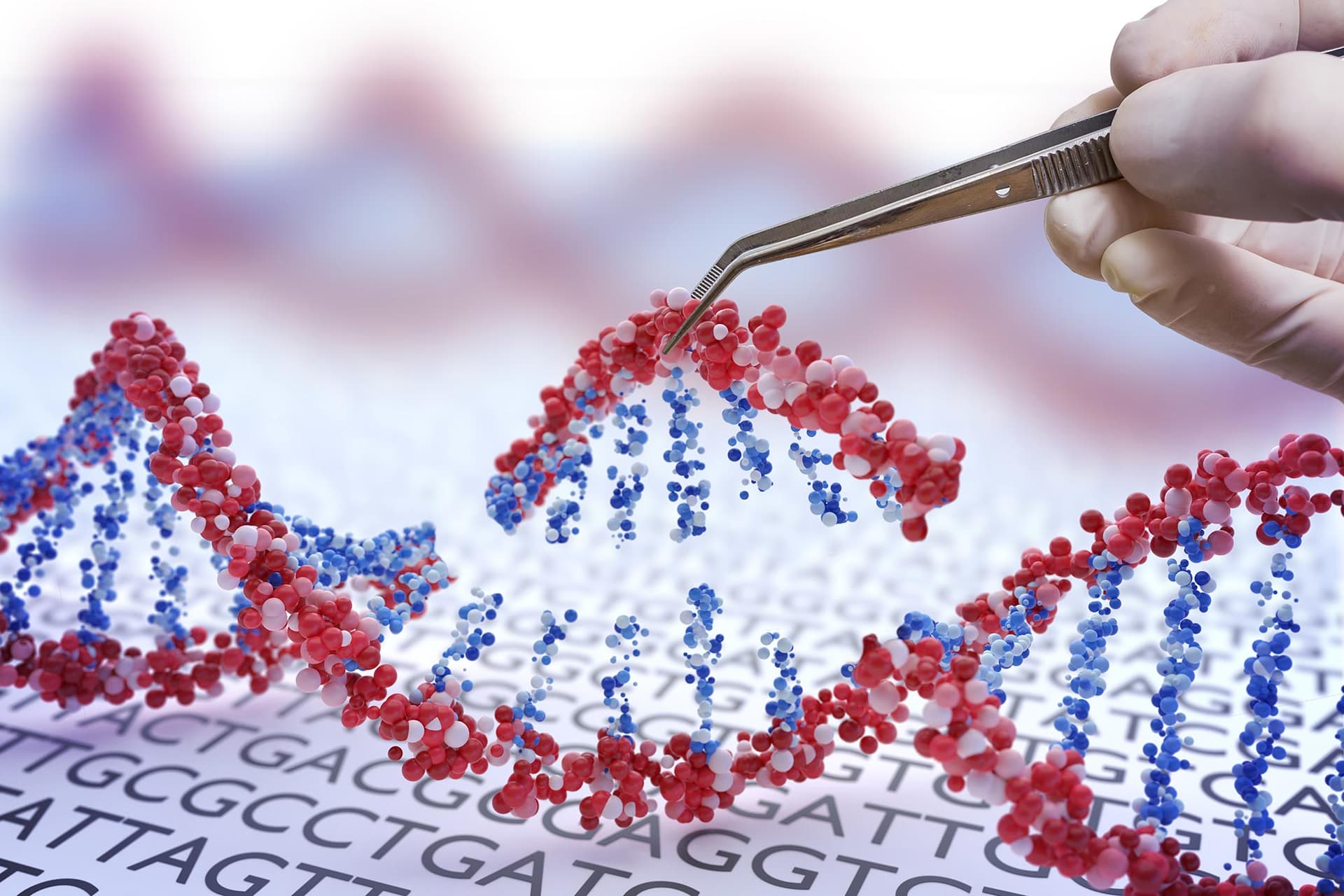
A new CRISPR system called TAPIR raises protein production in a targeted way by activating ribosomal RNA production. Built by researchers at Ludwig-Maximilians-Universität München and partner institutes in Munich, it gives cells a more controlled way to make specific proteins.
From gene editing to dosage control
CRISPR/Cas made its name as a DNA-cutting tool, the discovery that earned Emmanuelle Charpentier and Jennifer Doudna the 2020 Nobel Prize in Chemistry for work first published in 2011. That breakthrough changed biology by making genome editing programmable, but the new frontier is more subtle: adjusting what cells produce without permanently rewriting their DNA. TAPIR sits in that shift, treating protein output like a dial rather than an on-off switch.
Cells do not run protein synthesis at a fixed rate. They continually adjust output to match growth, stress, development, and tissue-specific needs. When that balance breaks, protein-production levels can move too low or too high, and those imbalances are linked to disease.
How TAPIR changes protein production
By activating ribosomal RNA production, TAPIR feeds the cell’s protein-making machinery and increases synthesis in a targeted manner. Instead of forcing a gene into constant overexpression, or removing it entirely with a knockout, the system aims at a more physiological middle ground: enough control to raise output without flattening the cell’s normal behavior.
Overexpression often floods cells with more protein than they would naturally tolerate, while knockout experiments can erase a function completely and miss what happens when a cell simply makes less of a protein.
Why precise protein output is useful
Monoclonal antibodies are one immediate use case. Those molecules are already a cornerstone of biologics manufacturing, and the ability to fine-tune their production inside cells could help optimize yield without relying only on blunt genetic constructs. The same logic extends to other useful proteins, especially when production level is as important as protein identity.
The method is also a research tool for stem cell biology and other disease-relevant processes. In stem cells, dosage is often everything, and even modest changes in protein abundance can affect self-renewal, differentiation, and lineage choice. A CRISPR system that can tune output rather than simply remove a gene better fits those dosage-sensitive experiments.
Diseases driven by too little or too much protein production are not rare edge cases in biology, they are a major part of the therapeutic landscape. A technology that can increase or decrease protein output with greater precision could open new routes for studying those conditions and, eventually, for intervening in them.
Why Munich’s version matters now
The TAPIR work comes out of a Munich ecosystem that includes LMU Munich, Helmholtz Munich, and the Helmholtz Protein Expression and Purification Platform. The system edits neither DNA sequence nor the final protein itself; it intervenes upstream, at the level of cellular capacity to synthesize protein.
That design places TAPIR in a practical lane for synthetic biology, where controlling how much of a part a cell makes, and when, is often the goal.
Part of a larger CRISPR expansion
This is not the first time CRISPR has been pushed beyond DNA cutting. MIT researchers previously used CRISPR-based tools to precisely control protein production in mammalian cells and to fine-tune synthetic gene circuits. An RNA-targeting enzyme expanded the CRISPR toolkit, showing how the platform has steadily grown into RNA biology and expression control.
Publication records from 2022 and 2023 show the same trajectory. On November 22, 2022, MIT researchers described a way to precisely control the amount of a particular protein produced in mammalian cells. In 2023, a paper titled “Engineering Human Cells Expressing CRISPR/Cas9-Synergistic Activation Mediators for Recombinant Protein Production” added to the same arc, while Molecular Systems Biology carried work on synthetic gene circuits for cell state detection and protein tuning in human pluripotent stem cells.
This article was produced by Prism’s automated news system from verified source data, official records, and press releases, then run through automated quality and moderation checks before publishing. The system is built and supervised by the people who set the standards it runs under. Read our full AI policy.
Did this article answer your question?