Endurance athletes may need 1.8g/kg protein daily, review finds
Endurance athletes are leaving protein on the table: the new review puts daily needs near 1.8 g/kg, and above 2.0 g/kg on recovery days or low-carb blocks.
Endurance athletes have treated protein as a lifter’s problem for too long, but a review in Sports Medicine says the numbers point higher. The paper by Oliver C. Witard, Mark Hearris and Paul T. Morgan, published online March 21, 2025 in volume 55, pages 1361-1376, says a daily intake of about 1.8 grams per kilogram of body mass should be advocated for endurance athletes, with recovery days and carbohydrate-restricted training pushing needs above 2.0 g/kg.
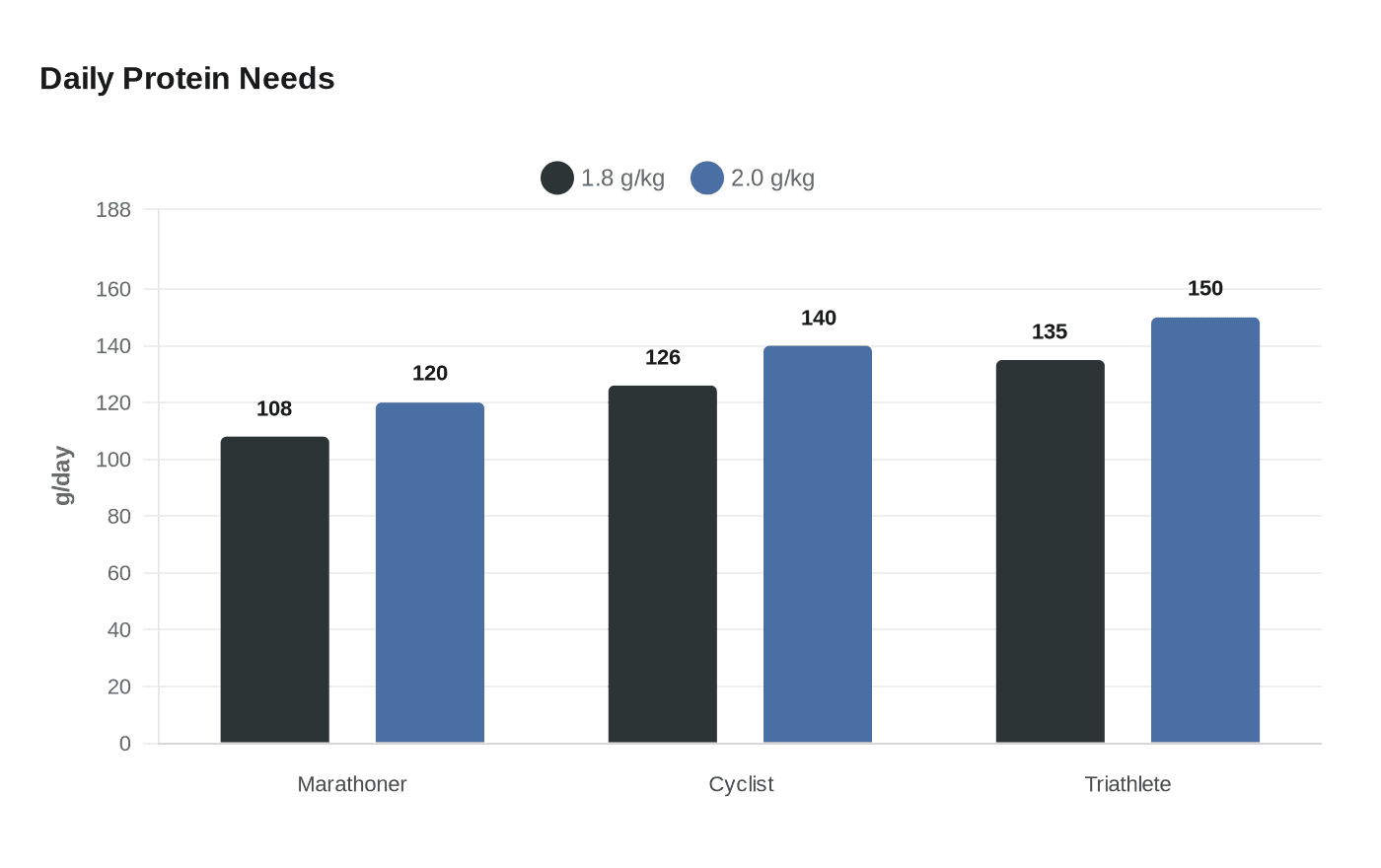
The practical math is hard to ignore. A 60-kilogram marathoner lands near 108 grams a day at 1.8 g/kg and 120 grams at 2.0 g/kg. A 70-kilogram cyclist is looking at about 126 grams to 140 grams. A 75-kilogram triathlete is closer to 135 grams to 150 grams. That is well above the 1.5 g/kg habitual intake the review says is typical in male and female endurance athletes, and it explains why a lot of recovery plans look solid on paper but come up short when the day gets busy.
The review’s bigger myth-buster is what protein does not appear to do when carbohydrate is already covered. There is no compelling evidence that adding protein to carbohydrate before or during endurance exercise improves performance when carbohydrate recommendations are met. The same goes for recovery: co-ingesting protein with carbohydrate does not convincingly improve liver or muscle glycogen resynthesis when carbohydrate needs are already satisfied. For athletes trying to squeeze out better splits, steadier watts or one more hard interval, protein is not a substitute for getting the carb plan right.
Where protein starts to matter more is in the sessions that ask the most from recovery. The authors say protein needs may rise above 2.0 g/kg/day during carbohydrate-restricted training and on rest days, a sign that prolonged muscle repair and amino acid oxidation during exercise can leave athletes underfed for adaptation. That matters most in periodized low-carbohydrate or low-energy-availability training, which the review describes as an increasingly popular strategy in endurance sport. It also matters when recovery windows are under 24 hours, when the next session arrives before muscle repair has caught up.
The review frames its guidance around indicator amino acid oxidation, which it calls the most contemporary way to estimate protein requirements in endurance athletes. The message is clear enough for marathoners, cyclists and triathletes alike: the old instinct to undercount protein on endurance blocks is costing recovery, and 1.8 g/kg/day is now the number worth planning around.
This article was produced by Prism’s automated news system from verified source data, official records, and press releases, then run through automated quality and moderation checks before publishing. The system is built and supervised by the people who set the standards it runs under. Read our full AI policy.
Did this article answer your question?