India’s protein market surges as plant-based demand outpaces growth
India’s protein boom is moving beyond sports nutrition, with plant-based and cleaner-label products gaining an edge as trust and digestion shape buying decisions.
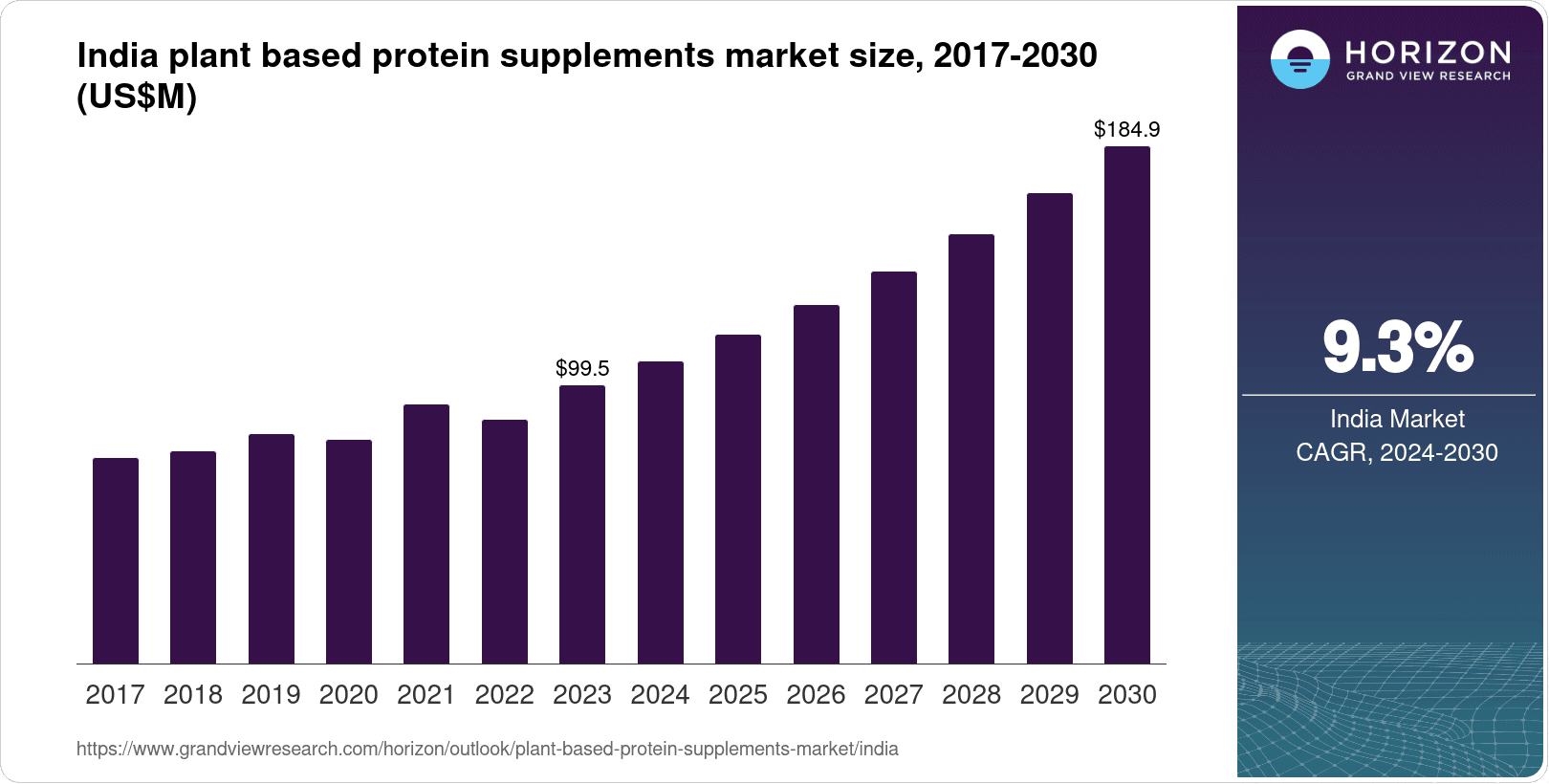
Protein demand is going global, and India is defining its own version of growth
India’s protein market is no longer a niche sports-nutrition story. IMARC Group estimates the country’s protein supplements market at about $912.9 million in 2025, rising to $1.5781 billion by 2034, while Mordor Intelligence puts the broader protein market at $1.62 billion in 2026 and forecasts $2.22 billion by 2031. That kind of expansion signals something bigger than a category upswing: India is becoming one of the clearest examples of protein demand broadening beyond the United States and Western Europe.
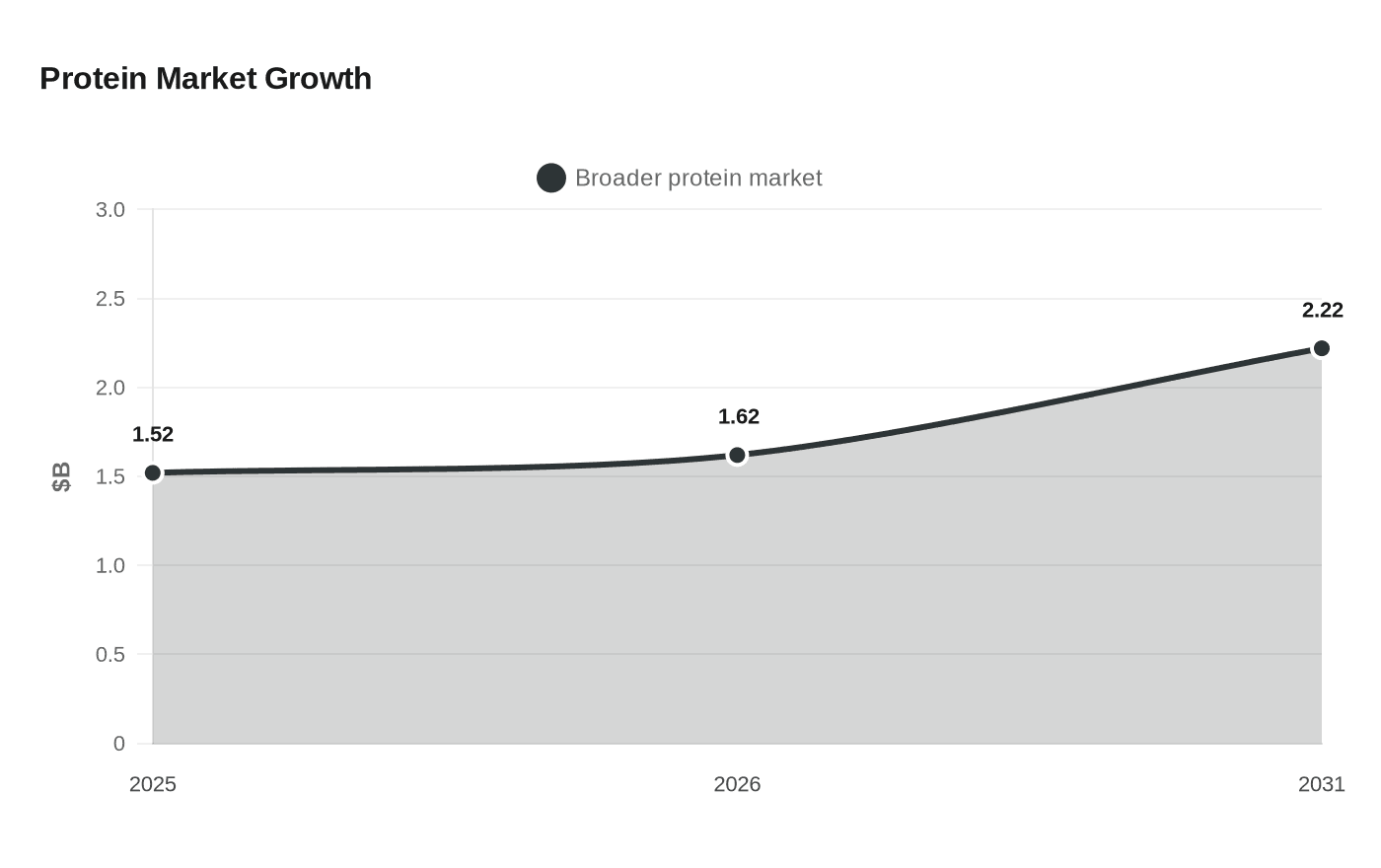
What makes this market especially interesting is the direction of demand. Mordor Intelligence identifies plant-based protein as the fastest-growing segment, and its wider protein market outlook shows growth from $1.52 billion in 2025 to $2.22 billion by 2031 at a 6.54% CAGR from 2026 to 2031. IMARC’s supplements forecast points in the same direction, with a 6.27% CAGR from 2026 through 2034. Taken together, those numbers suggest a market that is still expanding quickly, but also changing in character as consumers move from simple protein quantity toward ingredient quality, digestibility, and everyday usability.
Plant-based protein is not just a trend, it is becoming a mainstream signal
The fastest-growing part of the market is not the most traditional one. Plant-based protein is emerging as the segment with the strongest momentum, and that matters because it reflects how Indian consumers are approaching the category on their own terms rather than simply copying U.S. sports nutrition habits. In practical terms, the opportunity is not limited to gym-goers chasing muscle gain. It is spreading into family nutrition, daily wellness routines, and plant-forward eating patterns that fit a broader mainstream audience.
That shift also changes what performs well on shelf and online. Formulations that lean on recognizable whole-food ingredients, cleaner ingredient decks, and gentler digestion are better aligned with the way India’s protein conversation is evolving. In a market where protein is becoming part of broader household nutrition, products that feel familiar and easy to understand can have an advantage over heavily processed supplements that read like performance-only tools.
Digestive comfort is becoming a buying criterion
One of the most important drivers behind this change is digestive health. A survey by ITC’s food division found that 56% of Indian families report issues such as gas, acidity, and indigestion, and related reporting says these concerns are more prevalent in urban populations. That helps explain why additive-free and gut-friendly protein products are drawing attention: consumers are not only asking how much protein they are getting, but also how their bodies will handle it.
This is where India’s protein category starts to look different from the classic mass-gain model. A product can no longer rely only on a high protein count to win loyalty if it causes discomfort or feels too heavy for routine use. For brands, the lesson is straightforward: digestibility is no longer a side benefit, it is part of the value proposition. For consumers, especially in cities where wellness and convenience increasingly overlap, a protein powder or supplement has to fit into daily life without creating a second problem.
Trust, transparency, and clean labeling are now central to growth
The faster the category grows, the more important credibility becomes. India’s protein market is expanding at a pace that creates real opportunity, but it is also entering a phase where consumers are more selective about labels, claims, and ingredients. That makes transparency a commercial issue, not just a compliance issue.
The regulatory backdrop reinforces that point. FSSAI’s health-supplement and nutraceutical rules were issued in 2016, and its FAQs say regulated products must carry warnings, precautions, known side effects, contraindications, and published product-drug interactions as applicable. For brands, that means the label is part of the product experience, not a legal afterthought. Clear disclosure, careful claims, and readable packaging are becoming essential to building trust in a category where consumers are paying closer attention.
Safety concerns are pushing the market toward higher standards
The demand for cleaner products is also being sharpened by consumer-safety concerns. A CNBC-TV18 report on a study of 36 protein powders found that more than 70% had mislabeled protein content, with some products containing only half of what they claimed. The same report said 8% of the samples showed pesticide residue and 14% contained aflatoxins. Those findings are hard to ignore in a category built on confidence and measurable nutrition.
The impact is bigger than one bad batch or one weak brand. When consumers see evidence of mislabeled protein levels and contamination risks, they become more cautious about what they buy and more receptive to brands that can prove quality. That helps explain why clean-label positioning is gaining force in India: the market is rewarding products that feel safer, simpler, and easier to verify.
What brands need to do next
India’s protein market is heading toward a broader, more mainstream future, but winning in that future will require more than chasing volume. Brands and distributors need to treat the category as a trust business as much as a nutrition business. The strongest products will likely be the ones that combine growth-ready formulation with the kind of clarity that modern consumers expect.
- Build around cleaner ingredient decks and avoid overcomplicated formulas that can turn off everyday buyers.
- Treat digestive tolerance as a core product benefit, especially for urban consumers already concerned about gas, acidity, and indigestion.
- Make labeling precise and compliant, with warnings, precautions, side effects, contraindications, and interaction disclosures where required.
- Use plant-based options strategically, since they are already the fastest-growing segment and may appeal to consumers looking beyond classic whey-led sports nutrition.
- Back claims with quality controls, because mislabeled protein content and contamination concerns can quickly erode category trust.
India’s protein boom is not simply a replay of Western supplement culture. It is a market growing quickly, but in a different direction: toward cleaner labels, plant-based proteins, and products that fit ordinary households as much as fitness routines. That combination is what will define the category’s next phase.
This article was produced by Prism’s automated news system from verified source data, official records, and press releases, then run through automated quality and moderation checks before publishing. The system is built and supervised by the people who set the standards it runs under. Read our full AI policy.
Did this article answer your question?