NCBA backs bill to tighten labeling rules for alternative proteins
NCBA backed the FAIR Labels Act, turning label language into a direct fight over who gets to define protein at the shelf. The bill would force tighter naming rules for cell-cultivated and plant-based products.
The National Cattlemen’s Beef Association threw its support behind the FAIR Labels Act on April 30, sharpening a fight that is no longer just about disclosure but about who gets to define protein in the U.S. marketplace. For NCBA, labeling is a competitive issue with real consequences for how shoppers read a package, how regulators classify a product and how meat alternatives are positioned against conventional beef.
The bill, now reintroduced in the 119th Congress as H.R. 8596 in the House, is backed in the Senate by Pete Ricketts of Nebraska and John Fetterman of Pennsylvania. House companions are led by Mark Alford of Missouri, Mike Flood of Nebraska and Buddy Carter of Georgia. NCBA said the measure is aimed at transparency for cell-cultivated protein and plant-based alternative protein products, but the industry politics behind it are plain: naming rules can shape consumer perception before a shopper ever tastes the product.
Under the bill text, USDA, working with the U.S. Department of Health and Human Services, would have 180 days after enactment to develop common standards of identity for cell-cultivated protein products and plant-based alternative protein products. The agencies would also have to revise their 2019 memorandum of understanding within 90 days. The Senate sponsor’s office said the bill would require cell-cultivated protein and plant-based alternative protein products to bear accurate labels and would prohibit sale of mislabeled products. The House sponsor’s office said the goal is to prevent misleading labels and increase transparency in food labeling.
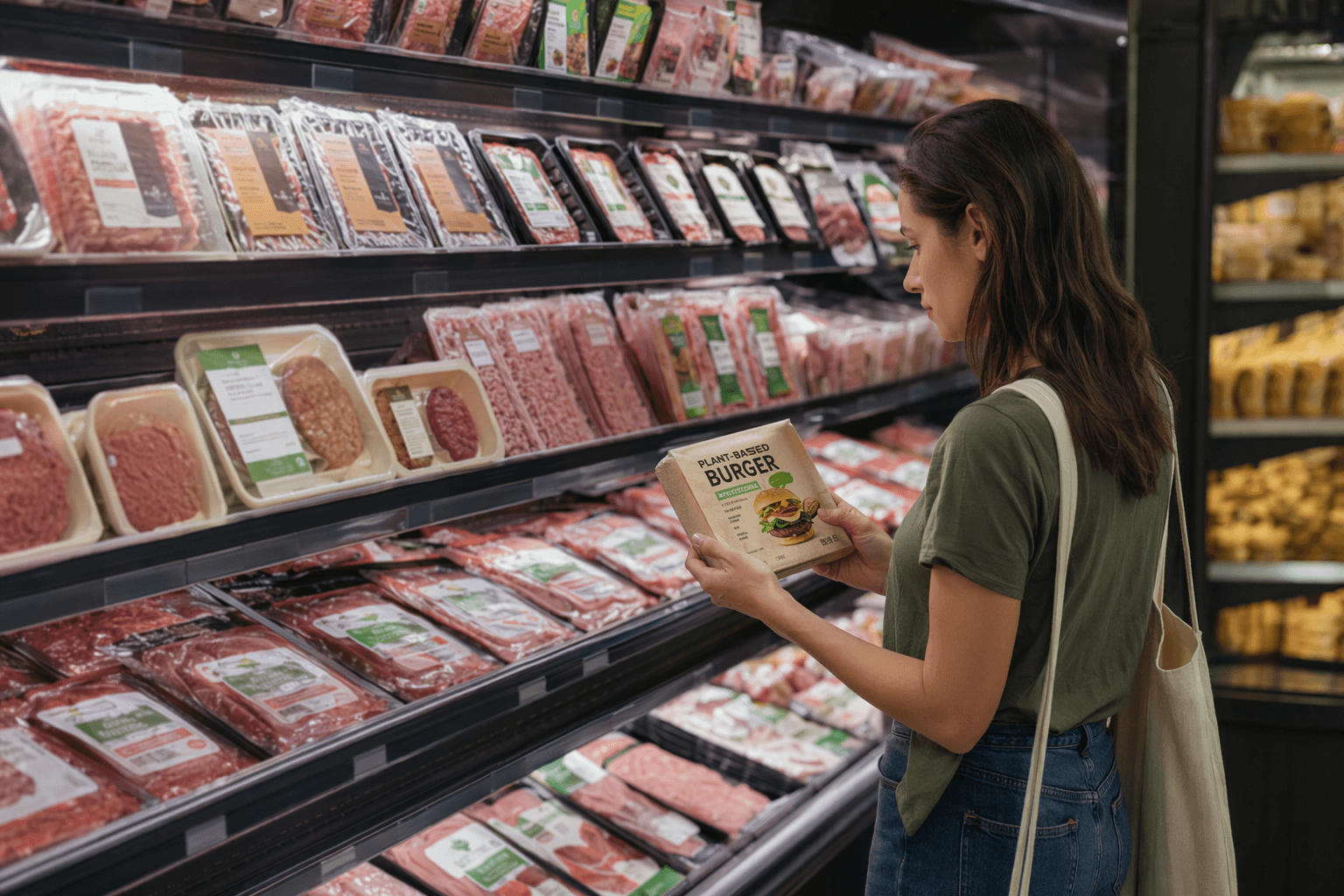
That puts the protein aisle at the center of a language fight that has been building for years. Versions of the FAIR Labels Act were introduced in the 118th Congress in 2024, making this latest push part of a continuing campaign rather than a one-time statement. The pressure point is not abstract: if a package can call itself meat, or something close to it, then market access, merchandising and consumer trust all move with the word choice.
The stakes are especially clear in cultivated meat. GOOD Meat received FDA clearance in 2023 and later USDA label approval for cultivated chicken, and the company has said it was the first cultivated meat sold in the United States. GOOD Food Institute continues to press for fair labeling and a level playing field, while courts and state lawmakers have split over restrictions. A Texas judge recently struck down a state law that would have required plant-based and cultivated meat products to carry disclaimers saying they are not real meat.
NCBA’s endorsement adds the weight of the beef industry to a broader push to harden naming rules around alternative proteins. At this point, the argument is not only about what goes on the label. It is about who gets to own the category name itself.
This article was produced by Prism’s automated news system from verified source data, official records, and press releases, then run through automated quality and moderation checks before publishing. The system is built and supervised by the people who set the standards it runs under. Read our full AI policy.
Did this article answer your question?