New study finds fat-burning enzyme also regulates gene expression in fat cells
HSL is not just a fat-breakdown enzyme anymore. In fat cells, it also enters the nucleus and helps control genes tied to healthy adipose tissue.
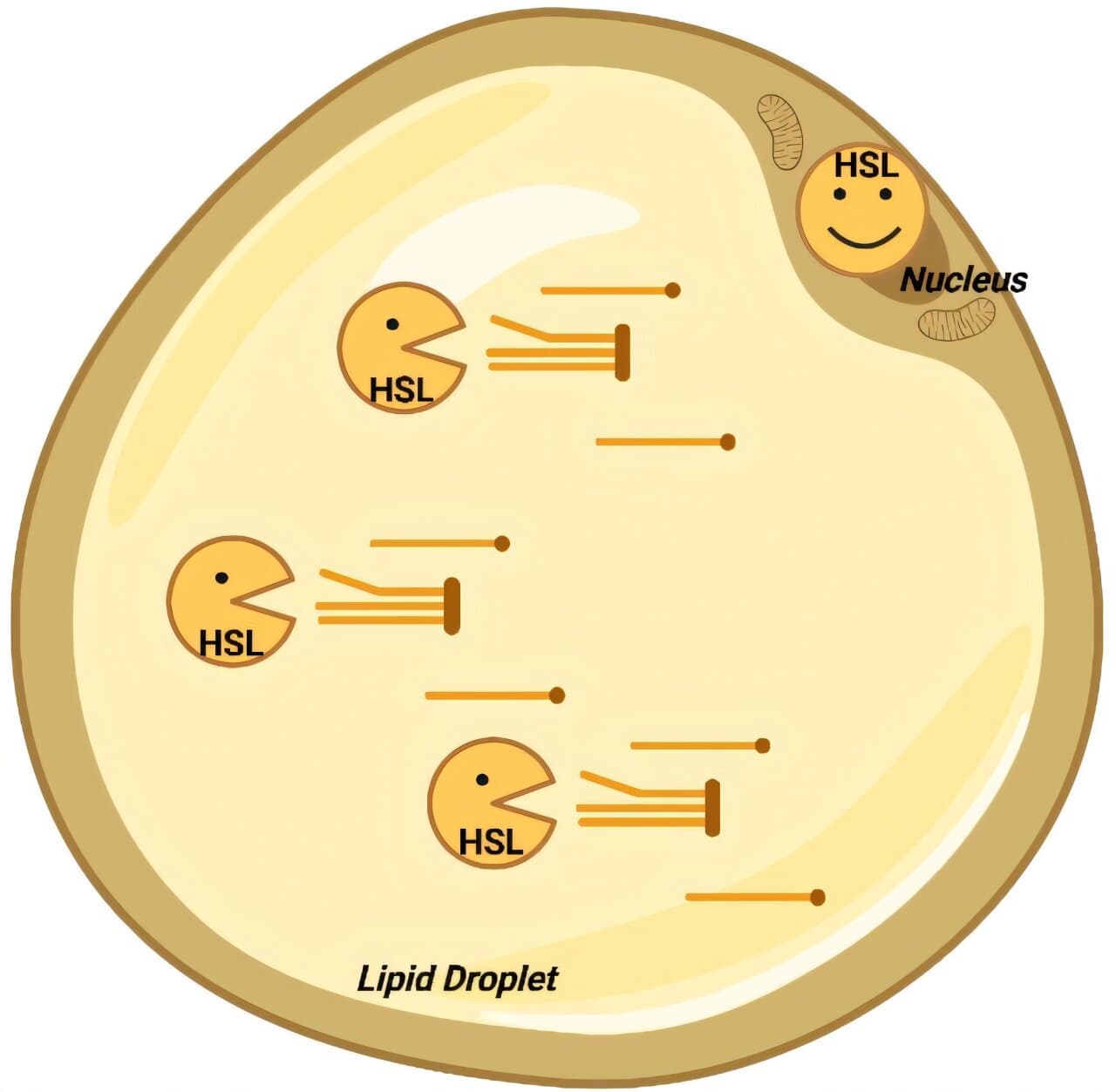
A long-trusted metabolism enzyme is turning out to have a second job inside fat-cell nuclei, and that shift could change how obesity drugs are built.
Researchers led by Dominique Langin at the University of Toulouse’s Institute of Metabolic and Cardiovascular Diseases, or I2MC, found hormone-sensitive lipase, better known as HSL, in adipocyte nuclei where it helps regulate gene expression. The 2025 study in Cell Metabolism says nuclear HSL is essential for adipose tissue maintenance, not just for breaking down stored fat on lipid droplets. In other words, HSL is not only part of the cell’s fuel-release machinery; it also appears to help keep fat tissue structurally and metabolically healthy.
That matters because obesity biology has long treated HSL as a classic lipase, but the new work shows its location inside the cell is part of the story. The team reported that HSL trafficking between the nucleus and the cytosol is controlled by TGF- and catecholamine signaling, and that HSL phosphorylation drives the protein back out of the nucleus. In vivo, HSL accumulated in adipocyte nuclei during high-fat feeding and shifted out during fasting, suggesting that nutritional state helps dictate where the protein acts.
The clearest evidence came from mouse models with different HSL subcellular localizations. Those experiments showed nuclear HSL was required to maintain adipose tissue. The researchers also silenced the gene in human adipocytes and found that HSL affected mitochondrial oxidative phosphorylation and the extracellular matrix independently of its enzymatic activity. That is the real dogma-shift here: HSL is doing nuclear, gene-linked work that cannot be explained by fat burning alone.
The finding also helps explain a stubborn paradox in metabolism research. People and mice lacking HSL do not become obese. Instead, they develop lipodystrophy, a loss of healthy fat tissue. That matters because obesity and lipodystrophy can look opposite on the surface but can converge on the same downstream harms, including insulin resistance, diabetes, fatty liver disease and heart problems.
The World Health Organization says 2.5 billion adults were overweight in 2022, including 890 million living with obesity, and global adult obesity has more than doubled since 1990. Against that backdrop, the Toulouse work points to a new therapeutic angle: not simply blocking or boosting fat breakdown, but understanding how HSL moves, where it acts, and how it helps maintain adipose tissue health. For now, that is proven in cells and mice. Turning it into a human treatment is the next, and much harder, step.
This article was produced by Prism’s automated news system from verified source data, official records, and press releases, then run through automated quality and moderation checks before publishing. The system is built and supervised by the people who set the standards it runs under. Read our full AI policy.
Did this article answer your question?