Protein brands fight to stand out in a crowded market
High protein is no longer enough. Brands are winning by picking a format, occasion, and source that consumers can taste, trust, and pay for.
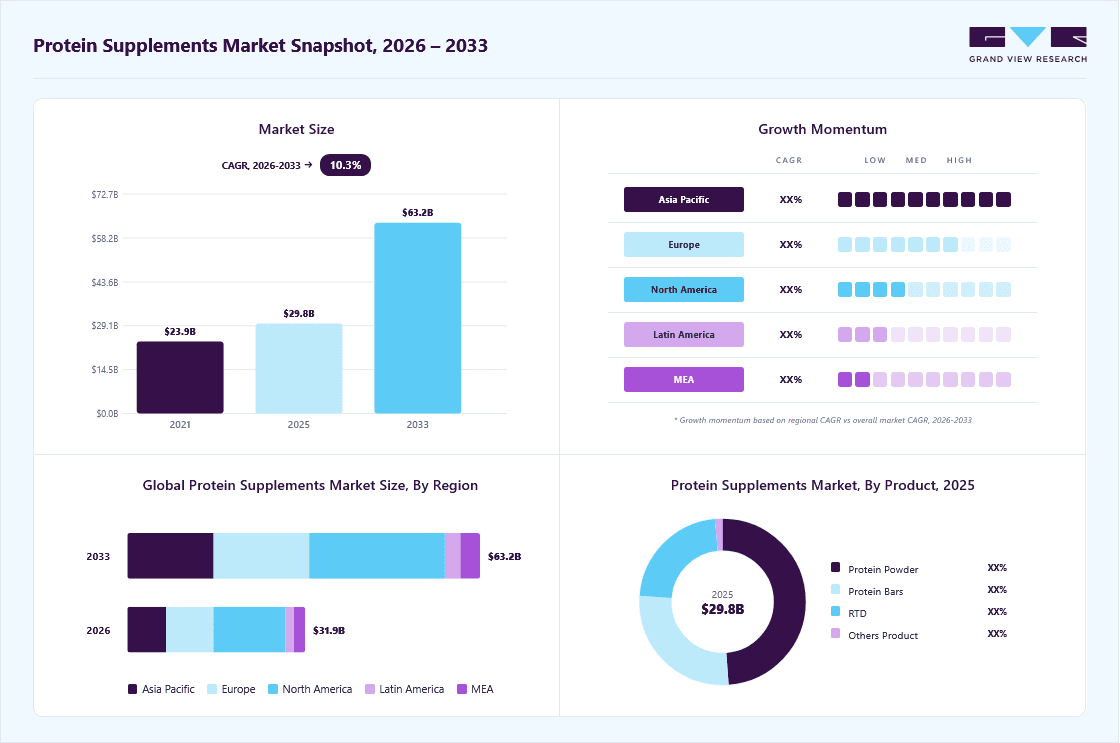
Grand View Research values the protein supplements market at $29.8 billion in 2025 and projects it to reach $63.2 billion by 2033, but the shelf is far more unforgiving than that growth story suggests. In a market this busy, grams are table stakes. The brands that break through are the ones that sell a specific job, a specific format, and a taste worth buying twice.
The market keeps growing, but the shelf keeps narrowing
The easiest mistake in protein is assuming the category still rewards simple volume claims. Consumers have learned to read labels quickly, and a product with 30 grams of protein is not automatically better than one with 20 if the taste, digestibility, or price is off. That shift matters because the market is now packed with powders, shakes, bars, ready-to-drink beverages, clear whey, powders-plus-collagen hybrids, and plant-based alternatives all chasing the same attention.
Grand View Research projects the clear whey market to climb from $583.4 million in 2025 to $980.1 million by 2033, at a 6.8% CAGR. That traction keeps attracting entrants, but it also makes differentiation harder, because every new launch lands next to a long list of near substitutes.
Choose a job for the product, not just a higher protein number
The strongest brands start by deciding what the product is for. Protein can mean muscle gain, satiety, recovery, or morning convenience, and each of those use cases asks for a different formulation and a different message. A gym-focused powder, a breakfast shake, and a grab-and-go bar solve different pain points, so one hero SKU rarely carries every occasion.
That is where the most useful differentiation levers still live. Brands can win through function, such as recovery or fullness; through formulation, such as clear whey, dairy-free blends, or low-sugar profiles; or through brand identity, such as premium, clinical, or indulgent positioning. The market rewards clarity here because broad promises sound generic and generic products are easy to replace.
A practical way to think about it is this: the product should answer one clear question faster than the competitor does. If the answer is breakfast convenience, the format should make that obvious. If the answer is post-workout recovery, the ingredients and sensory profile need to support that promise without forcing the consumer to work for it.
Format is now a strategy, not just a package choice
Format has become one of the sharpest dividing lines in protein. By January 9, 2024, the number of clear protein powders on the market had more than doubled in the previous two years in Nutraceutical Business Review's count of the segment, as brands tried to reach consumers beyond the traditional protein powder buyer. That expansion shows how much whitespace still exists when a format makes the category feel easier, lighter, or more versatile.
Bars tell the other side of the story. Protein bars saw a 13% reduction in the number of bars on offer in 2023, and delists outpaced new product launches, in the same January 9, 2024 Nutraceutical Business Review snapshot. That is a reminder that not every protein subsegment is equally forgiving. Bars can still work, but they have to earn their place with better taste, better texture, and a clearer reason to exist than another dense, chalky snack.

Clear whey is a useful example of how format and occasion intersect. It gives brands a way to speak to consumers who want protein without the milkshake experience, and its growth suggests a real opening beyond the core powder buyer.
Distribution and price architecture can still separate winners from the pack
Crowded protein shelves are not won only on formulation. Distribution matters too, and the brands that can secure a signature shelf or channel gain a big edge, whether that is club, mass, e-commerce, convenience, or foodservice. A product that fits the channel, in both price and format, has a better chance of becoming a repeat purchase rather than a one-time trial.
Price architecture is part of that equation. In protein, consumers are increasingly willing to compare the full value stack, not just the grams on the panel. A premium product can command a higher price if the sensory quality, ingredient source, and occasion are clear; a value product can win if it delivers straightforward utility without overpromising. The problem comes when a brand lands in the middle, with no premium cue and no sharp value signal.
Claims are now a legal issue as much as a marketing one
Protein claims sit under real regulatory and litigation pressure. The U.S. Food and Drug Administration has specific requirements governing when foods can make protein claims, and the Ninth Circuit's decision in Nacarino v. Kashi Co. clarified protein labeling requirements on August 21, 2023. Food-labeling suits involving protein claims were succeeding by November 7, 2022, and the National Agricultural Law Center has tracked food-labeling litigation involving protein as an active area for years.
Consumer-friendly language still matters, but it has to explain why the product exists and why it is worth buying again without drifting into vague promises.
Trust now sits next to taste on the shopping list
Consumer perception keeps pushing the category toward higher standards. In a July 28, 2021 consumer study, the United Soybean Board found that consumers agree protein is important to a nutritious diet, and more than half said the quality of protein matters too. Source, digestibility, and how the product fits into daily routines all matter more than a single headline number.
Trust is also being shaped by scrutiny around contaminants and testing. Consumer Reports published an October 14, 2025 investigation titled “Protein Powders and Shakes Contain High Levels of Lead.”
This article was produced by Prism’s automated news system from verified source data, official records, and press releases, then run through automated quality and moderation checks before publishing. The system is built and supervised by the people who set the standards it runs under. Read our full AI policy.
Did this article answer your question?