Protein claims pile up as reformulation gets harder for brands
Protein is still booming, but every new claim now carries a taste, texture and operations bill brands keep underestimating.

Protein is no longer the only claim that matters
Food Business News captured the real problem bluntly: protein, fiber, sugar reduction, carb quality and portion control have all taken turns as priority claims, and they do not always replace one another, they stack. That is why reformulation fatigue is real. Every time a brand pushes protein higher, it can lose sweetness, texture, shelf life or margin, and the consumer still expects the finished product to feel familiar.
That is the hidden cost of the current health claims arms race. The market no longer rewards a single nutrition win if the eating experience slips, because shoppers want the halo and the habit. In practice, the product still has to taste good, behave in the supply chain and survive the scrutiny of a label that now has to do more work than ever.
Consumers want more protein, but they are not always sure what that means
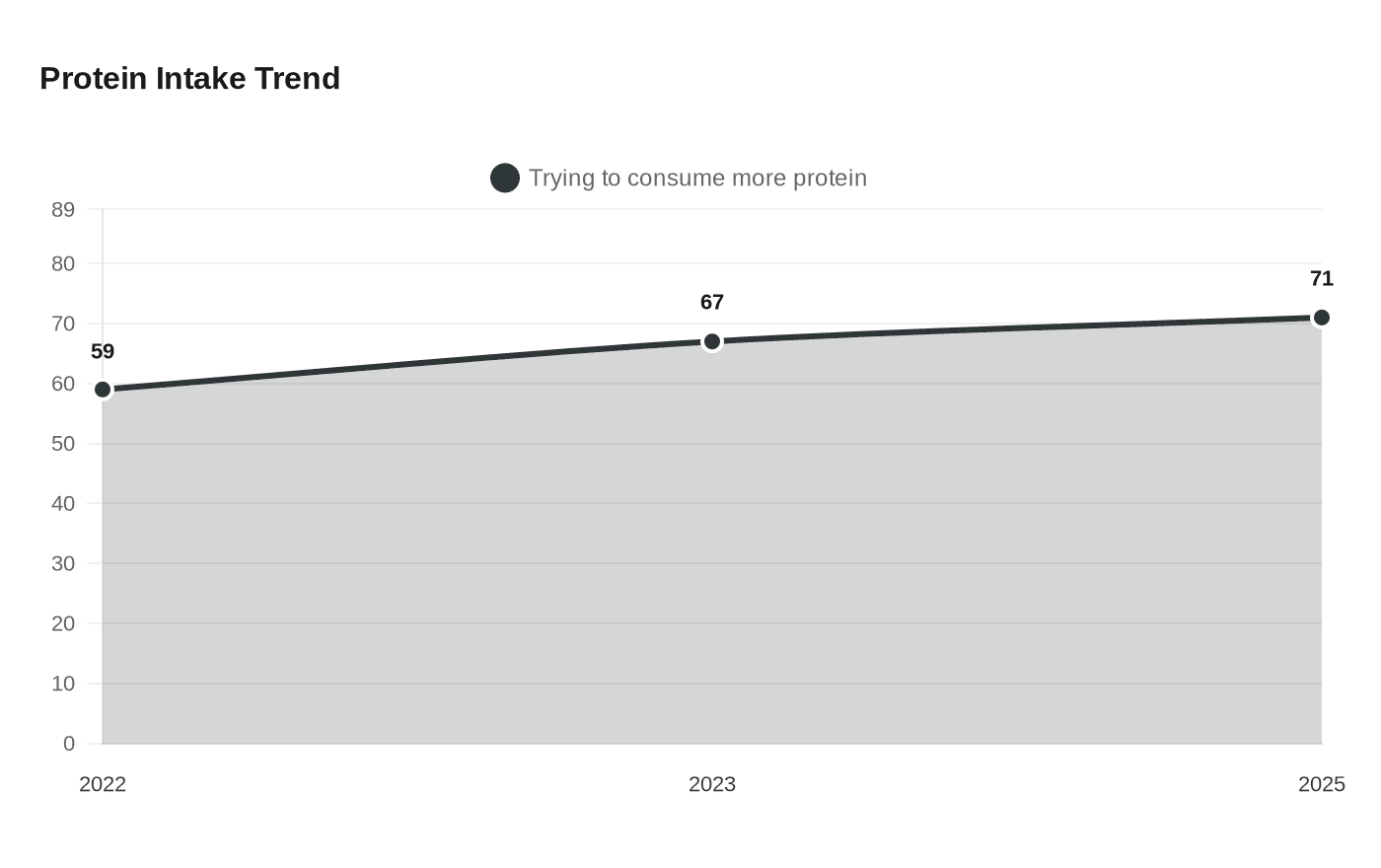
The protein boom is not a passing fad. In the International Food Information Council’s 2025 Food & Health Survey, 71% of Americans said they were trying to consume more protein, up from 67% in 2023 and 59% in 2022. IFIC also said high protein was the most common diet Americans followed in the past year, which tells you how deeply the category has moved into the mainstream.
The same research also shows why brands can still stumble. IFIC’s 2025 protein survey found that 79% of consumers were either unaware or unsure how much protein they should actually consume daily. The motivation is clear enough, weight management, fitness and healthy aging all rank high, but the amount is fuzzy, and that fuzziness opens the door to crowded, repetitive claims that can blur more than they persuade.
Wendy Reinhardt Kapsak, Monica Amburn and Jamy Ard have all been part of the broader protein conversation at IFIC, and the through line is simple: consumers want protein, but they want it in food they actually enjoy eating. The survey work also shows how broad the nutritional mood is, with 64% of Americans grading their own diet as a B- or better. That is not a group looking for lectures. It is a group looking for convenient wins that still feel credible.
This is where reformulation fatigue shows up
For manufacturers, protein is not a one-click upgrade. When a formula adds more protein, the common tradeoffs are predictable and expensive: texture loss, shorter shelf life, higher cost and sometimes reduced sweetness. Those are not cosmetic issues. They are the things that determine whether a reformulated product survives a second purchase or quietly disappears after launch.
The same balancing act appears when brands try to cut sugar. If the sweetness drops too far, they often have to add fiber or protein to preserve a healthier halo and keep consumers from feeling like the product got stripped down. Portion control creates its own pressure, because smaller servings still have to deliver enough satiety to feel worth the calories, which usually means denser nutrition and a tighter formulation brief.
That is why shoppers can say they want healthier products and still reject them the moment the bite changes. They may not use the language of reformulation fatigue, but they feel it immediately when a yogurt turns chalky, a bar eats dry or a beverage loses the mouthfeel that made it feel satisfying. Protein can help sell the front of pack; it can also expose every weakness in the formula behind it.
The new brief is bigger than grams of protein
FoodDrinkEurope has been clear about what drives reformulation: improving nutritional profile, shelf life, texture, sensory profile and portion size. That list reads like a reality check for anyone who still thinks better-for-you product development is mostly a matter of adding a nutrient and printing a claim. It is not. It is a series of compromises, and the best teams know exactly where they are willing to bend.
That is also why ingredient suppliers like Ingredion and Tate & Lyle matter so much in this market. Tate & Lyle says its ingredients are designed to reduce sugar and calories, improve texture and mouthfeel, and increase nutrition through fiber and protein. That is the kind of promise brands need now, because protein cannot just be present, it has to play nicely with everything else in the system.
The old single-metric mindset is broken. If a product is high in protein but rough on texture, difficult to process, or too sweet to fit current expectations, the claim is doing less work than the brand thinks. The winning formulas now are the ones that make the nutrition panel, the ingredient list and the eating experience feel like they belong to the same product.
Washington is changing the label game at the same time
The regulatory backdrop makes this even harder. The U.S. Food and Drug Administration finalized an updated healthy claim rule on December 19, 2024, and then proposed front-of-package nutrition labeling on January 16, 2025. In Washington, D.C., that means the label is no longer just a marketing surface. It is becoming a more disciplined summary of what is actually inside the package.
The current Dietary Guidelines for Americans, 2025-2030 add to that pressure by emphasizing whole, nutrient-dense foods while limiting highly processed foods, added sugars and refined carbohydrates. For brands, that makes reformulation more strategic, not less. You cannot simply pile on protein and assume the rest of the nutrition story will take care of itself.
That is the real lesson here for the protein category. The next phase of innovation is not about who can add the most grams. It is about who can manage tradeoffs without breaking taste, texture, label credibility or operations. In a market where every claim is competing with every other claim, the brands that win will be the ones that make the full product experience hold together.
This article was produced by Prism’s automated news system from verified source data, official records, and press releases, then run through automated quality and moderation checks before publishing. The system is built and supervised by the people who set the standards it runs under. Read our full AI policy.
Did this article answer your question?