Snack brands target nutrient-dense grazing as protein drives demand
Protein is turning snack time into a mini-meal market, but the real test is whether brands deliver satiety and convenience or just smaller packs with wellness labels.
The snack aisle is being asked to do more than carry consumers between meals. Brands are building smaller, more portable foods that promise protein, satiety and convenience, because a growing share of shoppers are grazing instead of sitting down for three fixed meals. That shift is forcing the category to prove it can deliver real nourishment, not just a better-sounding version of a familiar snack.
Grazing is now the operating system
Circana’s view of the market is blunt: the old three-square-meals-a-day pattern is losing ground, and snacking has expanded in both frequency and purpose. Snacks are no longer just indulgent extras, they are filling convenience, wellness and dietary goals, which changes the job description for the aisle. A bag or bar now has to work as a pick-me-up, a mini meal or a bridge between breakfast and dinner, and it has to do that without feeling heavy or hard to carry.

SNAC International’s 2025 State of the Industry Report makes that shift easy to see in the numbers. The U.S. snack food industry reached $156 billion in sales, up 4.8% over the prior year, while 35% of consumers said they snack between 2 and 5 PM. That is the clearest sign that afternoon grazing is not a fringe habit anymore. It is a core eating occasion, and brands are building around it.
Protein is the clearest signal of value
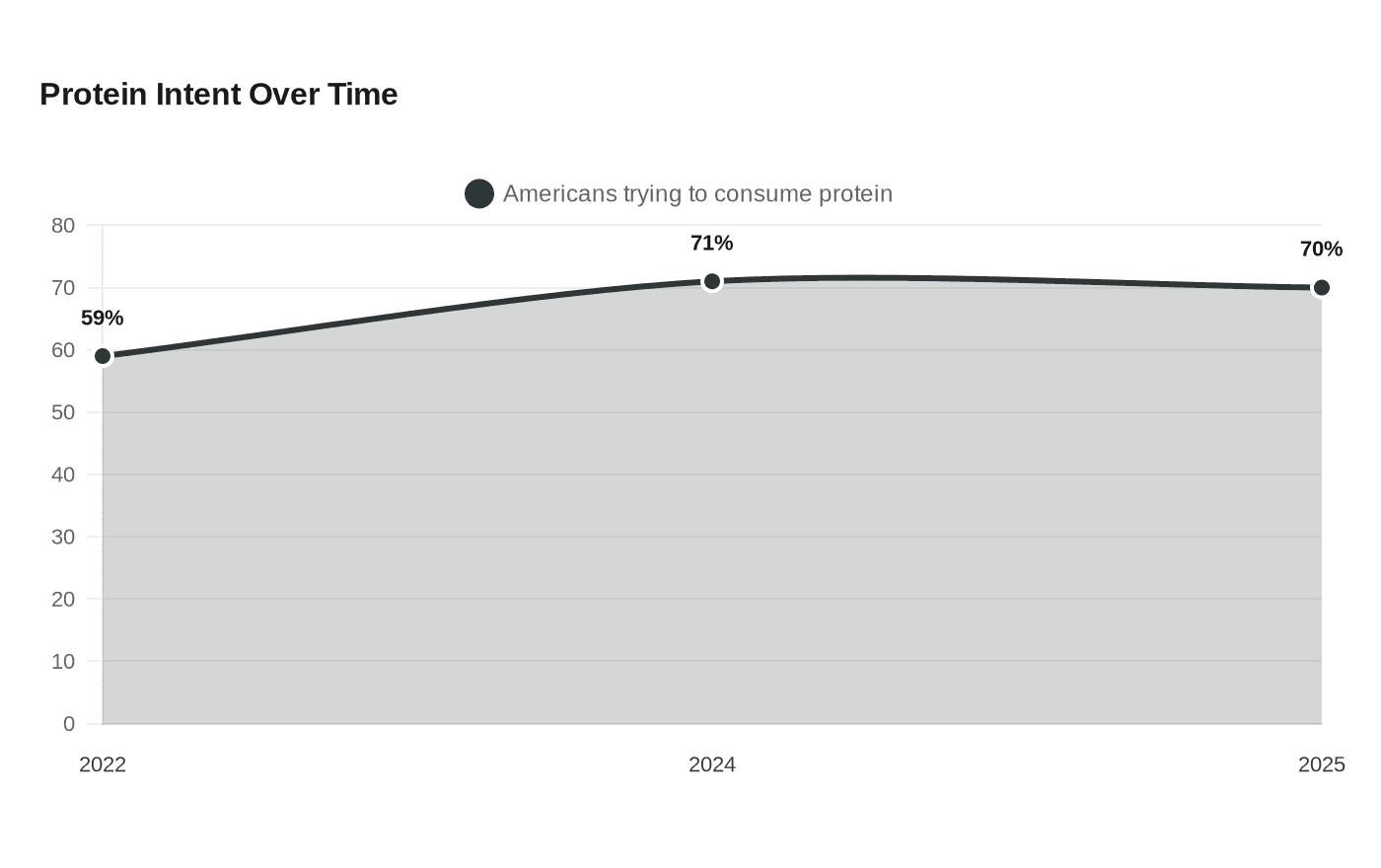
Protein is now the strongest shorthand for a snack that feels worth buying. The 2025 IFIC Food & Health Survey found that 70% of Americans try to consume protein, down slightly from 71% in 2024 but up sharply from 59% in 2022. IFIC also found that a high-protein diet was the most common diet Americans followed in the past year, and that consumers most often define a healthy food as a good source of protein.
That matters because protein has moved far beyond the gym crowd. IFIC’s Spotlight Survey found that 35% of respondents increased their protein consumption in the last year, but 53% are unaware of how much protein they should consume daily and 26% are unsure. In practice, that means protein is both a demand driver and a confusing label cue. Shoppers know they want more of it, even when they are not sure exactly how much they need.
Cargill’s 2025 Protein Profile reinforces the same point from another angle. The company found that 61% of Americans increased their protein intake in 2024, up from 48% in 2019. It also found that 57% of consumers who read nutrition labels check protein content, which explains why protein is showing up so prominently on snack packaging. It is one of the few nutrition claims that can stop a shopper in the aisle and justify a grab-and-go purchase.
The gap between demand and what lands in the cart
The most interesting part of this story is not that consumers want protein. It is that the market still misses the mark so often. Chomps-commissioned research found that protein appears in 36% of snacking occasions but is fulfilled in only 19% of purchases. That gap is a real opening for brands that can make protein easier to grab in a format that feels snackable, not punishing.
The same research says protein-forward snacks are growing three times faster than the overall $126 billion snacking market. That is a big signal that the category is not just reshuffling existing dollars. It is creating a premium lane for products that can deliver a functional payoff without losing the easy pleasure that makes snacks sell in the first place. The winners are the snacks that feel like a sensible choice and still taste like something people want to eat.
Bars are still big, but the category is widening
Glanbia’s numbers show how quickly protein snacking is moving beyond the old bar-and-shake frame. The company says the U.S. ready-to-eat protein category is worth $7.7 billion, with protein bars still the largest segment. But protein snacks, including salty and savory formats such as chips and pretzels, grew 47.5% in one recent year. That is the kind of growth that tells you the category is not just deepening, it is broadening.
That broadening matters because it matches how people actually eat. Younger consumers are helping drive demand for high-protein snacks, bold global flavors and smaller, satisfying meals, according to Cargill. Glanbia says most Gen Z, Millennial, Gen X and Boomer consumers specifically look for protein in their snacks, which makes this a mainstream behavior, not a niche wellness habit. The opportunity is no longer just to make a protein bar better. It is to make protein feel natural in more snack formats.
Single-serve is the packaging clue
Portion control and convenience are showing up in the pack format itself. SNAC International says single-serve snack packages grew 10%, while low-sodium and organic snack sales rose 12%. Those numbers tell the same story from the shelf: shoppers want smaller formats that feel easier to justify and easier to finish.
That is why nutrient-dense grazing works as a product strategy. The best snacks in this environment are not necessarily the biggest or the most indulgent. They are the ones that can deliver enough protein, maybe some fiber, and a sense of sustained energy without becoming a full meal or a sugar crash in disguise.
The real challenge is taste plus texture
This is where a lot of protein snacks still stumble. The pitch is easy enough: more protein, cleaner cues, smaller portions. The hard part is making the texture pleasant and the flavor repeatable enough that people actually buy it again.
That is why the best brands are treating function and indulgence as a single brief. Snack makers can no longer rely on flavor alone, but they also cannot win with nutrition talk if the product feels dry, chalky or overly engineered. In a market built around grazing, the winning snack has to do a real job, fit a real occasion and still taste like something worth reaching for between meetings, errands or the next meal.
Big food is already placing its bets
The major acquisitions tell you where the smart money is going. Glanbia points to Mondelez acquiring Grenade and a majority stake in Perfect Snacks, and Ferrero acquiring Power Crunch. Those are not cosmetic moves. They are signs that large food companies see protein snacking as a durable growth engine, not a temporary wellness fad.
That matters because it raises the standard for the whole aisle. Once large players move in, protein snacks stop being a side experiment and start becoming a core battleground for innovation, distribution and repeat purchase. The next phase of the category will belong to brands that can turn protein from a claim into a habit, because nutrient-dense grazing is no longer a trend to watch from the sidelines. It is becoming the way the snack aisle earns its keep.
This article was produced by Prism’s automated news system from verified source data, official records, and press releases, then run through automated quality and moderation checks before publishing. The system is built and supervised by the people who set the standards it runs under. Read our full AI policy.
Did this article answer your question?