Solar Foods wins U.S. patent for Solein protein, launches commercial products
Solar Foods secured a U.S. patent for Solein and pushed its first commercial snack into the market, turning a lab curiosity into a real commercialization play.
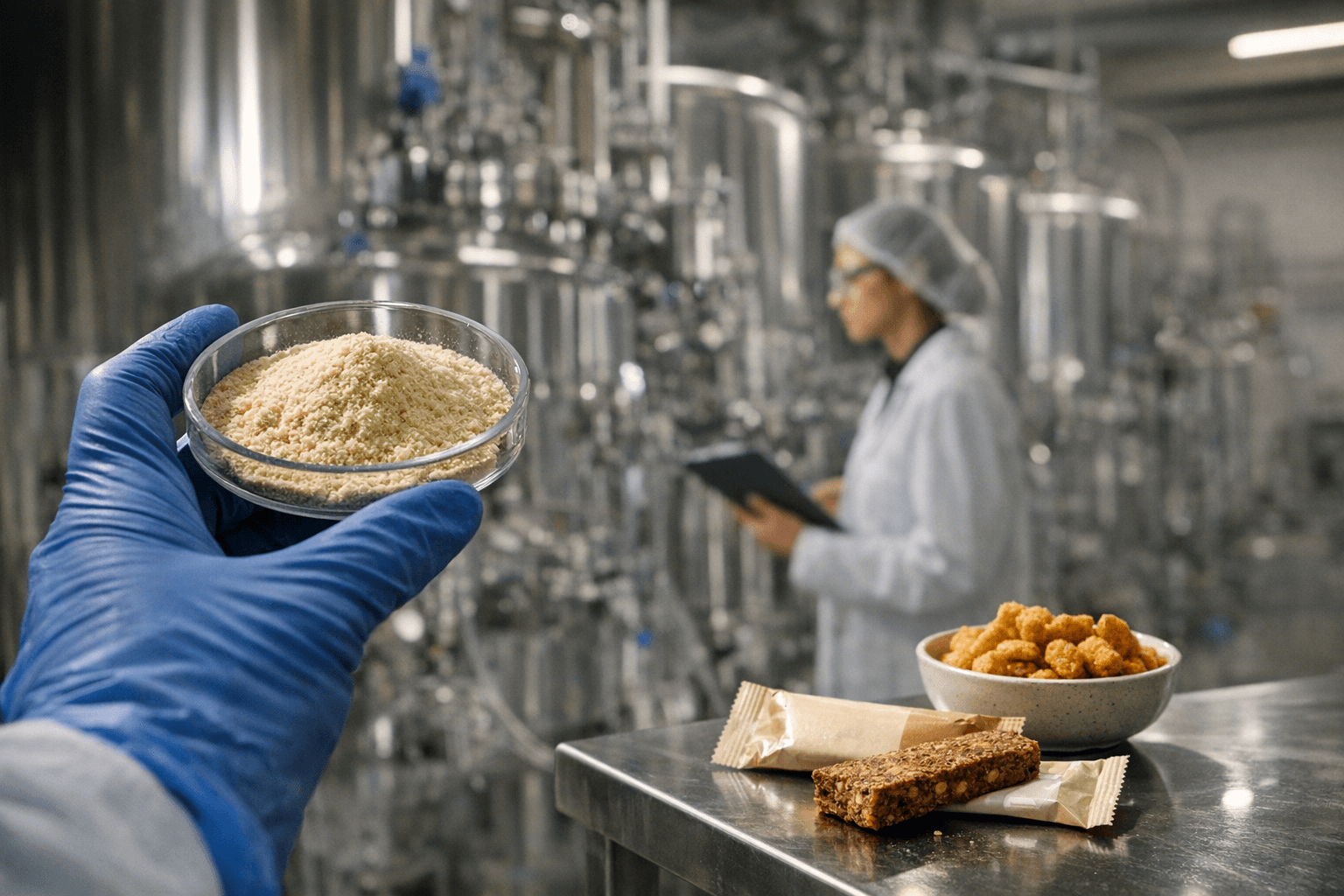
Solar Foods just removed one of the biggest practical obstacles between Solein and the U.S. market: patent risk. The company said it received a patent from the United States Patent and Trademark Office for its gas-fermentation production process, giving it exclusive rights to make Solein for food products with that patented organism and process.
That matters because patent clearance does not equal instant market scale, but it does change the business case. It gives Solar Foods more leverage with brand partners, more protection around its core process, and a cleaner path to licensing or direct ingredient sales in the United States. For an ingredient built on a single microbe fed with carbon dioxide, renewable electricity and hydrogen, that kind of intellectual-property footing is a bigger deal than the novelty factor alone.
Solar Foods is pairing that legal step with an actual product launch. The company said it has begun commercialization in the U.S. health and performance nutrition market, starting with Solein Protein Bites Nut Mix Edition. The snack uses peanut butter, hazelnuts and a chocolate-flavored coating, and Solar Foods says it is a good source of protein, iron and vitamin B12. That is the right first move: a familiar bite-sized format is a much easier sell than asking consumers to think about fermentation chemistry before they taste the product.
The company’s own roadmap makes clear where it sees near-term demand. Its 2025-2030 strategy focuses on Health & Performance Nutrition, especially in the U.S., which Solar Foods describes as a roughly $10 billion core segment that consumes about 500 kilotons of protein powder annually. That is a market built on function, not just food trends, and it is exactly where a differentiated protein ingredient can justify a premium if the sensory profile and nutrition stack up.
Solar Foods is still early on volume. Factory 01 began operations in April 2024, reached its full design capacity of 160 tons of Solein annually in 2025, and the company plans to expand that to 230 tons during 2026. The scale is meaningful for a first commercial plant, but it also shows how far Solein still has to go before it can compete on cost with commodity protein inputs. Juha-Pekka Pitkänen, the company’s chief scientific officer and co-founder, has framed scaling and regulation as the main remaining bottlenecks.
The regulatory path is also moving, but not finished. Solar Foods said Solein first won novel-food approval in September 2022 from the Singapore Food Agency, then followed with self-affirmed GRAS status in 2024 and a GRAS notification to the FDA in September 2025 seeking a no-questions letter, which some U.S. customers may require. The ingredient has also been tested in alternative meat, noodles and ice cream, but the first real commercial beachhead is still the same one that usually opens the door for high-value proteins: performance nutrition and snacks.
This article was produced by Prism’s automated news system from verified source data, official records, and press releases, then run through automated quality and moderation checks before publishing. The system is built and supervised by the people who set the standards it runs under. Read our full AI policy.
Did this article answer your question?