Stanford team unveils APB-Display to measure protein binding at massive scale
APB-Display can express and purify more than 100,000 protein variants in one day, then measure binding at a scale that AI protein design has lacked.
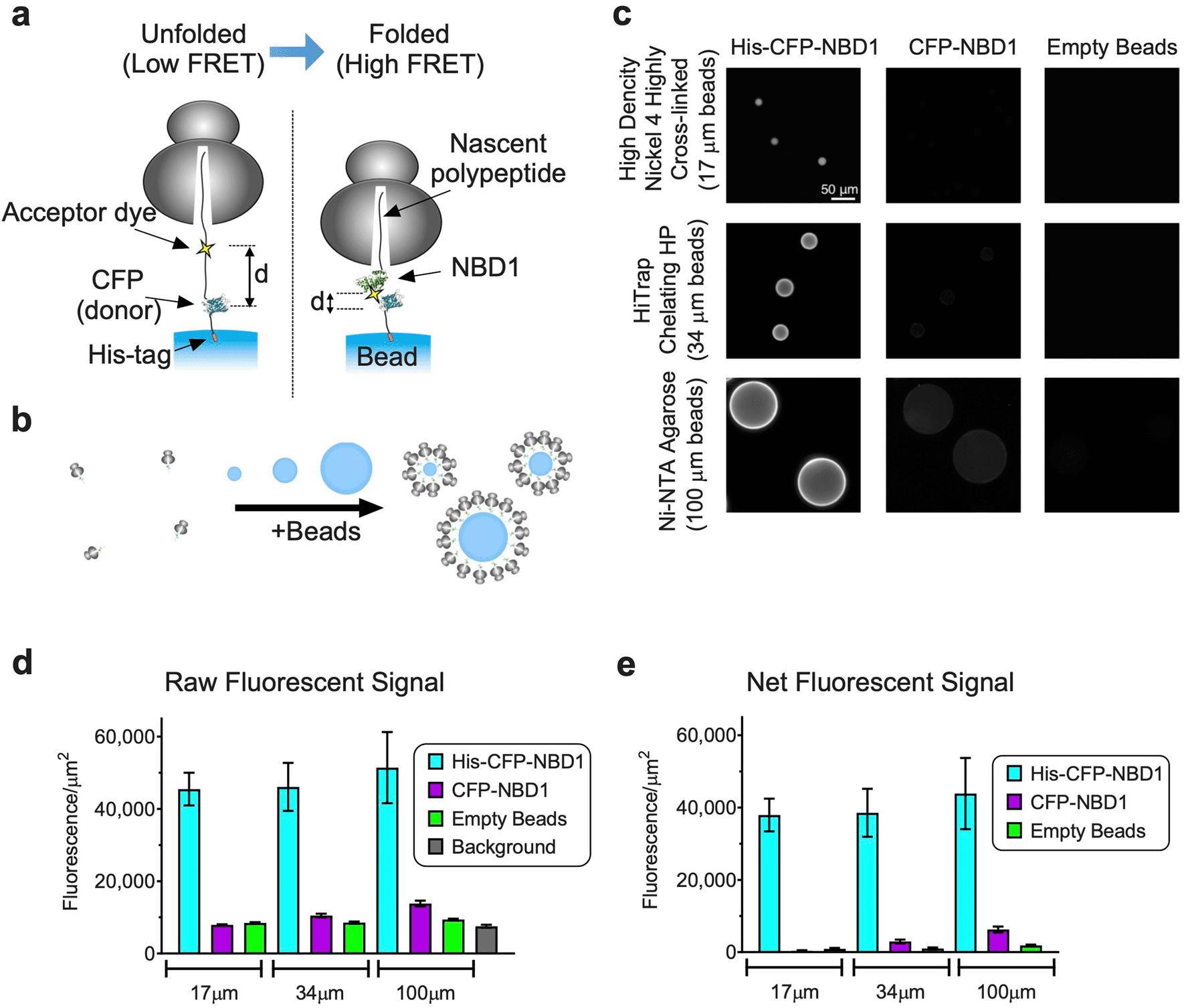
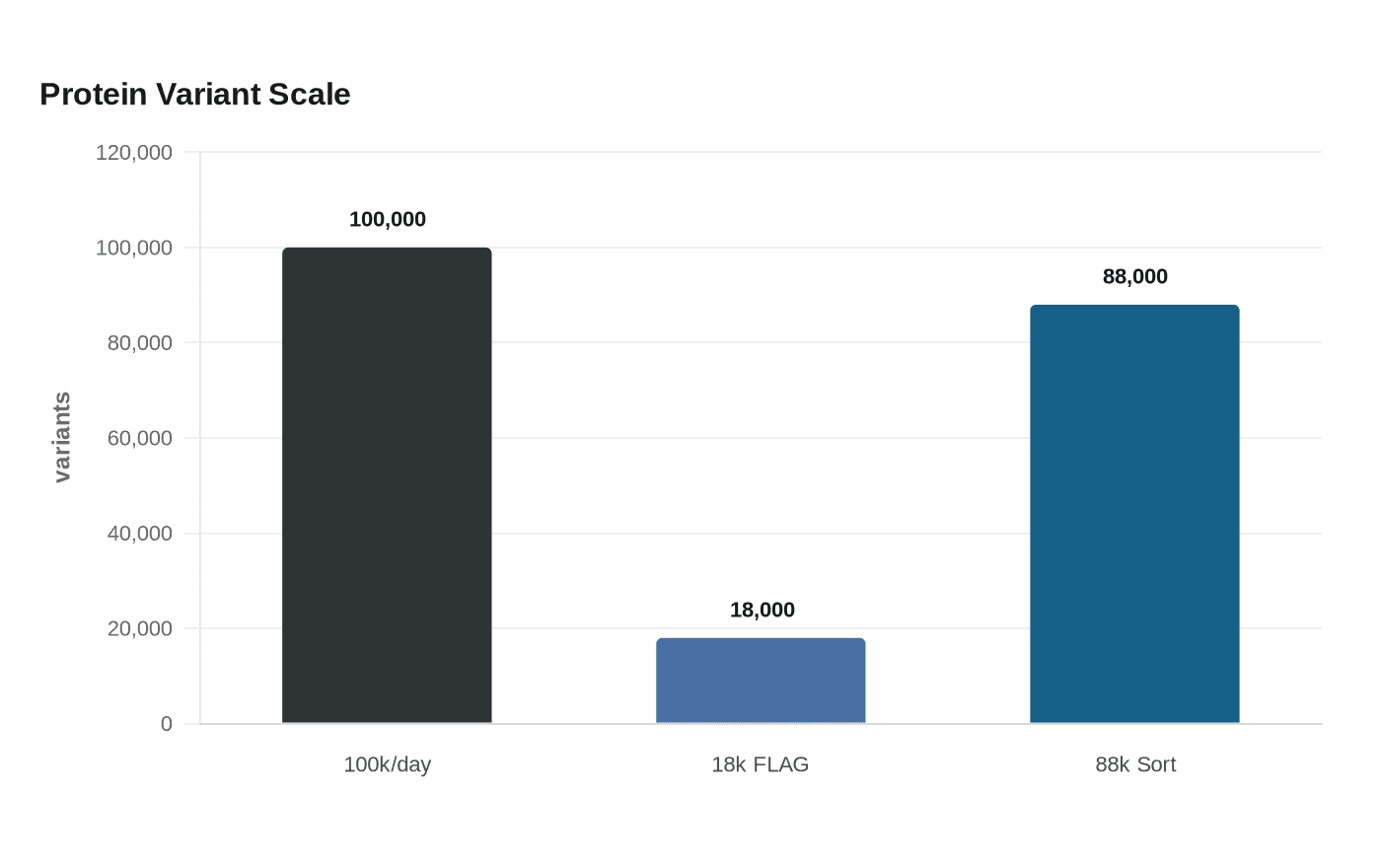
Stanford researchers have pushed protein validation into the same high-throughput world that AI protein design already inhabits. Their APB-Display system, short for Amplicon/Protein Bead Display, can express and purify more than 100,000 protein variants in vitro in a single day, then turn around and quantify whether those variants actually bind.
That matters because the real bottleneck in AI biology is no longer proposing sequences. It is testing them fast enough, cheaply enough and with enough quantitative rigor to decide which candidates deserve the next round of work. APB-Display attacks that problem with particle-templated emulsification, which builds hydrogel beads that covalently display many copies of each protein variant along with its encoding DNA. In practice, that gives the assay a built-in link between genotype and phenotype, but at a scale that starts to look industrial rather than artisanal.
The preprint, titled “Amplicon/Protein Bead Display enables quantitative in vitro biochemistry at scale,” lists Daria R. Passow, Anvita Gupta, Samuel Thompson, Anshul Kundaje and Polly M. Fordyce as authors. It describes two readout modes. APB-TiteSeq used fluorescent ligands, sorting and sequencing to generate titration curves, while simultaneously quantifying expression and binding affinities for more than 18,000 FLAG epitope variants against M2 anti-FLAG antibody in three days. APB-SortSeq paired single-concentration binding measurements with neural-network denoising and returned quantitative affinities for more than 88,000 variants.
The appeal is not just speed. The authors say the platform runs on standard laboratory equipment plus access to a FACS sorter, which makes it far more portable than many custom biophysics setups. That accessibility is the point: if protein design is going to become a software-like workflow, the experimental layer has to stop behaving like a boutique craft. APB-Display is a serious step in that direction, especially for drug discovery and protein engineering teams that need large, clean datasets tying sequence to function.
Fordyce, an associate professor of bioengineering and genetics at Stanford and a Chan Zuckerberg Biohub investigator, has spent years building microfluidic platforms for quantitative, high-throughput biophysics and biochemistry. Stanford has also filed a patent on APB-Display, PCT/US63/707264, naming D.R. Passow and P.M. Fordyce as inventors; Fordyce is also a co-founder of Velocity Bio.
The timing is hard to miss. On May 27, 2026, Biohub announced an open protein-biology model suite that included ESMC, ESMFold2 and ESM Atlas, and said researchers had used ESMFold2 to design binders against five cancer- and immunology-related targets in days instead of months or years. APB-Display fills in the missing half of that equation. Stanford and Biohub are not just making better models for proteins; they are building the validation layer that could decide which AI-generated proteins become medicines, tools or dead ends.
This article was produced by Prism’s automated news system from verified source data, official records, and press releases, then run through automated quality and moderation checks before publishing. The system is built and supervised by the people who set the standards it runs under. Read our full AI policy.
Did this article answer your question?