Study reveals gut-brain signal drives protein-seeking appetite
Protein craving in flies looks wired into the gut-brain loop, not just taste. The signal pushes animals toward amino acids and away from sugar.

A gut signal that changes what an animal wants
A South Korean animal study adds a new piece to the protein puzzle: when protein runs low, the gut does not just register the shortage, it helps steer feeding behavior toward the missing nutrient. Led by Seong-Bae Suh at the Institute for Basic Science’s Center for Microbiome-Body-Brain Physiology, with collaborators at Seoul National University and Ewha Womans University, the work shows a gut-brain circuit in fruit flies that detects protein deficiency and quickly changes what the animal seeks.
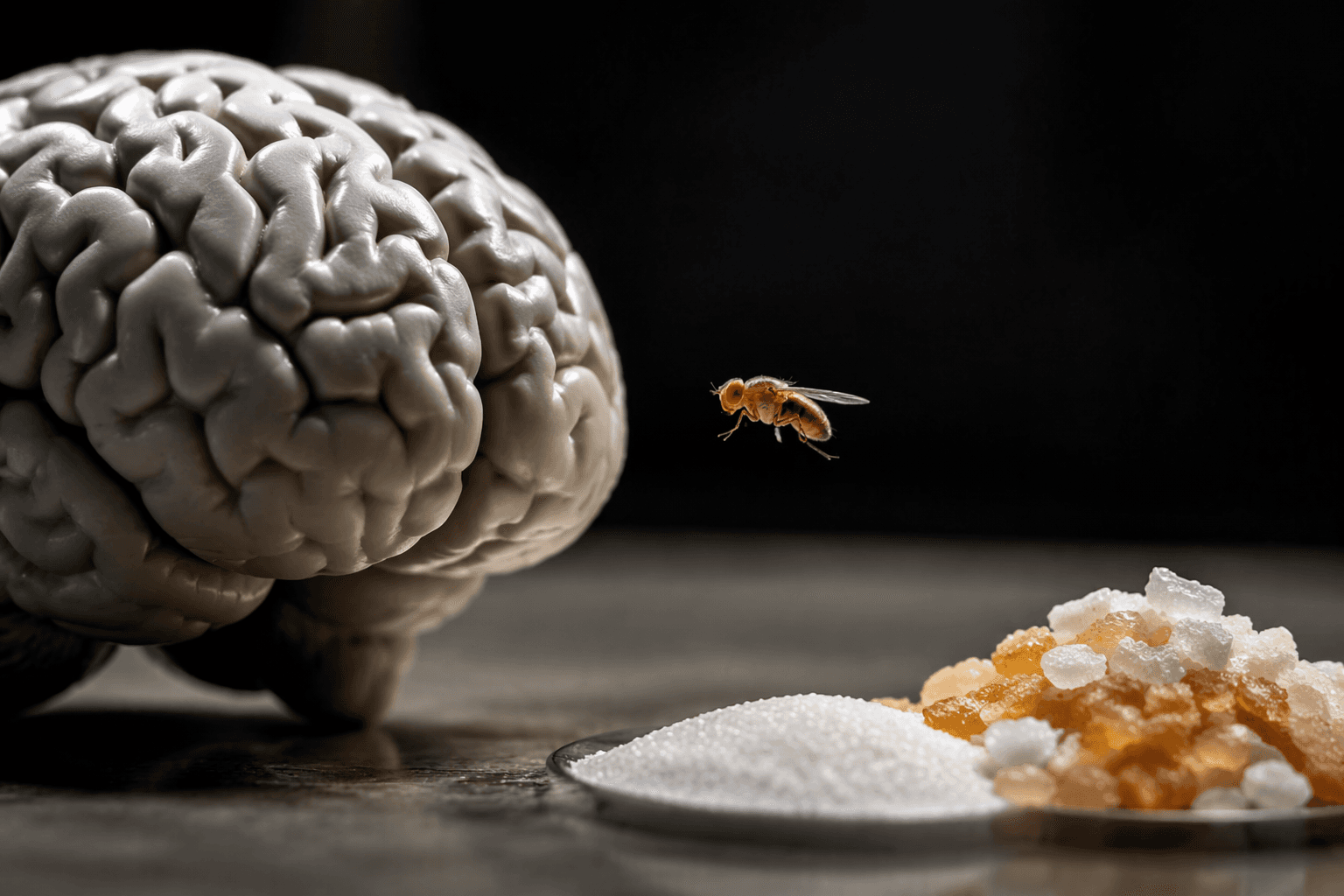
That matters because it reframes protein appetite as a biological response, not a vague preference or a matter of self-control. The important part for anyone watching the protein category is the mechanism: the gut is not passively receiving food choice signals, it is actively shaping them. In practical terms, that gives a stronger scientific backbone to the idea that protein-rich foods can influence satiety, craving, and repeat choice.
How the fly gut flags a protein shortage
The newer research points to two coordinated routes. One is rapid and neural, the other is slower and hormonal, and together they push the animal toward essential amino acids while pulling it away from carbohydrate-heavy feeding. When protein is lacking, gut cells release the peptide CNMa, short for CNMamide, which signals amino-acid deficiency to the brain.
The newer study says circulating CNMa modulates brain neurons to promote essential amino acid intake while suppressing carbohydrate consumption. It specifically identifies DH44 neurons as carbohydrate-related neurons that are suppressed by CNMa signaling. That is the key mechanism shift: the animal does not simply eat more overall, it changes what it values at the brain level.
There is also a reinforcing loop built into the system. A 2026 EurekAlert release described the mechanism as a positive feedback loop that sustains neuronal activity and CNMa production, which helps explain why the response is not just a one-off reflex. In other words, once the protein shortage is detected, the signal keeps the system pointed toward protein until the deficit is addressed.
The earlier Nature work laid the foundation
This new work did not appear out of nowhere. A 2021 Nature study found that CNMamide is highly induced in enterocytes of the anterior midgut during protein deprivation in Drosophila. It also showed that silencing the CNMa-CNMa receptor axis blocked the essential-amino-acid-specific hunger response in deprived flies.
That earlier paper added another useful clue: gnotobiotic flies with an essential-amino-acid-producing symbiotic microbiome had reduced appetite for essential amino acids. That finding tied nutrient seeking not just to the fly’s own tissue state, but to the nutritional output of its microbiome. The new research goes further by mapping the circuit logic more clearly, showing how the gut-to-brain message changes feeding behavior in real time.
Why this matters beyond fruit flies
No one should pretend fruit flies are humans. The value here is not direct translation, but a cleaner model for how selective appetite can be built into biology. Scientists have long known that feeding behavior is shaped by internal metabolic needs and that amino-acid restriction can alter feeding and lifespan across species; what was missing was a precise gut-to-brain mechanism for selective protein seeking.
That missing mechanism is what makes this study interesting for satiety research. If nutrient deficiency can be translated into a specific appetite signal, then appetite is not just about fullness, taste, or habit. It is also about the body’s ability to identify what kind of fuel is missing and bias behavior toward it.
For malnutrition research, that could be especially useful. The reporting tied to the new study says the work helps explain nutrient selection and may be relevant to malnutrition biology. That is a bigger deal than it may sound like at first glance, because it suggests a way to think about undernutrition as a signaling problem, not just an intake problem.
What it suggests for protein product design
For the protein industry, the takeaway is not that flies prove a marketing point. It is that selective appetite appears to be biologically structured, which supports the logic behind high-protein product design in a more serious way than “protein is trending.” Brands are not just selling grams of protein anymore, they are trying to build products people will actively choose again, especially when sweeter or more indulgent options are sitting right next to them.
That is why protein keeps moving into snacks, bars, and beverages that are engineered for convenience and pleasure, not just performance. The research reinforces a familiar but often underappreciated product problem: consumers do not merely need more protein, they need products that help them choose protein over sugar-heavy alternatives. In that context, texture, flavor, sweetness balance, and satiety all matter as much as the label claim.
The work also fits the broader conversation around GLP-1 medications and satiety. As consumers eat less overall, nutrient density becomes more important, and protein is often the first macro to be singled out for muscle preservation, appetite management, and balanced daily nutrition. This study gives that messaging a more biologically grounded story: when intake drops, the body may become even more sensitive to the nutrient it is missing.
Where formulation may go next
The most interesting product-development implication is that protein may increasingly be bundled with other satiety-supporting ingredients. The research hints at food-as-function formulations that combine protein with fiber, probiotics, or related ingredients designed to work with the body’s own appetite signaling. That is not just a wellness pitch, it is a design challenge: make the product satisfy the brain’s nutrient-seeking logic, not just the palate.
That distinction matters. A bar that technically contains 20 grams of protein but tastes like a punishment will lose to a less useful snack that people want to repeat. The new study supports a simple, industry-relevant point: the best protein products will be built around biology and behavior together, because appetite does not respond to nutrition facts alone.
The bottom line
This is still early-stage work in fruit flies, but the mechanism is already useful as a lens. The gut-to-brain CNMa pathway shows that protein seeking can be driven by a structured nutrient alarm, with one fast route and one slower reinforcing route, rather than by vague craving alone. For satiety researchers, that opens a sharper model; for product developers, it strengthens the case for protein foods that are craveable, convenient, and nutrient-dense; and for nutrition messaging, it pushes the conversation away from willpower and toward biology.
This article was produced by Prism’s automated news system from verified source data, official records, and press releases, then run through automated quality and moderation checks before publishing. The system is built and supervised by the people who set the standards it runs under. Read our full AI policy.
Know something we missed? Have a correction or additional information?
Submit a Tip