Weill Cornell study maps degradability landscape for protein degraders
Weill Cornell’s new Nature Communications paper quantifies how protein degraders map onto degradable targets, a step toward cutting dead-end target picks.
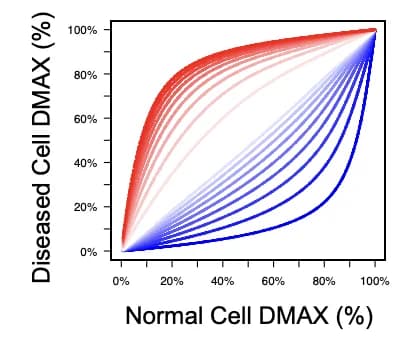
Protein degrader programs can make the molecules, but they still face a stubborn bottleneck: knowing which targets are actually degradable before a team sinks time into the wrong one. A new Nature Communications paper from Weill Cornell researchers lays out a quantitative framework for defining that degradability landscape, giving drug hunters a more systematic way to sort promising targets from those likely to resist the approach.
The paper, “A quantitative approach for defining the degradability landscape of protein degraders,” was published on July 13, 2026. The author list includes Wei Du, Lamberto De Boni, Benjamin David Hopkins and Olivier Elemento, and the manuscript record shows it was received on March 14, 2025 and accepted on July 7, 2026. Nature’s early-access version described the article as an unedited manuscript released before final publication, which put the findings in circulation ahead of full copyediting.

That timing matters for a field where target selection can determine whether a protein degrader program advances or stalls. Targeted protein degradation has become a major strategy in drug discovery, especially for oncology and precision medicine, because it can reach proteins that conventional inhibitors struggle to handle. A quantitative map of degradability is designed to sharpen that front end of the pipeline: instead of treating every disease-relevant protein as an equally plausible candidate, researchers can ask whether the target sits in a chemically and biologically favorable part of the landscape.
Weill Cornell Medicine’s Englander Institute for Precision Medicine highlighted the study and identified Olivier Elemento as the institute’s director. The institute also described Wei Du as Elemento’s former PhD student, underscoring the continuity behind the project’s author team. Elemento and Ben Hopkins have been central names in the work, with De Boni and Du rounding out the paper’s cited authorship.
For companies building protein degrader programs, the practical value is in triage. A framework that makes degradability more measurable could reduce wasted synthesis cycles, tighten mechanism-of-action studies and help prioritize targets that are more likely to produce a clear degradation signal. The remaining question is validation: whether the same quantitative rules hold across broader target classes, distinct degrader chemotypes and the messy biology of real disease settings.
This article was produced by Prism’s automated news system from verified source data, official records, and press releases, then run through automated quality and moderation checks before publishing. The system is built and supervised by the people who set the standards it runs under. Read our full AI policy.
Did this article answer your question?