A Simple Gesture pilots drone food delivery with Tarrant Area Food Bank
Tarrant Area Food Bank and Arlington used drones and a ground robot to deliver 300 grocery boxes, testing whether last-mile tech can reach households volunteers cannot.
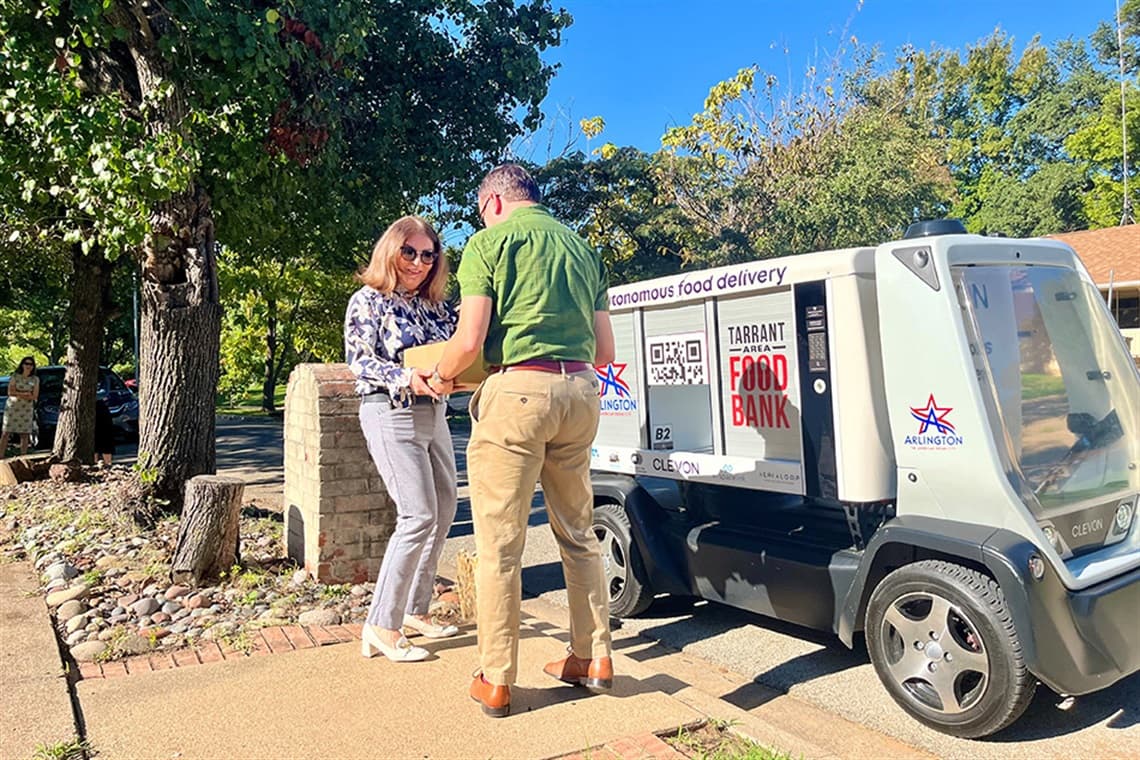
A fleet of airborne and ground delivery vehicles finished 300 grocery deliveries to East Arlington residents this spring, giving Tarrant Area Food Bank and the City of Arlington a live test of whether last-mile technology can move food more efficiently than a traditional van route. The two-year effort, backed by a $780,182 U.S. Department of Energy grant, began in October 2023 and was built around a simple question with big workplace implications for food recovery groups: when does new delivery hardware actually expand access, and when is it just a pilot?
The project moved boxes of nonperishable food through a two-stage system. Boxes were staged at the food bank’s distribution center, flown roughly a mile by an uncrewed aircraft to a transfer point, and then carried the last mile by land-based machines with lockers and text alerts so residents could retrieve them. The aerial vehicle used in the May 2025 phase was Aerialoop’s ALT6-4 VTOL delivery aircraft, a battery-powered craft about 6 feet long that could carry nearly nine pounds, which set the weight limit for each food package. On the ground, the city used one autonomous electric vehicle from Mozee and a Clevon 1 robot with a cargo compartment that could be unlocked by code.
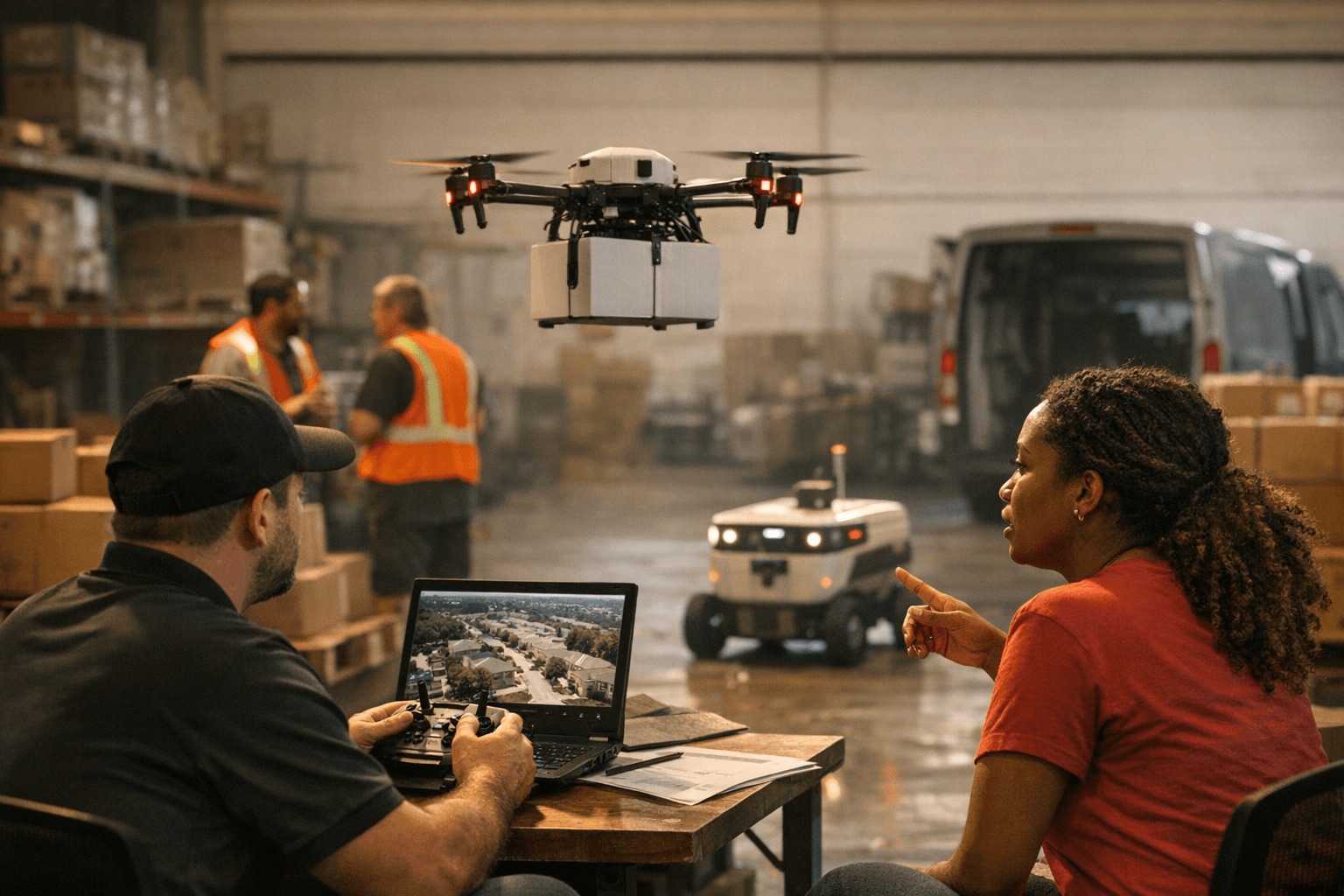
Arlington said the first delivery round in September 2024 reached nearly 150 households in East Arlington and near the University of Texas at Arlington. The final delivery window ran from May 12 to May 16, 2025, after city officials invited East Arlington residents to sign up by April 30. The city said the project ultimately completed 300 grocery deliveries overall and was designed to reduce greenhouse gas emissions while helping residents with mobility or transportation challenges.
The city also said it was evaluating energy use, cost-benefit and participant feedback. Most participants said they liked receiving groceries this way, a promising sign for a system meant to serve neighborhoods where access to food and transportation is uneven. The University of Texas at Arlington’s Institute of Urban Studies was a collaborator, and the university lists the work as a DOE subcontract running from November 1, 2023, to October 31, 2025.
For food recovery organizations that depend on volunteers, route coordinators and pantry partners, the takeaway is not that drones should replace doorstep pickups. It is that the field is still searching for the most efficient way to cover distance, reduce labor strain and reach people who cannot easily get to a pantry. After the pandemic made home delivery a heavier part of the job, Arlington’s experiment showed that the next phase of food access may be less about novelty than about matching the right delivery model to the right neighborhood.
Know something we missed? Have a correction or additional information?
Submit a Tip