UNICEF report shows global hunger deepens, underscoring local food bank need
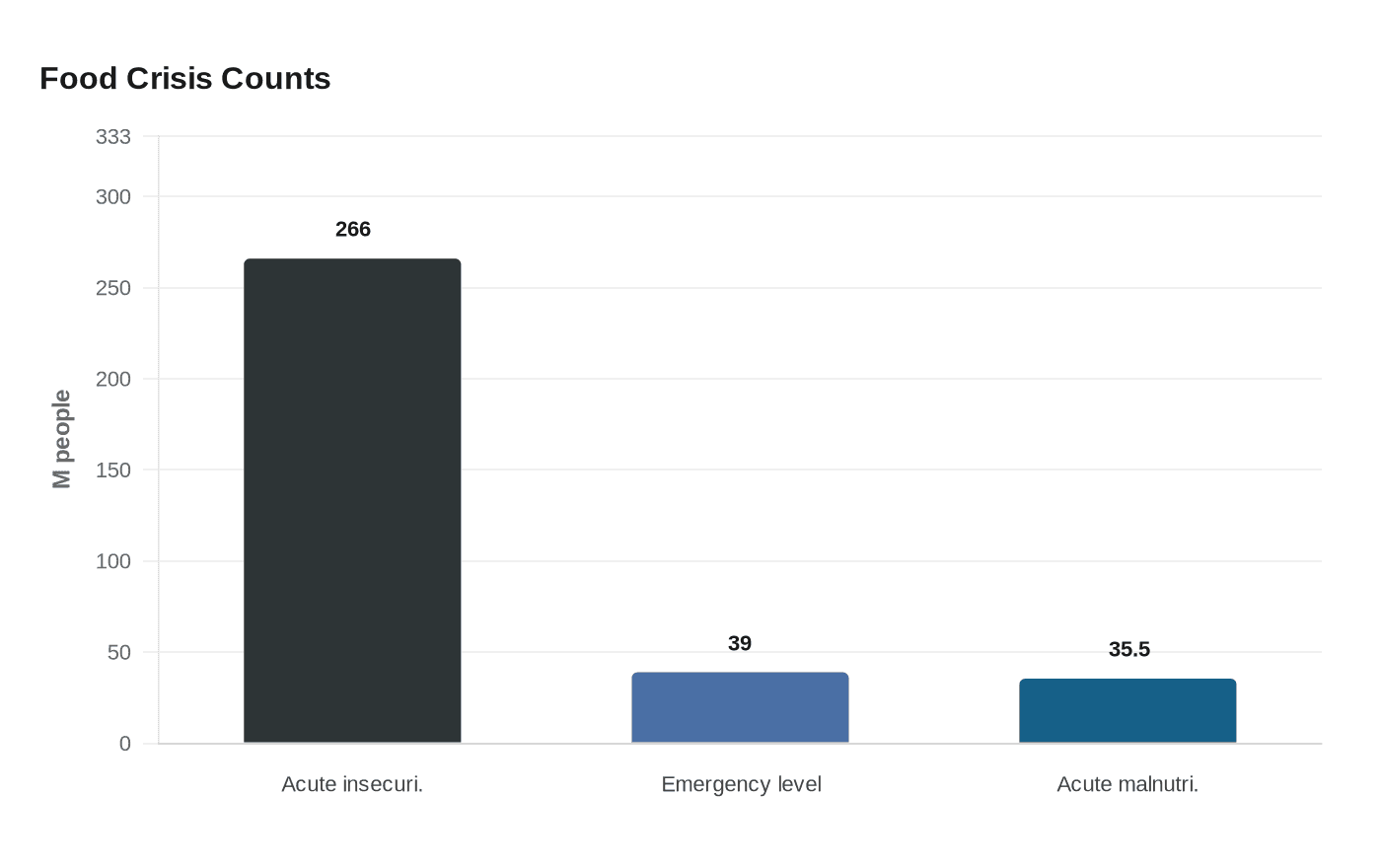
266 million people faced acute hunger last year, a sign that local food banks will keep seeing steady demand, not a temporary surge.

More than 266 million people in 47 countries and territories faced high levels of acute food insecurity in 2025, a scale that keeps pressure on hunger networks far beyond the world’s worst crisis zones. For A Simple Gesture, the report is a reminder that demand for doorstep donations and pantry deliveries is not a passing spike, which makes reliable green-bag pickups, volunteer retention and consistent donor education essential.
The 10th edition of the Global Report on Food Crises said acute hunger has doubled over the past decade. Ten countries, Afghanistan, Bangladesh, the Democratic Republic of the Congo, Myanmar, Nigeria, Pakistan, South Sudan, Sudan, the Syrian Arab Republic and Yemen, accounted for two-thirds of everyone facing high levels of acute hunger. Conflict remained the primary driver, accounting for more than half of all people facing severe hunger, while more than 39 million people in 32 countries were at emergency levels and nearly half of food-crisis contexts also faced nutrition crises. The report also counted 35.5 million children who were acutely malnourished.

The report marked 2025 as the first year since global hunger tracking began that famine was confirmed in two separate contexts in the same year, in Gaza Governorate and parts of Sudan. In some of the hardest-hit places, including Gaza, Myanmar, South Sudan and Sudan, overlapping conflict, disease and restricted access to services pushed malnutrition and mortality risks even higher.
The warning lands at a time when humanitarian and development financing for food and nutrition responses has fallen back to levels last seen nearly a decade ago. For local food recovery groups, that kind of squeeze can show up in slower pantry replenishment, more pressure on donor recruitment and tighter coordination across pickup routes when volunteer coverage gets thin.
At the United Nations, António Guterres called for rapidly scaling up lifesaving aid and ending conflicts that inflict suffering. FAO Director-General Qu Dongyu said acute food insecurity is “persistent and recurring” and has become structural rather than temporary. For food banks and neighborhood recovery programs, that is the clearest signal in the report: hunger relief now has to be planned as a durable operating need, not an emergency that will fade on its own.
This article was produced by Prism’s automated news system from verified source data, official records, and press releases, then run through automated quality and moderation checks before publishing. The system is built and supervised by the people who set the standards it runs under. Read our full AI policy.
Did this article answer your question?