Drive-through food distributions prove efficient and popular, even after Covid
Drive-through distributions stuck after Covid because they move food fast, fit tight sites, and scale to 1,000 cars a Wednesday when the layout works.
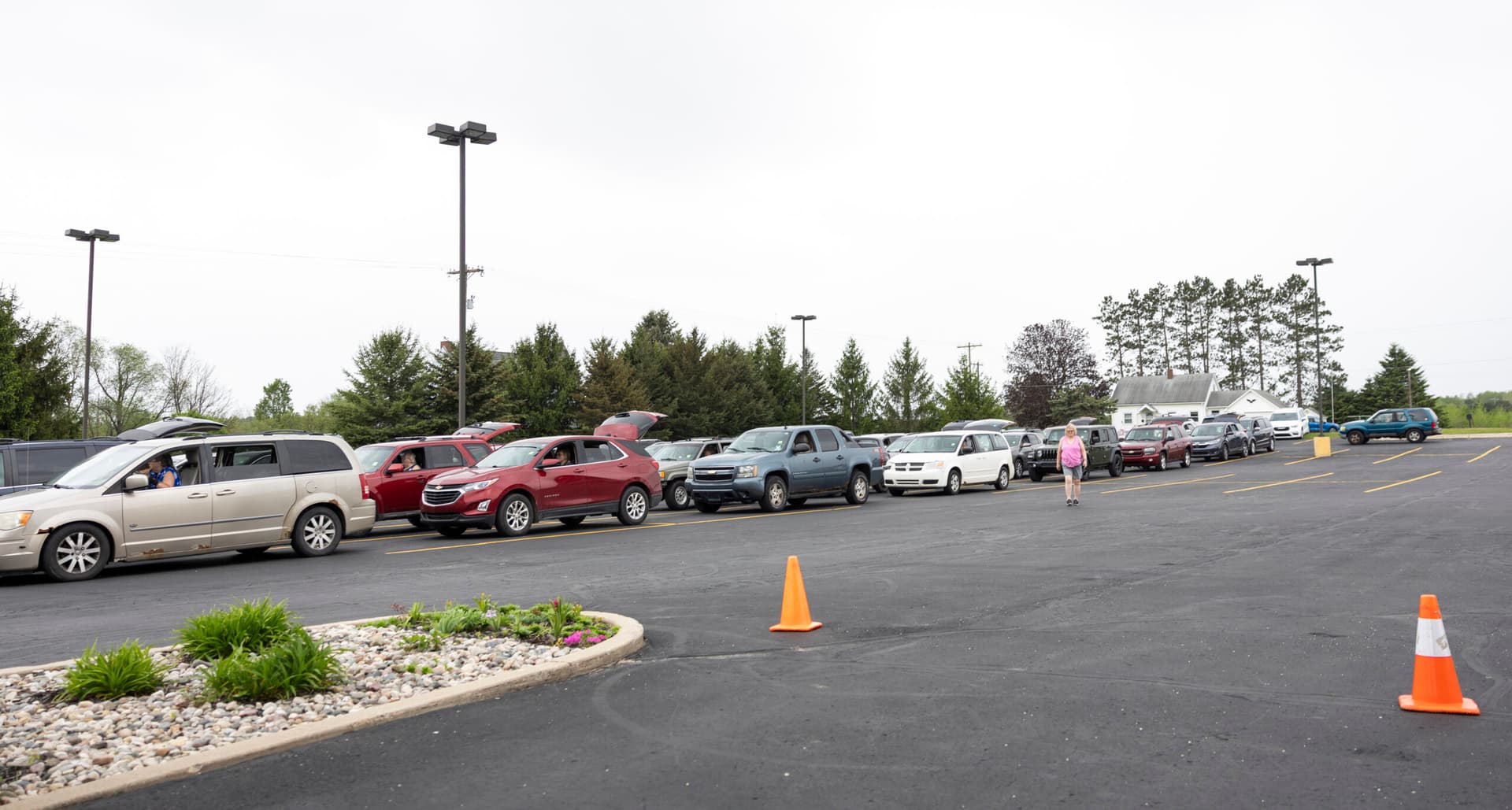
Food Share of Ventura County’s drive-through program can serve up to 1,000 cars every Wednesday. Food banks kept the model because it moves large volumes quickly, keeps traffic predictable, and serves people who need speed more than a shopping experience. For A Simple Gesture, the question is whether the site, staffing, and route design can make food access easier than a traditional pickup.
When drive-through is the better fit
Drive-through distribution makes the most sense when the goal is to move a lot of food in a short window without asking families to leave their vehicles. That matters for neighbors who worry about getting out of the car, for people with mobility limits, and for parents juggling children, bags, and parking. It also works when the alternative is a bottlenecked curbside handoff or a crowded indoor line that slows everyone down.
Food Share of Ventura County shows how far the model can scale when it is matched to the right operation. That volume would overwhelm many walk-up sites and would be hard to support without a clear vehicle flow and a disciplined volunteer rhythm.
Site layout decides whether the model helps or harms
The strongest drive-through sites are not always the largest ones. They are the ones with enough room for incoming cars, a safe loading area, and a clear path that prevents one delayed vehicle from backing up the whole line. That is why the model has spread to community sites such as schools and rotary clubs, places that may not have the space or infrastructure for a full pantry but can still support a controlled pickup pattern.
For A Simple Gesture, that layout question should come first. If a location has a narrow entrance, poor visibility, or no place to stage volunteers and boxes, a drive-through can simply shift the bottleneck from the pantry interior to the parking lot. If the site lets vehicles move through without crossing pedestrian traffic, the format can create a smoother experience than a walk-in setup that depends on multiple handoffs.
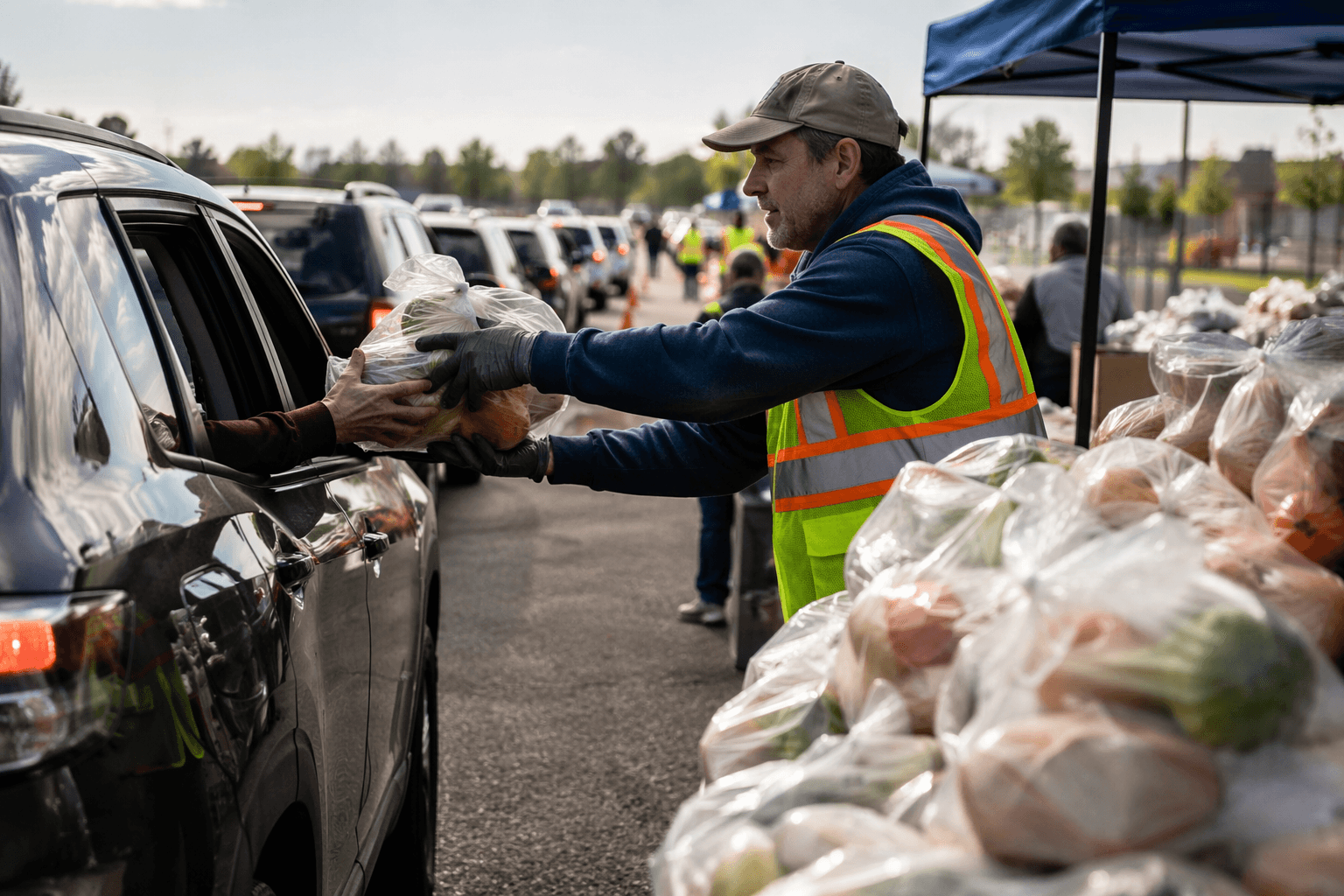
Weather also matters more than many organizers expect. A drive-through can be a relief in rain, heat, or wind because people stay in their cars and the exchange happens faster, but the same conditions can affect volunteer comfort and the pace of loading. A setup that works in mild weather can become sluggish if volunteers are exposed for too long or if wet conditions make paper bags, produce, or packaging harder to manage.
Staffing and traffic flow shape the real cost
A drive-through distribution looks simple from the road, but it depends on tightly coordinated labor. Someone has to direct cars, someone has to check eligibility or registration if that is part of the model, and others have to load food efficiently without making drivers wait too long. The faster the line moves, the more the operation depends on volunteers knowing their roles and staying in sync.
That is where the model fits naturally with A Simple Gesture’s doorstep pickup culture. The green bag system already relies on reliable route coordination, consistent volunteer habits, and predictable pickup timing. Drive-through distribution requires the same habits in a public setting.
Traffic flow is also a retention issue for volunteers. If a site is chaotic, helpers spend more time waiting, redirecting cars, or fixing loading problems than actually moving food. A clean one-way pattern, enough staging space, and a simple loading sequence reduce frustration and make the volunteer shift feel manageable.
Convenience has tradeoffs, especially around choice
The biggest strength of drive-through distribution is speed. The biggest weakness is that it often offers less product choice than in-person shopping, where clients can browse and select what fits their household. That tradeoff affects dignity, household preferences, and whether the distribution feels responsive to real life.
A Simple Gesture coordinators should treat that tradeoff as a design decision, not an afterthought. If the operation prioritizes speed because the demand is high or the site is constrained, then the loading method should be clear and the inventory mix should reflect what can be packed quickly. If choice is the higher priority, then a different format may serve better even if it moves fewer households per hour.
The same logic applies to privacy. Some neighbors are more comfortable staying in the car than walking through a crowd, especially when they do not want to be seen carrying food home. Drive-through distribution can make the exchange feel less exposed and has retained support after the Covid emergency that helped popularize it.
What this means for A Simple Gesture
For a neighborhood food recovery group like A Simple Gesture, the main decision is whether drive-through will improve access or merely relocate friction. The format is strongest when the volume is high, the site is tight, the weather is unpredictable, or the client base values speed and privacy over browsing. It is weaker when choice matters more, when traffic cannot be controlled, or when the site layout forces volunteers into constant improvisation.
- Use drive-through when the site can handle vehicles safely and repeatedly.
- Choose it when volunteer staffing is stable enough to keep traffic moving.
- Favor it when mobility, parking, or privacy are barriers for households.
- Avoid it when limited space or poor flow would create longer waits than a walk-up system.
- Accept the tradeoff when speed and reliability matter more than product variety.
The decision framework is:
This article was produced by Prism’s automated news system from verified source data, official records, and press releases, then run through automated quality and moderation checks before publishing. The system is built and supervised by the people who set the standards it runs under. Read our full AI policy.
Know something we missed? Have a correction or additional information?
Submit a Tip